



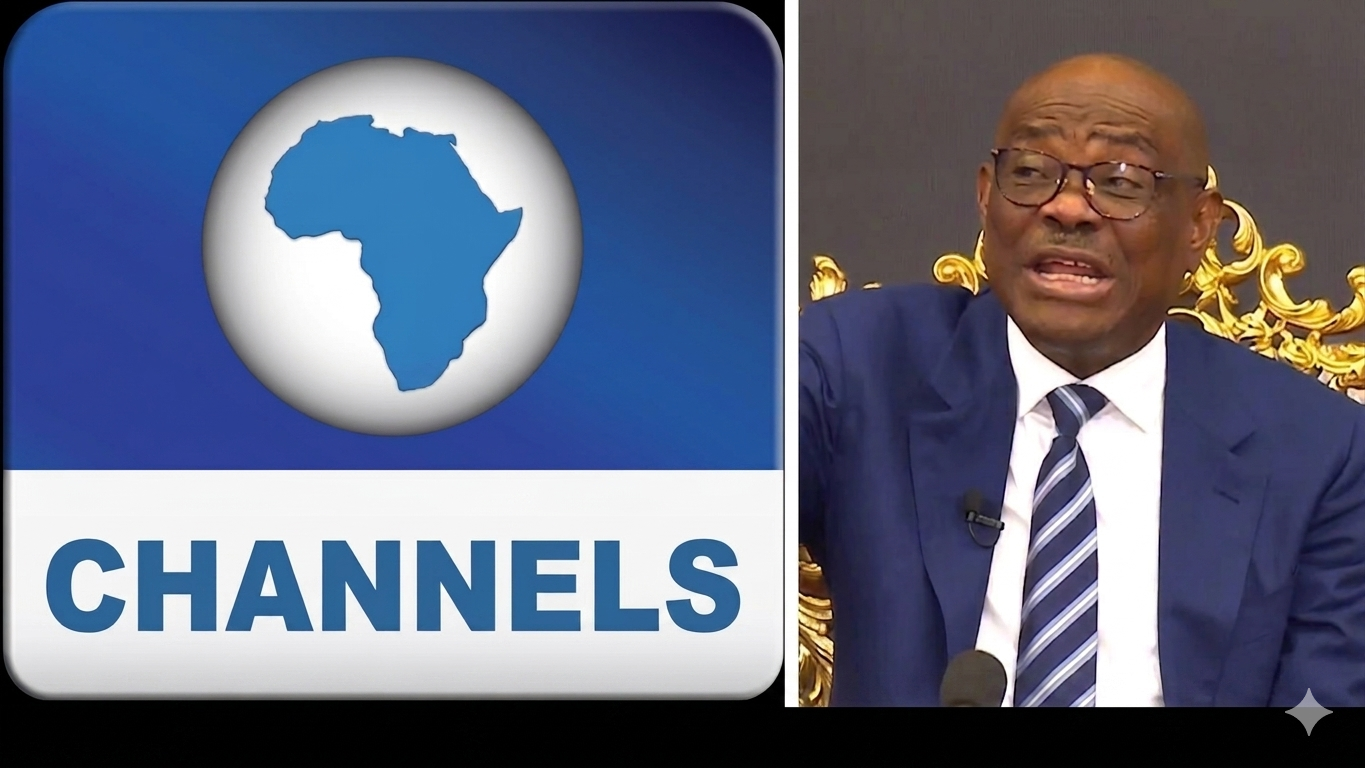
Fresh tensions have surfaced between the Minister of the Federal Capital Territory, Nyesom Wike, and Channels Television after controversial remarks concerning the ownership of the broadcaster’s Abuja headquarters ignited nationwide debate.
The disagreement unfolded during a televised media interaction in Abuja where the minister questioned the circumstances surrounding the acquisition of the property occupied by the media organisation in the Guzape district of the Federal Capital Territory.
During the session, Wike maintained that the land hosting the station’s corporate office was originally allocated by the Federal Capital Territory Administration. He argued that many organisations operating within Abuja benefit from government allocations and privileges while projecting themselves as entirely independent entities.
The former Rivers State governor also addressed the issue of media coverage involving government activities, stating that television stations receive payments for broadcasting official events and public engagements. According to him, live transmission of government programmes requires extensive logistics and cannot be treated as a free public service.
The minister’s comments immediately triggered widespread reactions across political and media spaces, especially after video clips from the interview gained traction online.
Responding to the allegations, Channels Television issued a firm clarification, insisting that its Abuja property was lawfully obtained through approved procedures recognised by the FCT administration.
The broadcaster explained that the land was officially allocated for commercial purposes on March 6, 2007, adding that all legal obligations tied to the property, including statutory payments and regulatory requirements, were fully completed.
The organisation stressed that obtaining land allocation from government authorities does not amount to illegality, noting that such processes are standard practice for businesses and institutions operating within the nation’s capital.
Channels Television further defended the professional fees received for live event coverage, explaining that such payments cover technical production costs, outside broadcast operations, engineering support, transmission facilities, and other media logistics required for real-time broadcasting.
The station rejected suggestions that financial transactions relating to broadcast services compromise editorial integrity, reaffirming its commitment to independent journalism and objective reporting.

Media analysts say the latest confrontation reflects growing friction between public office holders and major news organisations in Nigeria’s political environment.
Several observers believe the development raises broader questions about government transparency, media independence, and the relationship between political power and press institutions in a democratic society.
Public reactions to the controversy have remained sharply divided.
Supporters of the minister praised him for openly discussing land administration and government spending within the Federal Capital Territory. Others, however, accused the FCT minister of unnecessarily targeting a prominent media institution known for its critical political coverage.
Press freedom advocates have also expressed concern over increasing hostility toward journalists and media organisations in the country. Some civil society groups warned that attempts to publicly discredit media houses could weaken public confidence in democratic accountability and free expression.
The controversy comes at a time when public scrutiny of Abuja land allocations has intensified following ongoing reforms and policy changes introduced by the current FCT administration.
Political commentators note that Wike’s outspoken style and confrontational approach to governance continue to attract both praise and criticism across different sectors of the country.
This is also not the first public disagreement involving the minister and media professionals in recent weeks.

Earlier controversies involving remarks directed at veteran broadcaster Seun Okinbaloye generated significant backlash from media stakeholders and advocacy groups who interpreted the comments as aggressive toward journalists performing their constitutional duties.
Despite the growing debate, Channels Television insists it will continue to prioritise factual reporting, public accountability, and balanced coverage of national issues without intimidation or external pressure.
Observers believe the latest dispute may further deepen conversations around the protection of press freedom, ethical journalism, and the role of the media in holding political leaders accountable in Nigeria’s democratic system.
As discussions continue across the country, many Nigerians are awaiting possible further reactions from both the FCT administration and the media organisation regarding the escalating public disagreement.




