



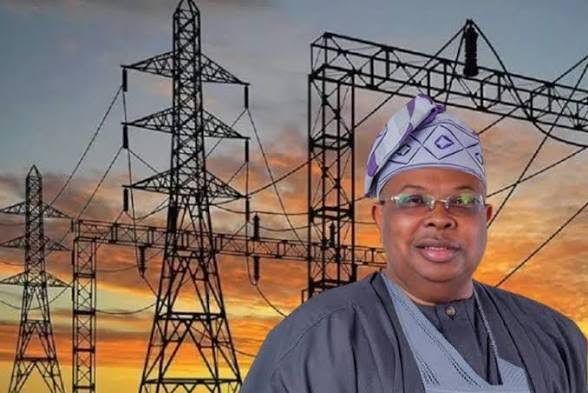
The Minister of Power, Joseph Olasunkanmi Tegbe, has clarified that he never made a commitment to fully resolve Nigeria’s persistent national grid challenges within three months, following public reactions to his comments during his ministerial screening before the Senate.
The clarification follows reports circulating in sections of the media suggesting that Tegbe had assured lawmakers of a rapid fix to the country’s recurring grid collapses shortly after assuming office. The interpretation triggered widespread debate among stakeholders in the power sector and members of the public, many of whom have long expressed frustration over Nigeria’s unstable electricity supply.

During his screening session, Tegbe spoke extensively on the condition of the national power infrastructure, describing it as structurally constrained and requiring comprehensive, long-term reforms rather than short-term interventions. He emphasized that the challenges facing the sector are deeply rooted and cannot be resolved through quick administrative actions alone.
He explained that his approach, if confirmed, would focus on immediate stabilisation efforts alongside a structured reform plan aimed at improving generation, transmission, and distribution efficiency over time. According to him, priority areas would include strengthening the national grid, expanding metering coverage, improving regulatory enforcement, and enhancing coordination across the electricity value chain.
However, in the aftermath of the screening, some media reports interpreted his remarks as a promise to fix the national grid within three months, a narrative that quickly gained attention and sparked public discussion about the feasibility of such a timeline.
Responding to the reports, Tegbe clarified that his comments were taken out of context. He stated that at no point did he guarantee a complete resolution of the national grid’s structural problems within a three-month period. Instead, he noted that he outlined initial intervention steps and early performance indicators that could begin to show progress within a short timeframe, depending on effective implementation and cooperation among key stakeholders.
He reiterated that Nigeria’s power sector requires sustained policy execution, significant investment, and institutional discipline to achieve meaningful and lasting improvements. According to him, reforms in the sector must be guided by technical realities, data-driven planning, and consistent regulatory oversight.
The minister further emphasized that the electricity value chain is complex, involving generation companies, transmission operators, distribution companies, regulators, and consumers, all of which must function effectively for the system to achieve stability.
Nigeria’s power sector has continued to struggle with frequent grid collapses, inadequate generation capacity, transmission limitations, and inefficiencies in distribution. These challenges have persisted despite various reform programmes and investments over the years, leaving many parts of the country with unreliable electricity supply.
Energy analysts note that resolving the sector’s issues will require a coordinated national strategy that addresses infrastructure gaps, improves financial viability within the electricity market, and strengthens accountability across institutions. They also stress that sustainable improvement will depend on consistent policy implementation rather than short-term political timelines.
Public reaction to the earlier reports reflects ongoing concern over the state of electricity supply in the country, with many Nigerians expressing both hope for improvement and skepticism about the speed at which reforms can realistically deliver results.
Tegbe, who was nominated by President Bola Ahmed Tinubu, is expected to oversee a sector that remains central to Nigeria’s economic growth agenda. His priorities, as outlined during his screening, include improving grid stability, expanding access to electricity, enhancing metering systems, and encouraging private sector participation in power generation and distribution.
As he prepares to assume office, attention is now focused on how the administration will translate reform promises into measurable outcomes in a sector widely regarded as one of Nigeria’s most critical infrastructure challenges.




