


(DDM) – A growing wave of public criticism has trailed the Federal Government’s Conditional Cash Transfer scheme, as many Nigerians accuse the ruling All Progressives Congress (APC) of using social welfare programmes as political tools rather than instruments for national development.
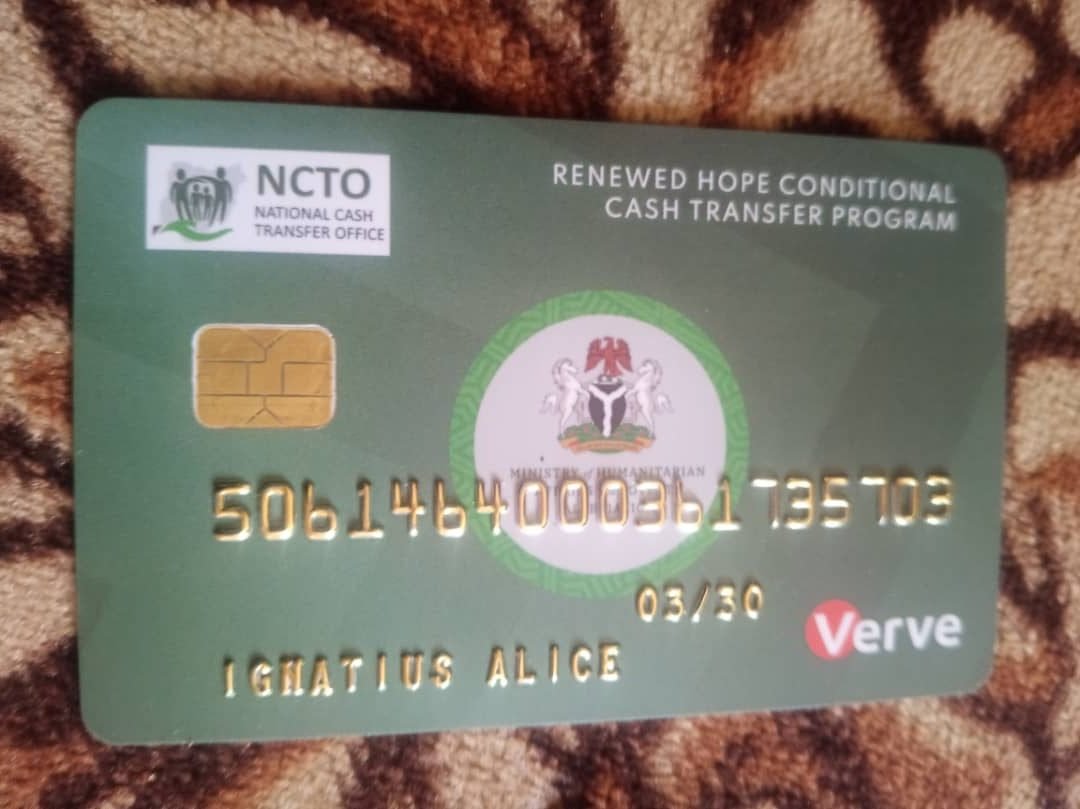
The concerns intensified after images of a new “the renewed Hope” cash transfer ATM card surfaced online.
DDM gathered that the card, issued under the National Cash Transfer Office (NCTO), enables selected citizens to withdraw monthly stipends allocated under the government’s poverty alleviation programme.
Critics argue that while the initiative was designed to support vulnerable households, it has increasingly become a subject of political suspicion.

Several Nigerians now believe the programme is being used to build political loyalty rather than address structural poverty.
Observers say the growing sentiment reflects deeper frustrations about governance, accountability, and economic hardship.
The Renewed Hope Conditional Cash Transfer programme is part of the Tinubu administration’s broader social relief strategy.
It was introduced after the removal of fuel subsidy and the resulting spike in inflation, transportation costs, and food prices.
Government officials maintain that the stipends are meant to cushion the impact of these economic shocks on low-income households.
However, analysts argue that the programme fails to address Nigeria’s long-term developmental needs.
Many civil society groups have also questioned the transparency of the beneficiary selection process.
Reports indicate that some communities claim beneficiaries are handpicked through political structures rather than verified through a transparent database of vulnerable citizens.
Experts warn that if true, such practices undermine the credibility of the entire welfare framework.
Critics further argue that a nation battling deteriorating roads, failing public schools, chronic power shortages, and rising unemployment needs more structural investments rather than cash handouts.
The growing outcry suggests that many Nigerians view the cash transfers as temporary relief that leaves the root causes of poverty untouched.
Economic analysts say that countries that successfully reduce poverty typically invest heavily in public infrastructure, mass employment programmes, and technological development.
They argue that sustained national growth cannot be achieved through monthly stipends alone.
Public commentary on the Renewed Hope ATM card has reignited conversations about whether current leadership priorities align with the long-term interest of the nation.
Some citizens interpret the growing dependence on cash transfers as an indicator of the government’s inability to generate sustainable jobs.
Others say the programme weakens civic independence by making vulnerable Nigerians politically indebted to the ruling party.
Government officials, however, insist that the programme is strictly humanitarian and apolitical.
They argue that the ongoing economic conditions require urgent relief measures to prevent hunger and social unrest.
Nonetheless, the debate highlights a fundamental divide between citizens who view the programme as life-saving support and those who see it as a political lifeline for the APC ahead of future elections.
The rising mistrust underscores broader concerns about governance and resource allocation in a country grappling with economic instability.
Political observers believe this controversy will continue to shape national discussions as Nigeria approaches another election season.




