


(DDM) – A growing wave of concern is sweeping global health circles as new evidence shows that reductions in US funding are endangering major international efforts to eliminate cervical cancer.
According to DDM findings, the impact is already being felt in countries like Nigeria, where the disease remains one of the leading causes of cancer deaths among women.
In northeastern Borno State, the fear of losing momentum is deeply personal for immunization officer Maina Modu, who lost his wife, Hauwa, to cervical cancer in 2011.
Her death made Modu one of thousands of Nigerians affected each year by a disease that kills an estimated 349,000 women globally despite being almost entirely preventable.

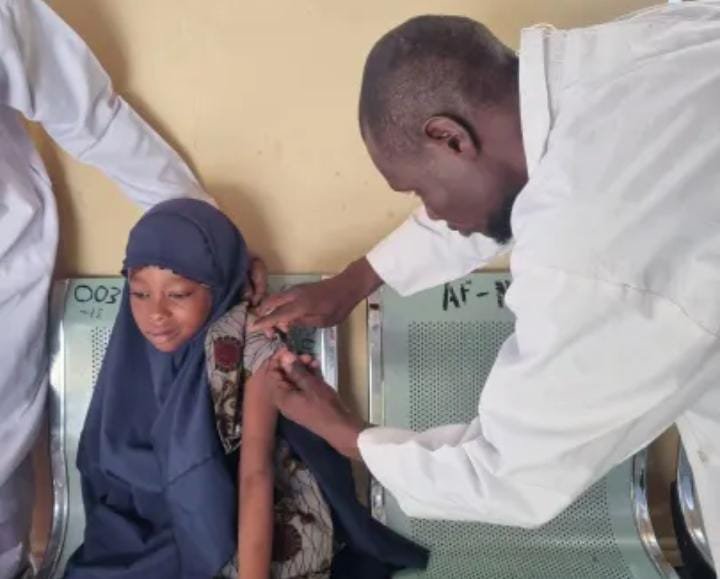
More than a decade later, Modu welcomed the opportunity to help protect his community when Borno launched its first-ever human papillomavirus (HPV) vaccination campaign in May 2024.
The campaign targeted adolescent girls, aiming to prevent HPV infections, the primary cause of nearly all cervical cancer cases worldwide.
Modu ensured that two of his daughters, including the youngest child of his late wife, were among the first to receive the vaccine.
He described the moment as emotionally overwhelming, recalling the pain of losing Hauwa and the relief of knowing his daughters now have protection she never had.
“I was so excited when I heard about the vaccine,” Modu said.
He explained that vaccinating his daughters felt like reclaiming some of the dignity his wife lost to the disease, which remains a heavy burden on many families in low-income communities.
His children became part of a much larger global health milestone.
They were among more than 86 million girls vaccinated through a massive global initiative led by Gavi, the Vaccine Alliance, a partnership that collaborates with governments to deliver life-saving immunizations in lower-income regions.
Gavi has accelerated progress dramatically in the last three years, vaccinating 73 million girls, the majority of them across Africa and Asia, where cervical cancer rates remain the highest.
However, global health experts warn that this momentum is now under threat as US financial support, which constitutes a major share of international vaccine funding, faces cuts.
The reductions could disrupt HPV vaccine supply chains, stall national immunization campaigns, and reverse gains made toward the World Health Organization’s goal of eliminating cervical cancer as a public health threat.
Public health officials say that without consistent funding, millions of girls could miss the window for vaccination, especially in regions with fragile health systems and persistent insecurity, such as parts of northern Nigeria.
Advocates argue that the loss of even a fraction of US support could greatly undermine the affordability of HPV vaccines, which many low-income nations rely upon Gavi to subsidize.
Gavi partners warn that immunization campaigns, which require extensive planning, training, logistics, cold-chain management, and community mobilization, cannot be sustained without stable international financing.
They fear that decreased contributions may lead to vaccine shortages, delayed national rollouts, and widening disparities between countries with strong health financing and those at severe risk of being left behind.
For families like Modu’s, the stakes are painfully clear.
He says his wife’s death fuels his commitment to vaccination advocacy, but he worries that other parents may lose the chance to protect their daughters if international support continues to shrink.
Global experts caution that unless funding is restored, the world may drift further away from eliminating one of the most preventable forms of cancer, a goal once considered within reach.




