


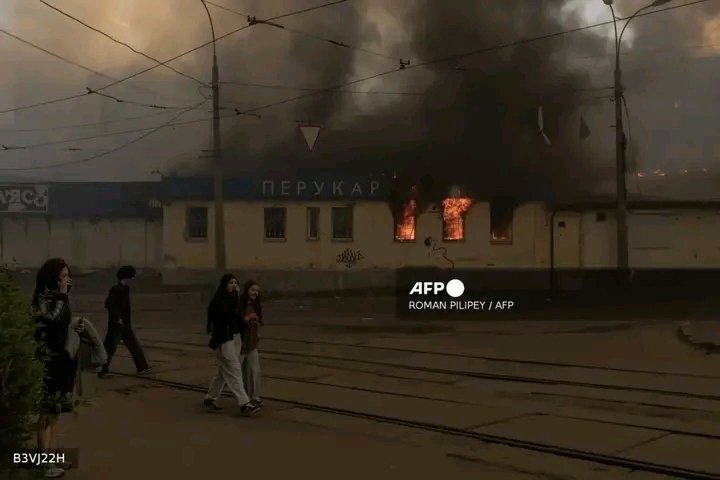
Four people have been confirmed dead following a major missile and drone assault launched by Russia against Ukraine, in one of the latest escalations of the ongoing war that continues to devastate parts of Eastern Europe. Ukrainian authorities and international media sources reported that the overnight attack involved a coordinated wave of aerial weapons targeting multiple regions, leaving destruction, injuries, and widespread disruption in its wake.
According to initial reports from Ukrainian emergency services, the attack combined both cruise missiles and unmanned aerial drones, which were launched in large numbers and in multiple waves. Air defense systems across several Ukrainian regions were activated in response, attempting to intercept incoming projectiles and reduce the scale of damage. Despite these efforts, several missiles and drones managed to penetrate defensive barriers and struck residential neighborhoods, commercial facilities, and key infrastructure sites.
Officials confirmed that at least four civilians lost their lives as a result of the strikes, while several others sustained injuries ranging from minor to severe. Emergency responders were deployed immediately to affected locations, where rescue operations continued into the morning hours. Firefighters worked to extinguish fires caused by explosions, while medical teams treated the injured and assisted in evacuating residents from damaged buildings.
Ukrainian authorities described the assault as one of the most intense aerial bombardments in recent weeks, noting that multiple cities and regions were placed under continuous air raid alerts throughout the night. Residents reported hearing repeated explosions and witnessing flashes across the sky as air defense systems engaged incoming threats. In some areas, falling debris from intercepted projectiles also caused additional damage to infrastructure and private property.

The Russian military has not released a detailed statement on the specific targets of the operation. However, in previous similar attacks, Moscow has often claimed that its strikes are aimed at military infrastructure, command centers, weapons storage facilities, and energy installations used to support Ukraine’s defense capabilities. Ukrainian officials, on the other hand, maintain that many of these strikes continue to hit civilian areas, resulting in casualties among non combatants and further worsening humanitarian conditions across affected regions.
Military analysts say the increasing use of combined missile and drone attacks reflects a tactical shift in the ongoing conflict. By launching different types of aerial weapons simultaneously, attacking forces aim to overwhelm Ukraine’s air defense systems, forcing them to respond to multiple threats at once. This approach increases the likelihood that some projectiles will evade interception and reach their intended targets.
The latest assault comes at a time when Ukraine continues to call for stronger international military support, particularly in the area of air defense systems. President Volodymyr Zelenskyy has repeatedly emphasized the need for advanced missile interception technology to protect Ukrainian cities and critical infrastructure from sustained aerial attacks. Western allies have provided several air defense platforms, but Ukrainian officials say current supplies remain insufficient to counter the scale of ongoing strikes.
The humanitarian impact of the conflict continues to grow as repeated aerial attacks damage housing, disrupt essential services, and displace civilians. In many regions, residents are forced to spend nights in shelters or underground facilities due to the frequency of air raid alerts. Power outages and infrastructure damage have also become recurring challenges, particularly following large scale bombardments targeting energy systems.
International concern over the escalation remains high, with global leaders urging restraint and renewed diplomatic engagement. However, efforts to initiate meaningful negotiations have largely stalled, as both sides continue to maintain firm positions on key issues related to territorial control, security guarantees, and military operations. Observers warn that the continued reliance on long range strikes signals a prolonged phase of attritional warfare with significant human and economic costs.
Humanitarian organizations operating in the region have expressed concern about the increasing risks faced by civilians, particularly in areas close to front lines or frequently targeted by aerial attacks. Relief agencies have called for greater protection of civilian infrastructure and improved access for emergency assistance in affected zones. They also highlight the psychological toll on populations living under constant threat of air raids and explosions.
As cleanup and recovery efforts continue, authorities are assessing the full extent of damage caused by the latest strike. Early estimates suggest that multiple buildings have been damaged or destroyed, with infrastructure repairs expected to take time. Emergency teams remain on alert as officials warn of possible further attacks in the coming days, given the continued intensity of the conflict.
The latest incident underscores the persistent volatility of the war in Ukraine and the ongoing challenges faced by civilians caught in the middle of a prolonged military confrontation. With both sides continuing to exchange strikes, the prospects for immediate de escalation remain uncertain, and the human cost of the conflict continues to rise.




