


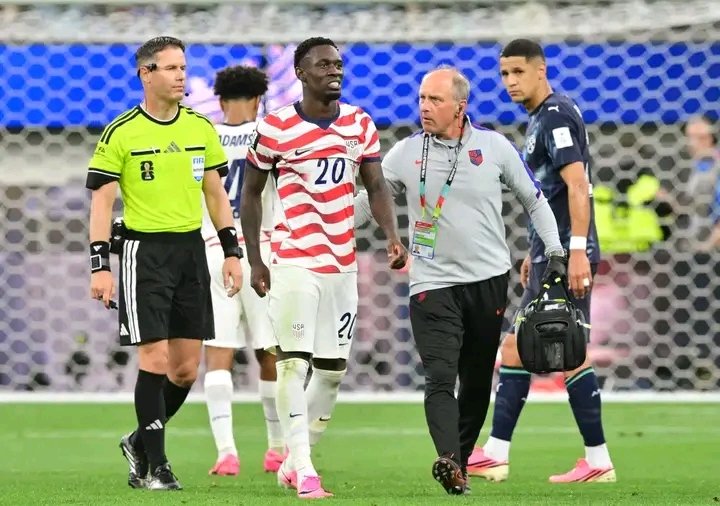
DOHA, Qatar — Nigerian-born forward Folarin Balogun has etched his name into football history after becoming one of the standout performers for the United States at the FIFA World Cup, marking a milestone moment that highlights his multicultural football journey and rising global profile.
Balogun, who was born in New York to Nigerian parents before growing up in England, has had a unique international career path that saw him represent England at youth level before ultimately switching allegiance to the United States. His decision to play for the US Men’s National Team (USMNT) proved significant as he became a key attacking figure in their World Cup campaign.
The striker made headlines after scoring a historic goal that contributed to a landmark achievement for the United States on the global stage. His performance not only boosted the team’s competitive standing but also placed him among a growing list of dual-national players shaping modern international football.
Football analysts say Balogun’s rise reflects the increasing influence of diaspora talent in world football, particularly players with eligibility for multiple national teams. His technical ability, pace, and finishing skills have made him a valuable asset in the US attack, where he continues to develop as a central forward.

Coaches and pundits have praised his composure under pressure, noting that his ability to deliver in high-stakes matches demonstrates maturity beyond his years. His contributions in the tournament have also sparked renewed discussions about talent identification and player development systems in the United States.
Balogun’s journey has been widely followed by Nigerian football fans as well, with many acknowledging his roots and expressing pride in his achievements on the global stage. His background has also reignited conversations about Nigeria’s own diaspora players and the ongoing competition among national teams to secure eligibility of top talents born abroad.
At club level, Balogun has continued to build his reputation in European football, gaining experience in top leagues and further sharpening his attacking instincts. His performances have attracted attention from scouts and analysts who view him as one of the promising forwards of his generation.
The World Cup platform has provided Balogun with an opportunity to showcase his skills on the biggest stage, and his contributions have been seen as part of a broader evolution in the USMNT’s attacking style. The team’s reliance on young, dynamic forwards has been central to its strategy, with Balogun playing a key role in that approach.
As the tournament progressed, his impact on matches underscored his importance to the squad, with supporters and analysts highlighting his ability to change the course of games through decisive movement and clinical finishing.
Balogun’s historic involvement in the World Cup continues to inspire discussions about identity, opportunity, and global football pathways, as players with multinational backgrounds increasingly shape the future of the sport.




