


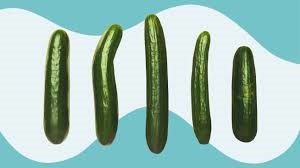
Penises vary widely in appearance and structure, with differences in length, thickness, curvature, and other physical features. Medical experts emphasize that these variations are normal and do not typically affect sexual or urinary function.
Length Differences
Penile length can vary between individuals and also changes depending on whether the penis is flaccid or erect.
Research suggests there are two general categories:
- “Growers,” where the penis increases significantly in length during erection
- “Showers,” where there is less noticeable change in size
A 2023 global review and meta-analysis estimated the average erect penis length at approximately 5.5 inches (14 cm). Earlier studies, including research conducted in the United States, reported similar figures ranging around 5.6 inches.

However, experts caution that many studies rely on self-reported data, which can introduce bias and affect accuracy.
Girth and Thickness
Penile girth (circumference) also varies significantly among individuals. One older study estimated the average erect girth at approximately 4.8 inches.
As with length, researchers note that measurement methods and self-reporting can affect the reliability of these figures.
Curvature and Shape
It is common for penises to have some degree of curvature when erect. Typical variations include:
- Curving upward
- Curving downward
- Curving to the left or right
- A combination of directions
In most cases, curvature is harmless and does not interfere with sexual activity.
However, pronounced or painful curvature may be associated with Peyronie’s disease, a condition involving scar tissue formation within the penis. Symptoms may include:
- Noticeable bending during erection
- Pain
- Erectile dysfunction
- Palpable hardened areas under the skin
Medical experts note that the condition may result from repeated minor trauma, genetic factors, or autoimmune responses. Treatment options vary depending on severity and may include medication or surgery.
Base and Head Proportions
The proportion between the penile shaft and the glans (head) differs among individuals. Some people have a more uniform shape, while others may have a wider base or a more prominent head. These variations are considered normal anatomical differences.
Circumcised and Uncircumcised Anatomy
Penises may also differ based on whether the foreskin is present.
- A circumcised penis has had the foreskin removed, leaving the glans exposed
- An uncircumcised penis retains the foreskin, which may cover the glans when flaccid
Circumcision is performed for cultural, religious, or medical reasons. In some cases, medical conditions such as phimosis—where the foreskin cannot retract properly—may require treatment.
While complications are possible, they are generally rare when the procedure is performed in clinical settings.
Other Physical Characteristics
Additional visible variations include:
- Pubic hair distribution around the base and shaft
- Vein visibility, which may become more prominent during erection
- Skin tone differences between the penis and surrounding areas
- Temporary color changes due to blood flow during arousal
These differences are all considered part of normal human variation.
Summary
Medical research shows that there is no single “standard” penis shape or size. Length, girth, curvature, and appearance vary widely among individuals, and most variations do not indicate any health problem.
Clinicians advise that individuals with concerns about pain, significant curvature, or changes in function should seek medical evaluation for proper assessment and care.




