



Adamawa State Governor Ahmadu Umaru Fintiri has donated 15 Toyota Hilux vehicles and 300 motorcycles to traditional institutions across the state to strengthen security operations, improve grassroots intelligence gathering and support efforts to tackle insurgency and other security threats.
The vehicles and motorcycles were presented to traditional rulers on Thursday by Deputy Governor Professor Kaletapwa Farauta, who represented the governor at a meeting involving federal and state security administrators.
The donation is expected to enhance mobility and improve coordination between traditional institutions and security agencies, particularly in communities where difficult terrain and limited transportation can hinder security operations.

Speaking at the meeting, Farauta expressed concern over persistent security threats posed by Boko Haram and the Islamic State West Africa Province (ISWAP), stressing the need for a coordinated approach involving government institutions, security agencies and traditional rulers.

She emphasised the importance of effective intelligence gathering at the community level, noting that traditional rulers occupy strategic positions that enable them to identify suspicious activities and provide timely information to security agencies.
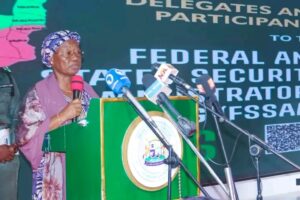
According to the deputy governor, strengthening traditional institutions and improving collaboration among security agencies remain important components of efforts to address insecurity across Adamawa State.
She also called for improved border surveillance, the deployment of drones and joint security patrols to tackle illegal migration, arms proliferation and smuggling.
Farauta urged traditional rulers to remain vigilant and promptly report suspicious movements within their respective communities. She also encouraged them to use their influence to resolve local disputes before they develop into violent confrontations.
The deputy governor’s remarks highlighted the importance of combining conventional security operations with community-based intelligence and conflict prevention mechanisms.
Adamawa shares an international border with Cameroon, making border monitoring and cooperation among security agencies important considerations in addressing cross-border criminal activities.
The provision of motorcycles could also improve access to rural settlements and remote communities that may be difficult to reach with conventional patrol vehicles. Meanwhile, the Hilux vehicles are expected to support transportation and coordination requirements associated with security operations.
However, the effectiveness of the intervention will depend on how the equipment is deployed, maintained and integrated into existing security arrangements across the state.

Speaking at the event, Akoro Agishara, Senior Special Assistant to the National Security Adviser on Governance and Subnational Affairs, commended the Adamawa State Government for its support for security agencies.
Agishara’s remarks underscored the importance of cooperation between state governments, federal authorities and traditional institutions in addressing security challenges.
The Emir of Mubi, Alhaji Abubakar Isa Ahmadu, who received the vehicles on behalf of his fellow traditional rulers, expressed appreciation to the state government for the donation.
He described the gesture as a boost to security efforts across Adamawa and acknowledged the importance of providing traditional institutions with the resources needed to support community safety.
Traditional rulers often serve as intermediaries between residents and government authorities, giving them access to local information that can assist security agencies in identifying emerging threats and preventing conflicts.
The latest intervention comes amid continuing concerns about insurgency and other security challenges affecting parts of northeastern Nigeria. Adamawa, alongside neighbouring states in the region, has faced the effects of insurgency, displacement and related humanitarian challenges over the years.
The donation of 15 Hilux vehicles and 300 motorcycles represents a practical intervention aimed at improving the capacity of traditional institutions to support security efforts. Its longer-term impact will depend on sustained cooperation, timely information sharing and the effective use of the equipment provided.
For residents across Adamawa’s emirates and chiefdoms, the priority remains translating the additional resources into improved security coordination, faster responses to emerging threats and safer communities.




