


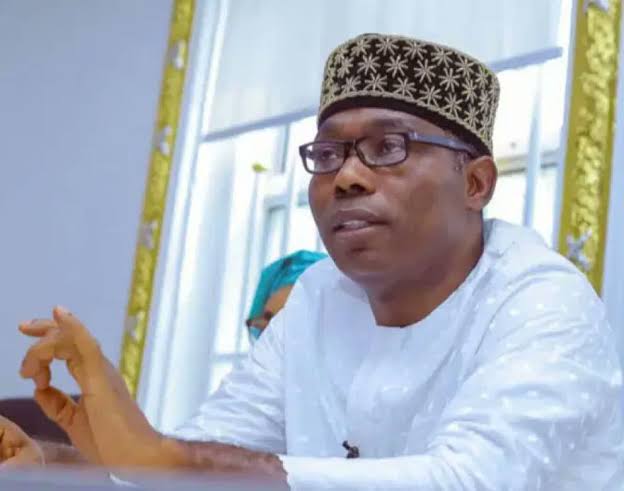
As Nigerians continue to grapple with the high cost of transportation, energy and other essential goods, the 2027 presidential race has begun to produce economic promises aimed directly at the country’s rising cost of living.
One of the latest proposals has come from the Social Democratic Party (SDP) presidential candidate, Adewole Adebayo, who has pledged to bring the price of petrol, cooking gas and aviation fuel down to N200 per litre within 12 months if elected president in 2027.
Adebayo made the promise on Sunday, September 6, 2026, during an interview with the News Agency of Nigeria (NAN) in Abuja, where he outlined his plans for Nigeria’s petroleum sector and broader economic reforms.
His proposal places domestic refining at the centre of his strategy, arguing that Nigeria’s dependence on imported refined petroleum products has contributed significantly to the pressure on consumers and businesses.

According to the SDP candidate, his administration would pursue the rehabilitation of Nigeria’s existing refineries while also creating an environment where modular refineries can operate effectively.
He argued that the age of the country’s refineries should not automatically make them obsolete, pointing to older refineries in the United States that remain operational after decades of service.
Adebayo’s argument is that Nigeria should be taking greater advantage of the crude oil it produces instead of relying heavily on imported petroleum products.
By increasing domestic refining capacity, he believes the country can reduce its exposure to international fuel prices and establish a more predictable pricing system for consumers.
The presidential candidate specifically identified petrol, cooking gas and Jet A1, the aviation fuel used by the aviation industry, as the products that would be placed under his proposed N200 price regime.
He said the objective would be to ensure that the prices of the three products do not exceed N200 per litre under an SDP administration. Punch Newspapers
The proposal comes against the backdrop of the long-running debate over fuel subsidy in Nigeria.
Adebayo said his administration would restore what he described as the original subsidy arrangement, under which 450,000 barrels of crude oil would be reserved for domestic consumption.
The crude would be refined locally, while other petroleum derivatives generated from the process would be sold, with the proceeds used to support the proposed price regime.
He specifically mentioned products such as naphtha, heavy fuel oil, diesel and kerosene, arguing that revenue from their sale could be channelled towards maintaining the lower prices of petrol, cooking gas and aviation fuel.
He also said his administration would seek the cooperation of the National Assembly in establishing the framework required to operate such a system.
For Adebayo, the issue is therefore not simply about bringing back fuel subsidy in its traditional form.
Rather, he is proposing a petroleum system in which domestic crude allocation, local refining and revenue from other petroleum products are combined to keep selected products affordable.
The SDP candidate also criticised what he described as an excessive focus on the subsidy debate, arguing that the fundamental problem facing Nigeria’s petroleum industry is inadequate domestic refining capacity.
He maintained that continuing to import refined products at international prices leaves the country vulnerable to global market movements and places additional pressure on consumers.
His position is that Nigeria’s crude oil resources should provide the foundation for a domestic energy system capable of supporting households, businesses and industries.
Instead of exporting crude and subsequently importing refined products, he wants more of the value chain to be retained within the country.
This approach, he said, would also have consequences beyond the filling station.
Cheaper petroleum products could potentially reduce transportation costs, lower operating expenses for businesses and ease some of the pressure that high logistics costs place on the prices of food and other essential commodities.
DDM News reports that Adebayo’s proposal extends beyond fuel prices, with transportation forming a major part of his broader economic programme.
He said an SDP government would expand public transportation and rail services in an effort to reduce Nigerians’ dependence on private vehicles.
His plan includes a system through which workers and students could access public transportation using employment or student identification cards, while employers would contribute six per cent of workers’ salaries towards transportation costs. Punch Newspapers
The proposed transportation policy is intended to work alongside the promised reduction in petroleum prices.
Adebayo argued that cheaper fuel alone would not sufficiently address the cost-of-living crisis if Nigerians continued to spend a large portion of their income moving from one location to another.
By combining lower fuel prices with expanded public transportation and rail services, he said his administration would seek to reduce the overall cost of movement.
He also outlined proposals covering housing, education, healthcare and agriculture. Under his plan, housing costs would be limited to seven per cent of workers’ salaries, while education and healthcare would be provided free. He further promised to prioritise agriculture and food security as part of efforts to make food more affordable for Nigerians. Vanguard News
The scale of these promises places significant emphasis on the ability of an incoming government to generate enough revenue and establish efficient systems capable of sustaining them.
While Adebayo has presented local refining and proceeds from petroleum derivatives as key mechanisms for funding the proposed fuel-price regime, the implementation of such a policy would depend heavily on refinery performance, crude availability, distribution infrastructure and the broader fiscal position of the government.
His proposal also comes at a politically significant moment, as the 2027 presidential election campaign begins to take shape around competing economic visions.
For many Nigerians, the price of petrol has become more than an energy issue.
It affects transportation fares, food distribution, manufacturing costs, household budgets and the operating expenses of businesses across the country.
A significant reduction in petrol prices would therefore have consequences throughout the wider economy if it could be implemented sustainably.
However, the central question for voters will be how such a reduction would be financed and maintained over time without creating another fiscal burden for the government.
Adebayo has attempted to answer that question through his proposed domestic-refining model and the use of revenue from other petroleum derivatives to support the N200 price ceiling.
He insists that Nigeria possesses the crude resources and existing infrastructure required to pursue such a strategy.
DDM News understands that the proposal is likely to become part of the wider economic debate ahead of the 2027 election, particularly as political parties seek to convince Nigerians that they have practical solutions to the country’s cost-of-living pressures.
Adebayo’s N200 pledge directly targets one of the most visible consequences of the economic hardship: the high cost of energy and transportation.
Whether the proposal can be achieved within 12 months, however, would ultimately depend on the government’s ability to revive refineries, expand domestic refining capacity, secure adequate crude supply, establish an effective pricing mechanism and maintain the infrastructure required to distribute petroleum products nationwide.
For now, Adebayo has placed a clear figure at the centre of his economic message: N200 per litre for petrol, cooking gas and Jet A1 within the first year of an SDP administration.
As the 2027 political contest gathers momentum, the feasibility, financing and sustainability of that promise are likely to receive as much attention as the promise itself.




