


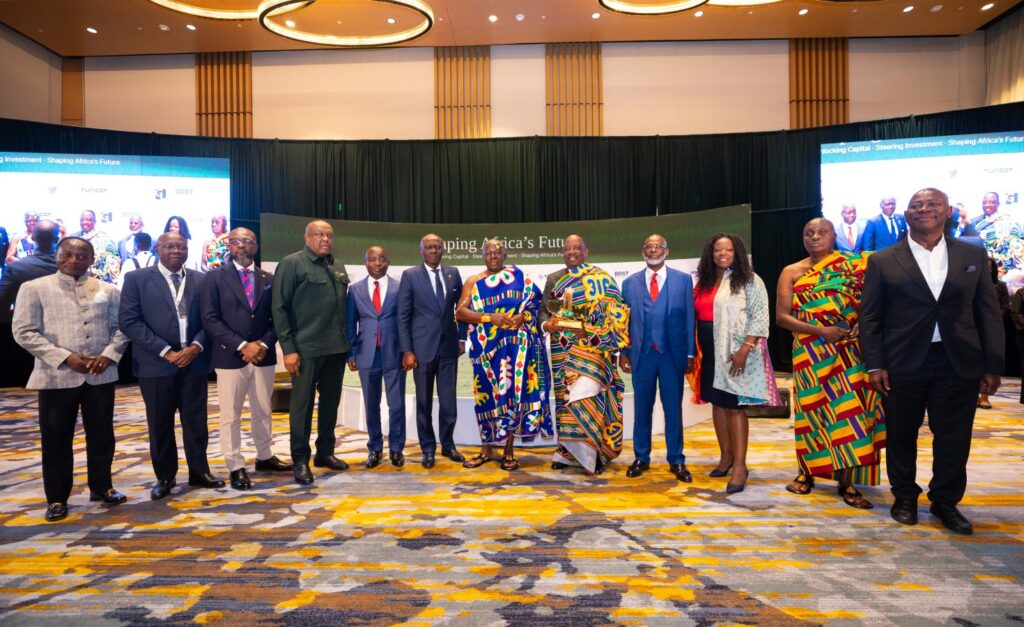
Africa’s growing push to attract international capital has entered a critical phase as governments and business leaders increasingly move beyond making investment announcements to confronting the harder question of whether pledged financing will actually reach projects on the ground.
Recent engagements in Washington have highlighted the scale of opportunities available across the continent, from infrastructure and energy to technology, manufacturing, healthcare and financial services.
African leaders and private-sector representatives have presented investment opportunities, promoted reforms and sought partnerships with global institutions and investors.
But while the deals and commitments announced during these engagements may generate headlines, the real measure of success will ultimately be determined by capital deployment.

For Africa, this distinction is crucial. The continent does not lack investment opportunities.
What remains difficult is converting investor interest into bankable projects, signed financing agreements, financial close and, eventually, construction and commercial operations.
DDM News understands that the growing attention from international investors reflects a changing perception of Africa’s economic potential.
With a population exceeding 1.4 billion people, rapidly expanding cities, rising consumer demand and significant natural resources, the continent offers opportunities that are difficult for global investors to ignore. Yet investors are also demanding greater certainty before committing large amounts of capital.
The challenge is particularly visible in infrastructure.
Africa requires enormous investment in roads, ports, railways, electricity generation, transmission networks, telecommunications and water systems.
These projects can generate substantial economic returns, but they often require long-term financing and depend heavily on government policy, regulatory stability and reliable revenue structures.
This is why meetings in Washington matter beyond the signing ceremonies.
Access to international financial institutions, development banks, private-equity firms, commercial banks and institutional investors can provide African countries with the capital needed to close major infrastructure and industrial financing gaps.
However, securing interest is only the beginning.
An announced investment can represent anything from a preliminary memorandum of understanding to a fully financed project ready for implementation.
Between those two points lies a complicated process involving due diligence, feasibility studies, regulatory approvals, risk assessments, financial structuring and negotiations over returns.
For African economies, the ability to move projects through that pipeline could determine whether the latest investment diplomacy produces lasting economic benefits.
Energy remains one of the strongest areas of opportunity.
Africa has enormous renewable-energy potential, including solar, wind and hydro resources, while several countries are also seeking to develop natural gas and other energy sources to support industrialisation. Yet millions of Africans still lack reliable access to electricity.
International investors are increasingly interested in the opportunity to participate in solving that problem, but financing energy projects requires confidence that electricity can be generated, transmitted and sold at commercially sustainable rates.
The same principle applies to manufacturing. Africa wants to reduce its dependence on imported finished goods and build stronger domestic and regional production networks. The African Continental Free Trade Area provides a potentially transformative framework by creating a market of more than a billion people.
But investors need dependable power, efficient transportation, predictable taxation and access to finance before factories can be established at scale.
Washington’s importance in this process extends beyond the United States government.
The city is home to major global financial and development institutions whose decisions can influence the availability and cost of capital across emerging markets.
African governments therefore have an opportunity to use these relationships to attract not only direct investment but also guarantees, concessional financing and technical support that can make commercially viable projects more attractive to private investors.
But investors are unlikely to commit billions of dollars simply because a project has been presented at a high-profile international meeting.
They want evidence.
They want to know who will repay the debt, where the revenue will come from, whether contracts will be enforceable and whether policy changes could undermine the business case.
They also want clarity around foreign-exchange risks, political stability, taxation, land rights and the ability to repatriate profits.
These concerns explain why Africa’s investment conversation is gradually shifting from opportunity promotion to execution.
For many African countries, improving the investment environment may therefore be more important than producing another long list of investment announcements.
Reforms that reduce bureaucratic delays, improve transparency, strengthen institutions and provide greater certainty for businesses can make the difference between a proposal remaining on paper and becoming a functioning project.
The private sector will also play a central role.
Governments can negotiate agreements and provide incentives, but businesses ultimately determine whether projects are commercially attractive.
African companies therefore need to develop stronger corporate governance, financial reporting and project-management capabilities if they want to compete successfully for international capital.
There is also a growing argument that African countries should seek more value from the investments they attract.
Instead of focusing exclusively on the amount of money entering the continent, policymakers are increasingly concerned about the quality and economic impact of that capital.
Investment that creates jobs, develops local supply chains, transfers technology and expands productive capacity can have a much greater long-term impact than capital that generates limited domestic economic activity.
This is particularly important in sectors such as mining and energy, where Africa possesses substantial natural resources but has historically captured less value from processing than it could.
The next phase of African investment may therefore increasingly focus on developing local processing and manufacturing capabilities rather than simply exporting raw materials.
DDM News reports that the biggest opportunity emerging from Africa’s engagement with international investors may therefore not be the announcements themselves, but the possibility of establishing a stronger pipeline of projects capable of attracting capital repeatedly.
If African governments can demonstrate that deals signed in Washington translate into construction sites, factories, power plants, digital infrastructure and operating businesses, investor confidence could strengthen considerably.
Conversely, if commitments repeatedly fail to reach financial close, investors may become more cautious, regardless of how attractive the continent’s opportunities appear.
The stakes are therefore high. Africa has spent years competing for international investment while confronting infrastructure deficits, high borrowing costs and limited fiscal space.
The continent now has an opportunity to turn its enormous market and resource advantages into a stronger investment proposition.
But that will require more than diplomatic meetings and impressive figures.
The next chapter will be measured in dollars actually disbursed, projects actually completed, workers actually employed and businesses actually producing goods and services.
Africa has brought the deals to Washington. The real test begins when the meetings end.
The question now is simple: will the money move?




