
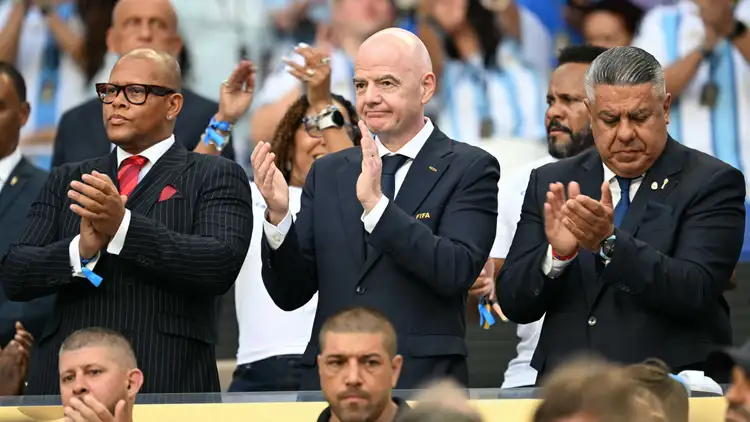
The Argentine Football Association (AFA) has become the subject of a preliminary investigation by United States authorities over suspected financial irregularities linked to international business operations during the ongoing 2026 FIFA World Cup.
The United States Department of Justice and the Federal Bureau of Investigation (FBI) are reportedly examining financial transactions involving the AFA and its president Claudio Tapia, with investigators looking into whether certain payments and commercial agreements could involve violations of American financial laws.
The investigation comes at a time when Argentina are competing for another World Cup title, creating significant attention away from the pitch as the national team continues its campaign in the United States.
According to reports from Argentine publications, including La Nacion and Terra, federal investigators have started gathering information and speaking with individuals who may have knowledge of the association’s financial activities.
The focus of the investigation is believed to involve hundreds of millions of dollars connected to international commercial agreements handled through United States banking systems.
Authorities are reportedly examining the relationship between the AFA and TourProdEnter LLC, a company that was involved in managing international contract collections for the football organisation.
Investigators are analysing whether the movement of funds through several American financial institutions, including Citibank, Bank of America and JP Morgan, followed legal requirements or whether any transactions may have breached regulations concerning money laundering or wire fraud.
The amount being reviewed is reportedly above $300 million, making the case one of the most significant financial investigations involving a football organisation during a major international tournament.
The inquiry has continued while Argentina remain focused on their World Cup objectives. During the tournament, the national team secured a dramatic 3-2 victory over Egypt in the knockout stage, but attention has also shifted towards developments involving the football association’s leadership.
Investigators recently questioned businessman Guillermo Tofoni during a three hour video conference meeting in Miami. Authorities are also seeking information from individuals who may have direct knowledge of financial decisions made during the leadership periods of Claudio Tapia and AFA secretary Pablo Toviggino.
The investigation remains at an early stage, and no criminal charges have been filed against the AFA, Tapia or any other individuals involved.
AFA representatives in the United States have responded to the reports, emphasising that an investigation does not automatically mean wrongdoing has occurred.
Tomas Regalado, who represents the AFA in North America, addressed the situation during a football and corruption forum in Miami alongside Argentine criminal lawyer Mariano Lizardo.
Regalado called for respect for the principle of innocence and stressed that authorities must complete their process before any conclusions are reached.
“Investigative measures alone do not determine responsibility or guilt,” he said.
The AFA has maintained that it will cooperate with relevant authorities while defending its reputation and financial operations.
Claudio Tapia has been one of the most influential figures in Argentine football in recent years. He became AFA president in 2017 and played a key role during Argentina’s successful period, including their victory at the 2022 FIFA World Cup in Qatar and triumphs in the Copa America.
Under Tapia’s leadership, Argentina strengthened their position as one of the strongest national teams in world football, with Lionel Messi leading a generation that ended the country’s long wait for major international trophies.
However, the current investigation places additional pressure on the AFA leadership as questions emerge regarding financial management and international agreements.
The case also highlights the increasing scrutiny placed on football organisations around the world, particularly regarding commercial partnerships, broadcasting rights, sponsorship income and international financial transfers.
Football authorities have faced similar investigations in the past as governments and financial institutions continue efforts to improve transparency within the sport.
For Argentina, the immediate priority remains their World Cup campaign. The team is preparing for their quarter final match against Switzerland, with hopes of continuing their pursuit of another global title.
Tapia remains with the national team during the tournament, but the developing investigation could become a distraction as Argentina attempt to maintain focus on their performances on the field.
The next stage of the process will depend on what investigators discover from financial records, witness statements and other evidence collected during the preliminary review.
If authorities determine that there is sufficient evidence, the investigation could progress into a formal criminal case. However, if no violations are established, the matter could eventually be closed without further action.
For now, the Argentine Football Association and its leadership remain under observation as US authorities continue their examination of the organisation’s financial activities.
The outcome of the investigation could have important consequences not only for AFA officials but also for wider discussions about transparency and accountability in international football administration.