



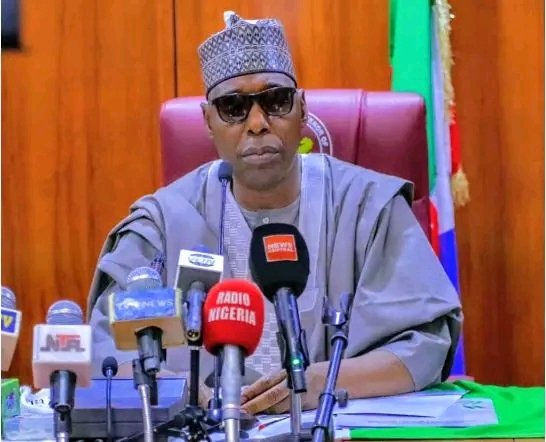
A younger brother of the Borno State Governor, Professor Babagana Umara Zulum, has emerged as the All Progressives Congress candidate for the House of Representatives seat representing the Dikwa, Konduga and Mafa Federal Constituency following a keenly contested party primary election.
The primary, conducted under the supervision of the All Progressives Congress electoral committee, brought together delegates from the three local government areas that make up the constituency. The exercise was part of the party’s nationwide internal selection process aimed at producing candidates for the next general elections.
Kaumi Babagana Zulum, who is the governor’s younger brother, was declared winner after polling a majority of the delegate votes, defeating other aspirants who also sought the party’s ticket. The election was held in line with APC guidelines, which emphasize delegate voting, internal democracy and adherence to established party procedures.
Party officials confirmed that the process was conducted peacefully, with accreditation of delegates carried out before voting commenced. Aspirants were given opportunities to present themselves to delegates ahead of the election, outlining their political vision, development plans and legislative priorities for the constituency.
The Dikwa, Konduga and Mafa federal constituency occupies a strategic position within Borno State, both politically and socially. The area has been significantly affected by insurgency related challenges over the past decade, resulting in displacement, infrastructural damage and humanitarian concerns. As a result, representation in the National Assembly from the constituency is often viewed as critical to advancing reconstruction efforts, attracting federal intervention and addressing the needs of affected communities.
Following the announcement of results, APC officials described the primary as competitive and orderly, noting that delegates exercised their franchise without interference. The outcome was subsequently ratified in accordance with party electoral rules.
The emergence of Kaumi Babagana Zulum has drawn attention within political circles in Borno State due to his familial connection to the sitting governor, Professor Babagana Umara Zulum, who has remained one of the most influential political figures in the state since assuming office in 2019. Governor Zulum is widely recognized for his administration’s focus on security coordination, humanitarian response, education reform and rebuilding efforts in communities affected by insurgency.
Observers say the development underscores the continued influence of established political structures within the ruling party in the state. The APC maintains a strong political presence in Borno, where it has consistently won major elective positions in recent election cycles. Political analysts also note that delegate based primaries often reflect the strength of grassroots mobilization and existing political alliances within the party structure.
However, reactions to the outcome have been mixed among political stakeholders and residents. While some party members describe the process as transparent and a reflection of delegate choice, others have raised broader discussions around political representation, elite influence and the role of political families in shaping electoral outcomes in Nigeria.
Supporters of the APC in the constituency argue that the primary outcome reflects confidence in continuity and alignment with ongoing development efforts in the state. They maintain that candidates who emerge through party primaries are products of internal democracy and delegate consensus rather than external imposition.
With the party ticket secured, Kaumi Babagana Zulum is expected to begin wider consultations with stakeholders across Dikwa, Konduga and Mafa. Political engagements are anticipated to include traditional leaders, community representatives, youth groups and party structures at ward and local government levels.
Campaign discussions are expected to focus on key issues affecting the constituency, including security stabilization, resettlement of displaced persons, rehabilitation of destroyed infrastructure, access to education, healthcare delivery and economic empowerment initiatives. These remain central concerns for residents in the area, many of whom continue to recover from years of insurgency impact.
Political analysts also highlight that the upcoming general elections will be closely contested across several constituencies in Borno State, as parties intensify efforts to consolidate support and expand their electoral reach. The APC, however, maintains a dominant position in the state, largely attributed to its governance record and established political networks.
The latest development adds to the growing list of aspirants emerging from influential political backgrounds across the country ahead of the next electoral cycle. It also reflects the ongoing internal dynamics within major political parties as they prepare for competitive legislative elections at both state and federal levels.




