
News
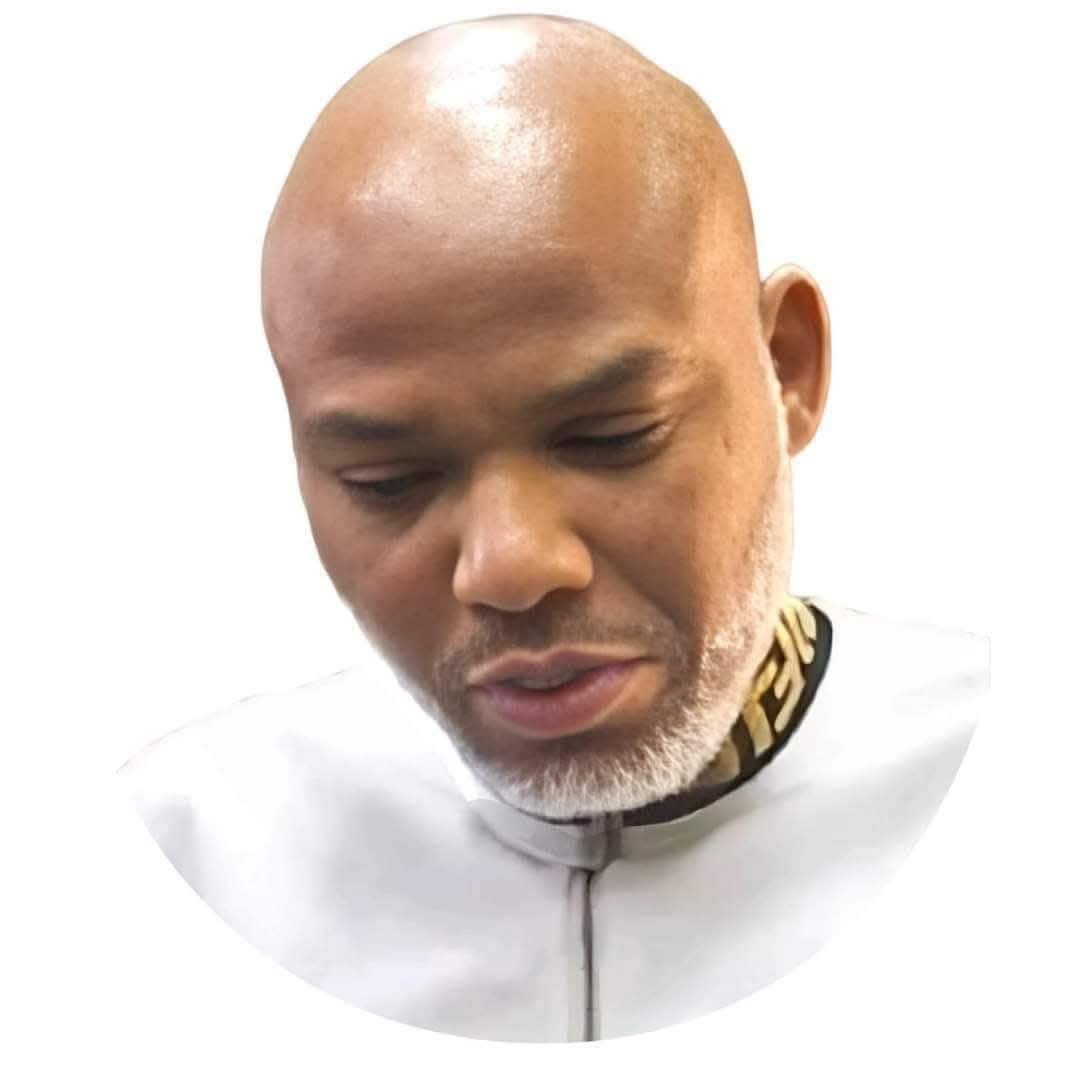
BREAKING: Court dashes police attempt to stop ‘FreeNnamdiKanuNow’ protest

The Federal High Court in Abuja has rejected an attempt by the Nigeria Police Force to stop the planned “Free Nnamdi Kanu Now” protest, allowing it to proceed as scheduled on Monday, October 20, 2025.
The Inspector General of Police, Kayode Egbetokun, had filed an ex parte motion through police lawyers, seeking to prevent the protest organized by activist Omoyele Sowore near the Aso Rock Villa.
Justice Umar declined to grant the motion, which would have immediately halted the demonstration without hearing Sowore’s side.
Instead, the judge directed the police to formally serve notice of their application on Sowore and adjourned the case to Tuesday for a proper hearing.

While reacting to the decision, Sowore hailed it as a victory for civil liberties. In a statement on his X handle, he said, “IG of Police Kayode Egbetokun dispatched police lawyers to sue me, in an effort to halt the #FreeNnamdiKanuNow protest scheduled for Aso Rock Villa on Monday.
However, Justice Umar refused to grant the ex parte motion, instructing them to serve me notice and adjourning the case until Tuesday.”
The protest, organized to demand the release of Nnamdi Kanu, leader of the proscribed Indigenous People of Biafra (IPOB), is expected to proceed as planned, with Sowore assuring that it will be peaceful and lawful.
The adjourned hearing on Tuesday will address the legality of the demonstration.

Former U.S. President Donald Trump claimed on Monday that he has dismantled the Department of Education.
Diaspora Digital Media (DDM) notes that the announcement came during American Education Week, an annual event highlighting public education in the United States.
Trump stated that he has handed control of educational matters to individual states, arguing that they are best positioned to serve students’ needs.
He said the move was intended to empower students and families while prioritizing choice and innovation in schools.
The president described the decision as a step toward building an education system that prepares children to lead, secures a stronger future, and fosters moral and intellectual development.
Trump’s executive order to dismantle the department was issued earlier this year, but the agency remains operational, albeit with fewer staff.
U.S. Secretary of Education Linda McMahon confirmed that while the department continues to enforce civil rights laws and promote practical degree programs, the agency is gradually reducing its operations.
The announcement drew immediate criticism from the National Education Association (NEA), the country’s largest teachers’ union and a founding organizer of American Education Week.
NEA President Becky Pringle said the plan is like a “wrecking ball” aimed at public schools and students’ futures.
Pringle warned that Trump’s actions could increase class sizes, cut job training programs, raise higher education costs, and reduce support for students with disabilities.
She added that civil rights protections for students might also be undermined if the department is fully dismantled.
Trump argued that the department had allowed schools to become “laboratories” for ideologies he opposed and that removing its influence would restore common sense to classrooms.
He claimed the initiative returns authority to parents and promotes a generation of thinkers, builders, and leaders prepared to advance the nation.
The former president further described his plan as a pathway to America’s “Golden Age,” emphasizing culture, education, and national strength.
Analysts note that the claim of dismantling the department is largely symbolic, as the federal education bureaucracy continues to function.
Critics argue that reducing the department’s authority could create disparities in educational quality across states.
Supporters, however, praise the shift as giving local communities more control over school curricula and priorities.
The debate underscores broader tensions in U.S. education policy, balancing federal oversight, state control, and the rights of students and parents.
The controversy over Trump’s education reforms is expected to continue, especially as debates about curriculum content, funding, and school choice intensify nationwide.
The Academic Staff Union of Universities (ASUU) has announced plans to shut down all public universities in Nigeria starting this Friday.
DDM gathered that the union’s decision is intended to pressure the Federal Government into meeting long-standing demands, including fair salaries and improved working conditions for academic staff.
The announcement was made via ASUU’s official X account on Tuesday.
The union warned that all universities will remain closed indefinitely until its demands are fully addressed.
ASUU’s leadership cited the ongoing exodus of lecturers from Nigerian universities as a major concern.
They argued that without adequate remuneration and enhanced work conditions, the brain drain will continue to weaken the quality of education nationwide.
The union specifically rejected the Federal Government’s latest salary offer of 35 percent.
The offer had been made as part of ongoing negotiations between ASUU and government officials to resolve the recurring disputes affecting the higher education sector.
In October, ASUU temporarily suspended a two-week warning strike to allow for renegotiation of the 2009 FGN/ASUU Agreement.
The agreement governs lecturer salaries, research funding, and other benefits critical to university operations.
Despite this temporary reprieve, union leaders said the government had failed to implement meaningful changes.
Analysts warn that a full-scale strike could disrupt academic calendars, delay graduations, and negatively impact thousands of students across the country.
The National Universities Commission (NUC) has not yet released an official statement regarding the strike or possible contingency plans.
Parents and student groups have expressed frustration over the recurrent interruptions in academic schedules caused by ASUU strikes.
Education experts note that Nigeria has experienced frequent university closures due to labor disputes since the 1990s, resulting in prolonged delays for graduates entering the workforce.
The Federal Government is under pressure to find a lasting solution to the dispute, with stakeholders calling for immediate dialogue and enforcement of previous agreements.
Observers say the strike highlights broader challenges in the Nigerian education sector, including underfunding, poor infrastructure, and low morale among academic staff.
Many fear that without swift government action, the strike could escalate, affecting research output and Nigeria’s position in global academic rankings.
ASUU has urged lecturers to prepare for nationwide shutdown procedures beginning Friday if satisfactory negotiations are not concluded.
Students, parents, and educational institutions now await the government’s response as tensions rise over the future of Nigerian universities.
News
APC Halts Taraba Governor’s Defection Event Amid National Outrage Over Kebbi School Attack
DDM News
The All Progressives Congress (APC) has suspended its planned defection ceremony for Taraba State Governor Agbu Kefas, citing the deadly wave of terrorist assaults that have shaken the nation.
DDM gathered that the party’s decision followed public grief and rising national tension after gunmen killed residents and abducted students during a violent raid on a secondary school in Kebbi State.
The defection event was originally scheduled for Wednesday in Abuja.
The APC said it could not proceed with a celebratory political gathering while the country was in mourning.
The party added that it reached the decision out of respect for soldiers, police officers, and civilians who lost their lives in recent attacks across northern Nigeria.
The latest incident in Kebbi State involved heavily armed terrorists who invaded Government Girls Comprehensive Secondary School in the Maga community of Danko-Wasagu Local Government Area.
At least twenty-five female students were abducted, sparking nationwide outrage and renewed calls for security reforms.
One student escaped late Monday night, according to the principal, and has since reunited with her family.
Felix Morka, National Publicity Secretary of the APC, announced the suspension in a statement on Tuesday.
Morka praised the courage of Nigeria’s armed forces and emphasised that the APC stands in solidarity with grieving families.
He stated that the party honours the sacrifices of security operatives who confront terrorists daily under harsh and dangerous conditions.
He added that the APC “deeply commiserates” with families affected by the attacks.
He also offered prayers for the safe rescue of the abducted Kebbi schoolgirls.
Security analysts say the party’s decision reflects growing political sensitivity around worsening insecurity, especially as the 2027 election cycle approaches.
The APC has faced criticism over Nigeria’s deteriorating safety situation, with several regions experiencing recurrent banditry, mass abductions and rural terror assaults.
The administration of President Bola Ahmed Tinubu has repeatedly pledged to end insurgency, banditry, and kidnapping.
The presidency maintains that ongoing military operations, including intelligence-driven missions across the northwest, are steadily expanding.
However, citizens and advocacy groups argue that government reactions often come after tragic losses rather than through sustained preventive action.
Political observers say this latest suspension shows how national insecurity is reshaping political activities and public expectations.
Many note that the symbolism of halting the defection event sends a message that political celebrations cannot exist in isolation from citizens’ suffering.
As rescue operations continue in Kebbi, pressure is mounting on security agencies to locate the abducted girls and prevent another prolonged school-kidnap saga like Chibok and Dapchi.
The APC has not announced a new date for the governor’s defection ceremony.
The party insists its focus remains on national stability and the protection of Nigerian lives.
The country continues to await updates from the military as search-and-rescue efforts intensify across remote forests and border corridors.
-
News1 day agoBREAKING: ISWAP executes Nigerian Brigade Commander
-
News6 days agoBREAKING: President Tinubu Snubs Wike, Backs Lieutenant Yerima, Military
DDM News
-
News1 day agoPHOTO: Nigerian Brigade Commander executed by ISWAP has been identified as Brigadier General Uba
-
World News4 days agoBREAKING: Multiple explosions hit oil installations in Bakassi Peninsula as group calls for Kanu release
-
News4 days agoObiano’s Camp Debunks Death Rumour, Warns Against Fake News
-
News3 days agoBREAKING: PDP expels Wike, Fayose, Anyanwu
-
News3 days agoBrigadier General reappears after ISWAP ambush
-
World News7 hours agoBREAKING: 7 killed as militants calling for Kanu’s release bomb security checkpoint
-
News4 days agoISWAP ambushes military convoy, reportedly abducts Brigade Commander
-
News4 days agoTENSION IN UNIUYO: VC PROF. NDAEYO NOMINATES JUNIOR PROFESSORS TO SCREEN SENIOR COLLEAGUES
- ALLEGED PLOT FOR VIOLENCE IF “LAST-MINUTE GAME” FAILS

