


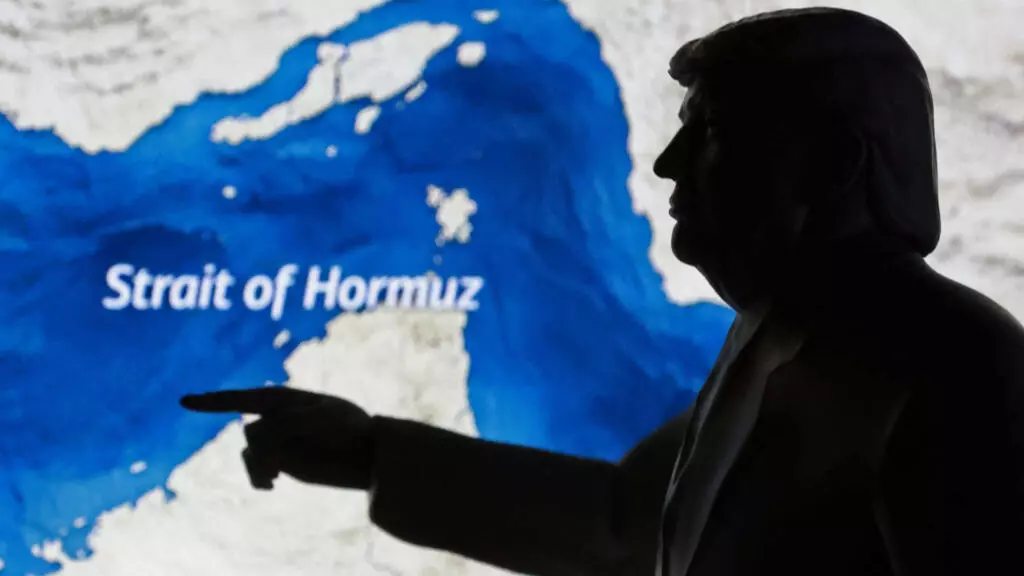
Talks between the United States and Iran have fallen apart after marathon negotiations, with President Donald Trump announcing that the U.S. Navy will immediately begin blocking the Strait of Hormuz.
The move comes after weeks of rising tension and a fragile ceasefire that now looks increasingly uncertain.
In a post on Truth Social, Trump said the Navy would stop and inspect ships entering or leaving the strategic waterway. He also claimed the U.S. would intercept vessels that had paid fees to Iran and begin clearing mines he says were placed in the strait.
The Strait of Hormuz is a critical global shipping route, carrying around 20% of the world’s oil supply, and any disruption there is likely to ripple through global energy markets.

“Effective immediately, the United States Navy… will begin the process of BLOCKADING any and all Ships trying to enter, or leave, the Strait of Hormuz,” Trump wrote.
He also warned that any Iranian forces attacking U.S. or commercial vessels would face severe retaliation.
Vice President JD Vance, who led the U.S. delegation in Islamabad, said the talks collapsed because Iran refused to accept key American demands, especially those related to its nuclear programme. He said the U.S. had been clear about its “red lines” throughout the discussions.
On the Iranian side, Parliamentary Speaker Mohammad Baqer Qalibaf blamed Washington for the failure, saying Iran had offered several proposals but could not get the U.S. to build trust in return. He said Tehran would now wait to see whether the U.S. is willing to earn that trust.
The negotiations were the first direct high-level talks between the two countries in over a decade, and the most significant since the 1979 Islamic Revolution. While officials say there was some progress, major disagreements remained over Iran’s nuclear ambitions and control of the Strait of Hormuz.
Iran had reportedly pushed for wider demands during the talks, including regional ceasefires, reparations, control over the strait, and access to frozen assets abroad. It also wants to collect transit fees in the waterway.
Even after the talks broke down, reports indicated that a few oil tankers still passed through the strait during the ceasefire period, though many others remain stuck in the Gulf awaiting clearance.
Trump has maintained that Iran will not be allowed to control or profit from the waterway, insisting the U.S. will secure free passage for global shipping.
With both sides holding firm, tensions around the Strait of Hormuz are once again escalating, raising fears over the security of one of the world’s most important shipping routes.




