


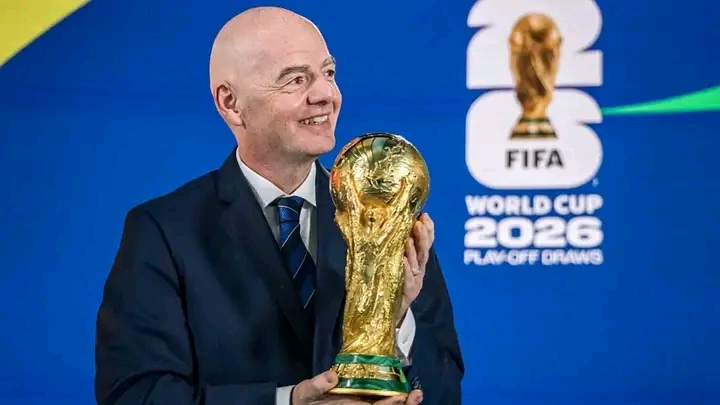
Football Association chairwoman Debbie Hewitt has called on FIFA president Gianni Infantino to release documents and communications relating to the governing body’s abandoned plan to sell stakes in the commercial operation of the World Cup.
Hewitt, who is also a FIFA vice-president and member of the FIFA Council, made the request in a letter sent to Infantino and FIFA Secretary General Mattias Grafstrom this week.
She wants FIFA Council members to receive full information about the proposal before the council’s next meeting on October 15.

The request comes weeks after FIFA withdrew the controversial plan following strong opposition from several football governing bodies, particularly in Europe. The proposal, known as FIFA Forward Enterprise, involved bringing private investment into a commercial entity connected to the World Cup.
The plan became public in July after reports revealed that FIFA had been considering selling stakes in the commercial operation of its flagship tournament. The proposal was met with criticism because FIFA’s national associations and some members of its own governing structures said they had not been adequately consulted.
According to The Times, Hewitt’s letter calls for the release of all relevant documents and communications concerning the proposed scheme. She has also requested an independent review of how the proposal was developed and presented.
The FA chair’s intervention adds to the scrutiny facing Infantino and FIFA following the collapse of the plan.
Infantino withdrew the proposal in early August after UEFA and other football organisations raised concerns over the process and the potential implications of allowing private investors to acquire interests connected to the World Cup.
Following the withdrawal, FIFA’s management board reaffirmed its support for Infantino after crisis talks in Morocco. Infantino also apologised for what he described as errors surrounding the proposal.
The English FA had previously supported Infantino’s bid for another term as FIFA president but withdrew that backing following the controversy surrounding the World Cup proposal.
The issue has since developed into a broader debate about transparency, consultation and governance within world football.
UEFA has maintained its opposition to the way the proposal was handled, while several European football associations have also expressed concerns about FIFA’s approach.
The Scottish FA, for example, subsequently withdrew its support for Infantino’s re-election, citing concerns about governance and transparency.
Hewitt’s latest request also covers another controversial FIFA decision involving United States forward Folarin Balogun.
The FA chair has asked FIFA to release documents and communications relating to the decision to suspend Balogun’s World Cup ban after he was sent off during the tournament.
The suspension of the ban allowed Balogun to feature in the United States’ round-of-16 match against Belgium, which the Americans eventually lost 4-1.
The decision has attracted questions from other football officials, including Belgian FA president Pascale Van Damme, who said her federation’s requests for clarification had remained unanswered.
Hewitt has therefore asked for information about both cases as part of a wider call for greater transparency within FIFA.
The Times reported that the FA chair’s letter also raises concerns about FIFA’s governance culture and the lack of communication with FIFA Council members since Infantino withdrew the World Cup investment proposal.
The request comes at an important time for international football administration, with FIFA preparing for further discussions involving its council and member associations.
The abandoned World Cup commercialisation plan had proposed generating additional investment through private participation. Supporters of increased commercial investment had argued that additional revenue could potentially provide more resources for football development, while opponents questioned the process and the implications for the governance of the World Cup.
The proposal was ultimately withdrawn after widespread criticism.
FIFA has not publicly responded to Hewitt’s latest request at the time of reporting.
The FA’s intervention means pressure for greater disclosure has now moved beyond national associations and into FIFA’s own governing structures, with a member of the FIFA Council formally requesting access to the relevant documents.
Hewitt is also a significant figure within the international football administration because she combines her role as FA chairwoman with her position as a FIFA vice-president.
The English FA’s position could also have wider implications for the relationship between FIFA and European football bodies as discussions over governance and future World Cup commercial arrangements continue.
For now, the immediate issue is whether FIFA will provide the requested documents and agree to an independent review of the abandoned investment plan.
The next FIFA Council meeting on October 15 is expected to provide an opportunity for council members to examine the matter further and seek answers about how the proposal was developed, who was involved and why member associations were not consulted earlier.
The controversy surrounding the World Cup plan has therefore shifted from the proposal itself to questions about transparency, decision-making and accountability within FIFA.




