


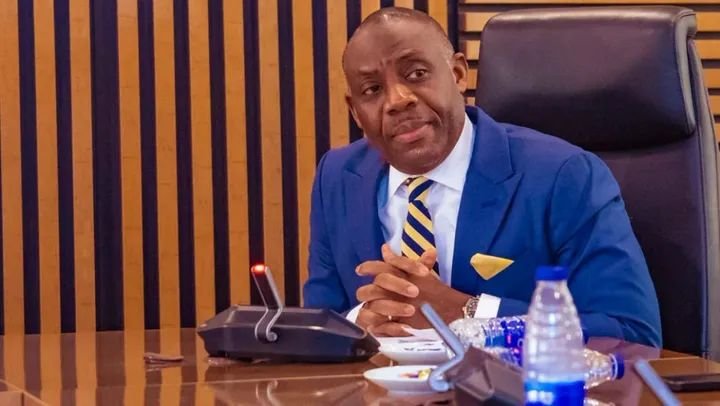
ABUJA, Nigeria — The Federal Government has announced plans to abolish the Junior Secondary School (JSS) and Senior Secondary School (SSS) structure, replacing it with a compulsory 12-year uninterrupted basic education model that will eliminate the examination barrier between junior and senior secondary levels, according to the Minister of Education, Dr. Tunji Alausa.
The proposal, which will be presented at the next meeting of the National Council on Education for approval, effectively replaces the 6-3-3-4 education system that Nigeria has operated since 1982 with a continuous 12-year basic education framework designed to guarantee uninterrupted learning from primary school through secondary education.
At the inauguration of the Universal Basic Education Commission (UBEC) Ministerial Implementation and Monitoring Committee in Abuja on June 30, Alausa explained that the decision was driven by evidence showing that the existing 6-3-3-4 policy had worsened access to education across the country. Out of approximately 24 million children enrolled in primary schools, only about four million complete senior secondary school, representing a staggering dropout rate of 20 million students between primary and secondary levels.
The reform mirrors the education model first implemented in Osun State in 2012 under the administration of former Governor Rauf Aregbesola, which reorganized schools into elementary, middle, and high schools corresponding to Grades 1-4, Grades 5-9, and Grades 10-12 respectively. The Osun model, which included the deployment of the Opon Imo digital learning device, aimed to reduce administrative bottlenecks and improve continuity in learning.

While the government has emphasized that the proposal is still subject to consultation and deliberation, education experts and stakeholders have raised significant concerns about the feasibility of the reform given Nigeria’s existing education challenges. Education advocate Similoluwa Adekoye warned that changing the school structure alone would not solve the country’s education crisis, pointing to poverty, insecurity, teacher shortages, and poor school infrastructure as fundamental barriers that must be addressed simultaneously.
The minister recently disclosed that about three in every four Nigerian children cannot read and understand an age-appropriate text by age 10, underscoring the scale of the challenge. The World Bank, in a 2024 assessment, reported that 72.6 per cent of Nigerian children aged 7-14 cannot read and understand a simple text.
President Bola Tinubu’s administration has been pursuing an ambitious reform agenda in the education sector, including the approval of a new curriculum that streamlines subject offerings and emphasizes practical skills development. The government has also inaugurated committees to fast-track the implementation of Smart Schools and Bilingual Schools designed to prepare Nigerian children for the digital economy and promote linguistic inclusion.
The National Council on Education, which is the highest policy-making body in Nigeria’s education sector, is expected to deliberate on the proposal at its next meeting, with implementation likely to involve extensive stakeholder consultations across the country.




