
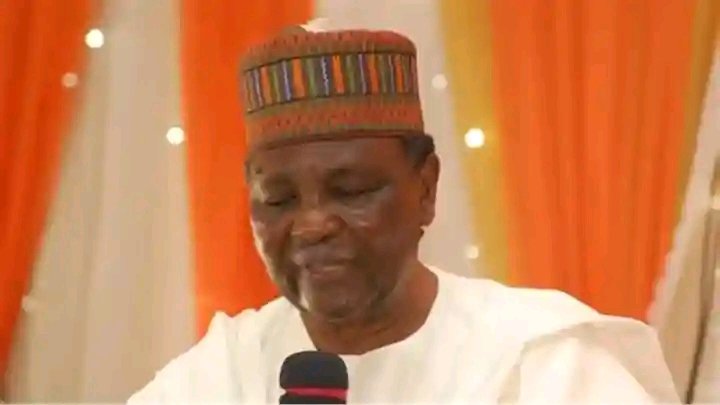
A remarkable historical account has brought renewed attention to the quiet influence of Mrs Akintola Williams, wife of Nigeria’s pioneering chartered accountant Chief Akintola Williams, in helping shape the early public life of Victoria Gowon during her years as Nigeria’s First Lady.
The account, drawn from recollections of Nigeria’s elite social circles in the post independence era, highlights how informal mentorship and close relationships among influential families played a significant role in guiding young women who suddenly found themselves in national spotlight.
Victoria Gowon, born Victoria Hansatu Zakari, became First Lady after her marriage to General Yakubu Gowon, who served as Nigeria’s Head of State during one of the most critical periods in the nation’s history. Her transition into the role came at a young age and during a politically sensitive time marked by the Nigerian Civil War and its aftermath. As a result, she was thrust into a position that carried both national attention and significant social expectations, despite the role of First Lady not being formally defined at the time.
Within this context, Mrs Akintola Williams is said to have played a supportive and guiding role, offering advice that helped Victoria Gowon adapt to the pressures of public life. Her influence was not political or official, but rather rooted in social mentorship, etiquette guidance, and the sharing of experiences that were common among women in elite Lagos society during the 1960s and early 1970s.
At the time, Chief Akintola Williams had already established himself as a leading figure in Nigeria’s professional class and is widely regarded as the country’s first chartered accountant. His household was part of a network of prominent families whose homes often served as informal meeting points for professionals, diplomats, and political figures. Within these circles, wives of influential men often formed close bonds and exchanged guidance on how to manage public expectations and social responsibilities.
According to historical reflections, Mrs Williams helped Victoria Gowon understand the expectations that came with being associated with the highest office in the country. This included how to present herself in public engagements, how to navigate formal gatherings, and how to maintain composure in a highly visible national role. These lessons were particularly important at a time when Nigeria was still defining its identity as a newly independent nation.
Victoria Gowon herself, trained as a nurse before her marriage, was known for her calm and reserved personality. Throughout her time as First Lady from 1969 to 1975, she maintained a dignified and low profile presence. She accompanied her husband on official duties and participated in select national events, reflecting the modest and symbolic nature of the First Lady role during military rule in Nigeria.
Observers of Nigeria’s political history note that First Ladies of that era were not given formal institutional responsibilities as seen in later administrations. Instead, they often served as supportive figures whose influence was largely ceremonial and social. In such a setting, guidance from experienced members of elite society played an important role in helping them adjust to public expectations.
The reported mentorship from Mrs Akintola Williams is therefore seen as part of a broader cultural practice in which senior women within influential families supported younger women entering public life. These relationships were built on trust, shared experiences, and a sense of responsibility to maintain dignity and decorum within Nigeria’s emerging leadership class.
Historians also point out that Lagos during the post independence period was a hub of social and political interaction, where professional elites, government officials, and their families frequently mingled. These interactions created informal networks that shaped social behaviour, public presentation, and even aspects of leadership culture in subtle but lasting ways.
Victoria Gowon’s time as First Lady coincided with a defining era in Nigeria’s national development, including the conclusion of the civil war and the country’s efforts toward reconciliation and rebuilding. Her quiet and composed presence was often viewed as reflective of the stability and restraint expected in the office during that period.
Today, this historical account serves as a reminder of the unseen roles played by influential women in shaping Nigeria’s leadership history. While official records often focus on political figures and major decisions, the social environment that supported those leaders also played a significant part in shaping public life.
The story of Mrs Akintola Williams and Victoria Gowon highlights how mentorship, culture, and elite social networks contributed to the development of early national figures, particularly women who stepped into prominent roles without formal preparation or institutional guidance.
As interest in Nigeria’s political history continues to grow, such reflections help provide a deeper understanding of how personal relationships and social structures influenced leadership styles in the country’s formative years.