


Iranian airlines have cancelled some international flights after the United States tightened sanctions on the country’s aviation industry as part of renewed efforts to put economic pressure on Tehran.
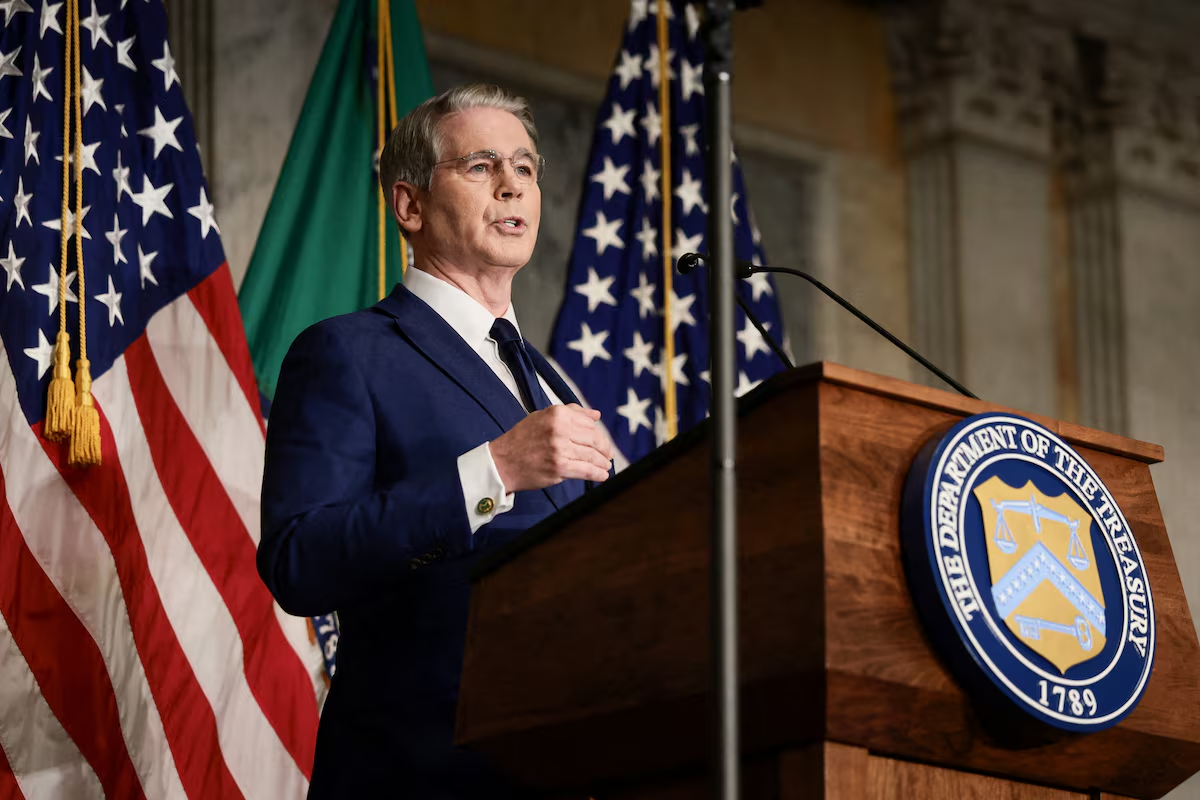
The cancellations came into effect on Wednesday, following new measures announced by US Treasury Secretary Scott Bessent on Monday.
A travel agent in Tehran told AFP that flights to Baghdad, Muscat, Qatar, Georgia and Azerbaijan had been suspended, although services to several other destinations, including China, remained available.
The new sanctions followed Bessent’s earlier threat to impose an “economic D-Day” on Iran, as Washington seeks to pressure Tehran after nearly seven months of war.

Iran’s aviation sector has been under US sanctions for years, but the extent of the latest measures remains unclear, particularly as other countries decide whether to comply.
Despite the sanctions taking effect, a Mahan Air flight from Tehran landed in Guangzhou, China, on Wednesday, according to FlightRadar24 tracking data.
China had on Tuesday opposed the US measures, describing them as illegal. A flight from Tehran to Shanghai was also scheduled to depart on Wednesday, according to Tehran’s international airport.
Some flights to Istanbul were still scheduled, although others had been cancelled, the travel agent said.
“The situation is unstable, and we are no longer selling tickets for the time being for fear of cancellations,” the agent said, requesting anonymity.
A Mahan Air flight from Kabul was also expected to arrive in Tehran around midday, while connections to Turkey and Armenia remained available through smaller Iranian airlines, including Varesh.
Flights to Najaf in Iraq and Dubai in the United Arab Emirates were also listed as scheduled.
Bessent had warned on Monday that Washington would “shut down” Iranian carriers and penalise companies and countries that continued doing business with them.
“If they land, you cannot provide them with fuel, you cannot provide them with landing services, you cannot sell them tickets, or you will be knocked out of the dollar system,” he told other countries.
The restrictions are expected to make international travel more difficult for Iranians seeking to leave or return to the country.
Pilgrims face disruption
Iranian media also reported flight cancellations, with the Tasnim news agency quoting a civil aviation spokesman as saying airports in Baghdad and Muscat “will no longer accept” Iranian flights.
However, Tasnim reported that other international routes, including Istanbul, would continue “as scheduled and as usual”.
Iranian aviation authorities were reportedly discussing plans to reroute flights to Baghdad through Najaf, a major destination for Iranian pilgrims.
In Iraq, the government had not publicly announced plans to enforce the US measures. However, several sources, including a senior government official, told AFP that Baghdad would comply.
The possible suspension of flights between Iran and Iraq has raised concerns among Iraqi travel agents, particularly in Najaf, which is home to one of the most revered Shia Muslim shrines.
Haidar Shamaa, a travel agent in Najaf, said most travel companies in the city depend on bookings for flights to Iranian airports.
Several travel agencies also reported receiving calls from worried customers seeking updates and considering land routes instead, although such journeys would take considerably longer.
The latest restrictions add another layer of uncertainty to Iran’s aviation sector, with the immediate impact depending partly on how widely other countries and aviation service providers enforce the US sanctions.




