


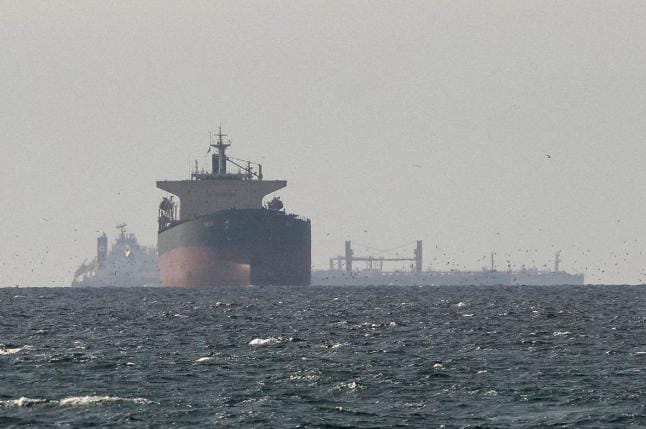
(DDM) – Twenty-two countries have signalled readiness to support efforts to secure and reopen the Strait of Hormuz, a crucial global oil shipping passage, as Iran faces escalating diplomatic isolation and pressure over its effective closure of the strategic waterway.
DDM confirms that in a joint statement issued this week, nations including the United Kingdom, France, Germany, Italy, the Netherlands, Japan, the United Arab Emirates, and South Korea condemned attacks on commercial vessels and actions that have disrupted maritime traffic through the strait.
The statement affirms their readiness to ensure safe passage for merchant ships and oil tankers after Iran’s recent actions prompted concerns about energy security and global trade.
The Strait of Hormuz, through which roughly one-fifth of the world’s oil supply transits, has become a flashpoint in a broader conflict involving Iran, the United States, and Israel.

Earlier this week, Iran’s Islamic Revolutionary Guards Corps declared that if the United States carried out its threat to target Iranian energy infrastructure, the strait could be completely closed, further heightening global tensions.
In response, U.S. President Donald Trump issued a 48-hour ultimatum demanding that Iran fully reopen the strait or face military action, including strikes against power plants, marking a sharp escalation in the standoff.
The international reaction to the crisis has been mixed. While 22 countries backed the statement to secure maritime routes, some Western allies have expressed reluctance to commit military assets to a coalition, with many emphasising diplomatic solutions once hostilities ease.
Governments that signed the declaration said ensuring the free flow of shipping through the strait is vital for economic stability, energy markets, and the global supply chain.
The situation follows a period in which Iran effectively restricted access to the strait in the context of the ongoing war, prompting a sharp rise in ship insurance costs and deterring many commercial vessels from traversing the passage.
The disruption to maritime routes has contributed to higher energy prices and economic uncertainty, as nations and industry stakeholders monitor developments closely.
Diplomatic efforts continue alongside military posturing, with officials from several countries calling for negotiations and a return to lawful, open passage for all commercial traffic.
The joint statement by the 22 countries represents one of the most unified international responses to the crisis to date, blending calls for security with a push toward de-escalation and coordination.
Global markets and policymakers will be watching closely as ongoing diplomatic and security developments in the Strait of Hormuz could have significant implications for energy supplies, geopolitical alliances, and international maritime law.




