


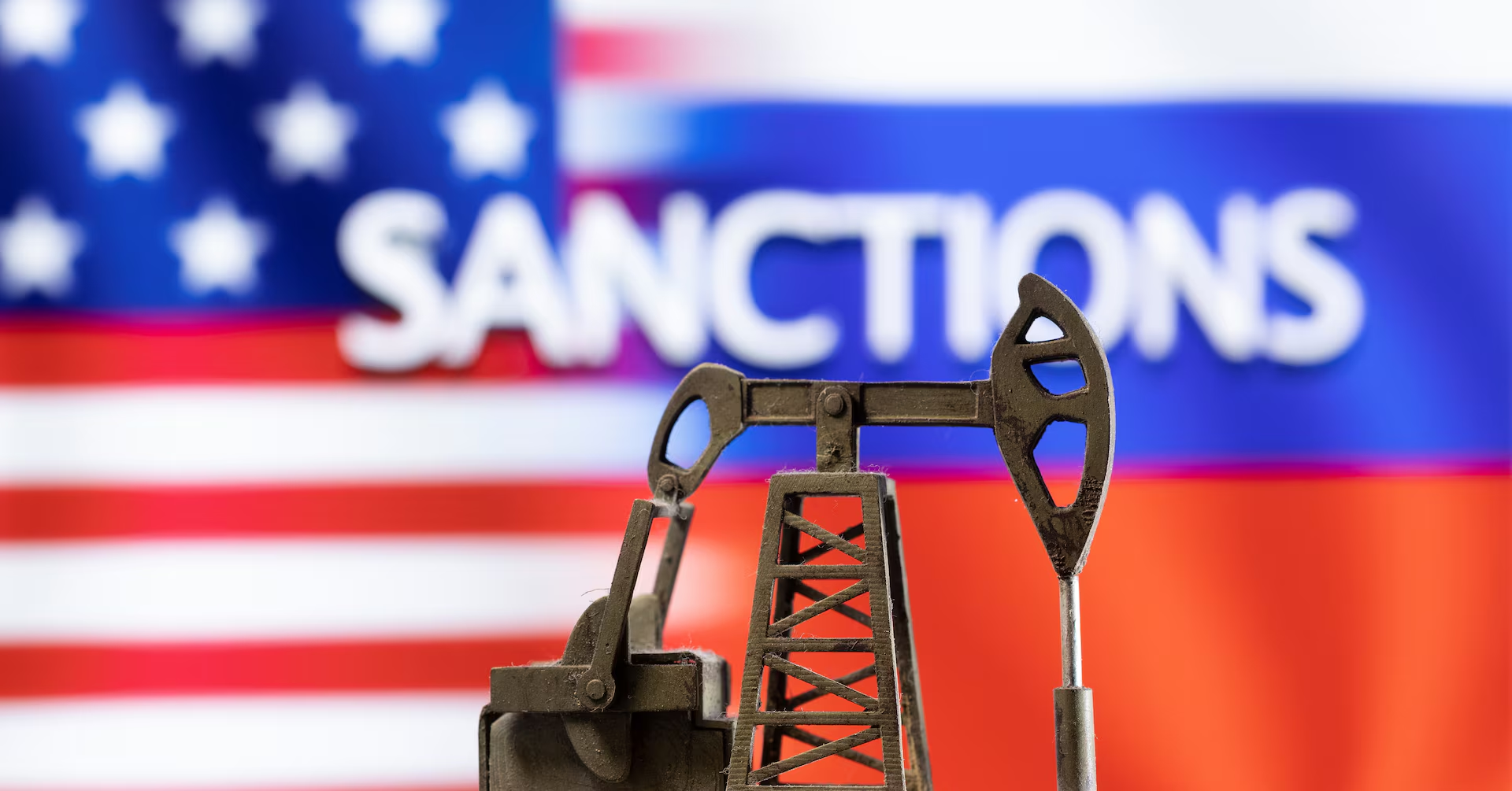
The United States has granted Iran a 60-day sanctions waiver following the first round of talks under a fragile peace framework, with President Donald Trump warning that Washington is prepared to act if Tehran fails to honour its commitments.
The waiver, which took effect on Monday, allows Iran to resume oil and petrochemical exports and receive payments for those sales until August 21, marking the first major economic concession since both sides signed an interim agreement last week.
Speaking after high-level negotiations in Switzerland, US Vice President JD Vance said the discussions had created a strong foundation for a broader and more permanent agreement.
“We laid a very good foundation for a successful final deal,” Vance told reporters.

The talks, held at the Swiss resort of Buergenstock and mediated by Qatar and Pakistan, produced a roadmap aimed at reaching a comprehensive agreement within 60 days.
As part of the understandings reached, negotiators established a mechanism to help end fighting between Israel and Hezbollah in Lebanon and opened a communication channel intended to prevent incidents in the Strait of Hormuz, a critical route for global oil shipments.
The US Treasury later announced the sanctions waiver, providing Tehran temporary relief from restrictions that have severely limited its oil exports.
Despite the diplomatic progress, Trump made it clear that the relief could be reversed if Iran fails to comply.
“If Iran doesn’t live up to their agreement, or if they’re not behaving, I will do what I have to do,” Trump said.
The president also said Iran would agree to weapons inspections aimed at ensuring what he described as “nuclear honesty.”
However, Tehran offered a different account of the negotiations.
Iranian Foreign Ministry spokesman Esmaeil Baghaei said nuclear issues were not discussed during the latest round of talks and denied that Iran had made any new commitments regarding its nuclear programme.
Iranian Foreign Minister Abbas Araqchi said the country secured several key concessions, including waivers on oil and petrochemical exports, the release of some frozen assets and the launch of a reconstruction and development programme.
Another point of disagreement emerged over how the released funds would be used.
Vance said a mechanism proposed by White House envoy Jared Kushner would place the funds under US and Qatari oversight, with the money largely directed toward purchases of American agricultural products such as corn, soybeans and wheat.
“So, the money that we lift is going to go to our farmers,” Trump said.
But Iran’s Central Bank Governor Abdolnaser Hemmati rejected that interpretation, insisting Tehran would not be restricted to buying only US agricultural goods and could use some of the funds for other non-sanctioned imports.
Meanwhile, signs of de-escalation continued to emerge across the region.
Officials reported a sustained lull in fighting between Israel and Hezbollah, while tanker traffic through the Strait of Hormuz began recovering after weeks of disruption triggered by the conflict.
Oil markets responded positively to the diplomatic breakthrough. Crude prices extended losses on Tuesday after falling three percent a day earlier, as traders anticipated a gradual return of Iranian oil supplies to global markets.
Technical negotiations are expected to continue throughout the week as both sides attempt to turn the preliminary understandings reached in Switzerland into a lasting agreement.




