


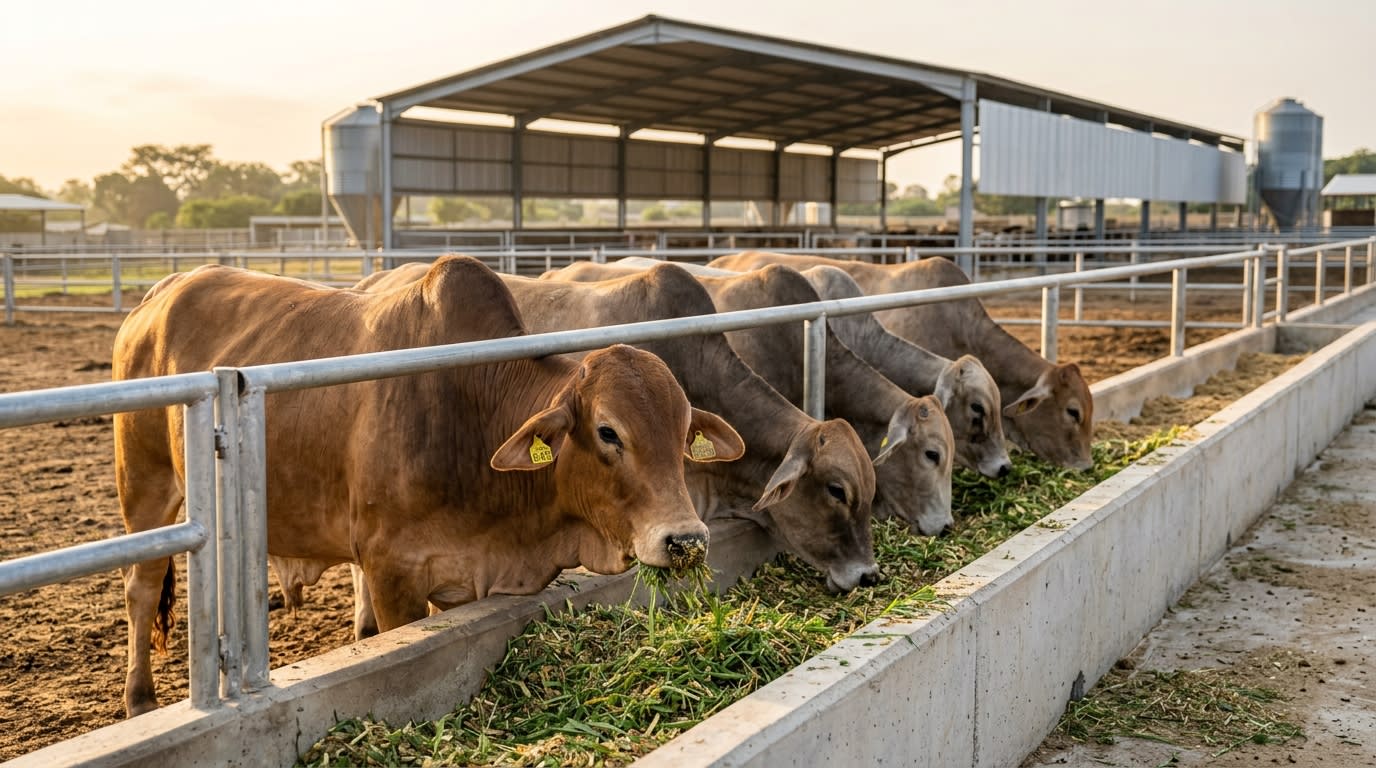
Nigeria’s livestock industry is becoming an increasingly important part of the country’s agricultural economy, creating opportunities for farmers, entrepreneurs, cooperatives and young Nigerians looking to build businesses around poultry, cattle, goats, sheep, pigs, fish and other animal-based enterprises. Yet while the opportunity is substantial, one of the biggest challenges facing livestock farmers remains access to affordable capital. Starting a livestock business requires money for animals, housing, feed, medication, labour, equipment, transportation and day-to-day operations, and many aspiring farmers simply do not have enough personal savings to finance the entire process.
This is where livestock loans can become important.
A livestock loan is essentially financing provided to farmers or agricultural businesses to establish, expand or maintain livestock production. Depending on the lender and programme, financing may be used to purchase animals, construct or improve farm structures, acquire feed and equipment, pay for veterinary services or support other approved agricultural activities. The exact terms vary widely, meaning farmers should understand the requirements before taking on debt.
For a first-time farmer, the idea of borrowing money to start a livestock business can be exciting, but it should also be approached carefully. A loan does not automatically make a farm profitable. In fact, borrowing without a realistic production plan can place a new farmer under considerable financial pressure. The strongest applications are usually built around a clear business model showing what will be produced, how much it will cost, who will buy the products and how the loan will be repaid.

One of the most important considerations is the type of livestock business being financed. Poultry, for example, can require substantial expenditure on chicks, feed, housing, vaccines, medication, water, electricity and labour. A broiler farmer may need financing for a production cycle lasting only a few weeks, while a cattle or goat farmer may have a much longer period before animals reach the desired market size. Dairy production, egg production and breeding operations also have different financial structures.
Consequently, there is no universal livestock loan that is suitable for every farmer.
A prospective borrower should first determine exactly how much capital is required. Instead of simply deciding to borrow ₦5 million or ₦10 million because that amount sounds sufficient, the farmer should prepare a detailed budget. The budget should cover livestock purchases, housing, feed, veterinary expenses, equipment, labour, transportation, utilities, security and contingency costs.
Feed deserves particular attention because it can represent one of the largest recurring expenses in livestock production. A farmer who calculates only the cost of purchasing animals and constructing a pen may underestimate the amount of money needed to keep the animals alive and productive until they generate revenue.
This is one reason lenders and agricultural financing programmes may request a business plan or production proposal. They want to understand whether the proposed operation is commercially viable and whether the borrower has considered the major risks.
The source of financing also matters. Nigerian farmers may encounter different types of agricultural financing through commercial banks, development-finance institutions, microfinance institutions, cooperatives, agricultural programmes and private financing arrangements. Some programmes may target specific categories of farmers, while others may focus on particular value chains, geographical areas, youth, women, cooperatives or small and medium-sized businesses.
Government-backed agricultural financing initiatives can sometimes provide more favourable terms than ordinary commercial borrowing, but farmers should never assume that every advertised programme is currently open, universally available or completely subsidised. Eligibility requirements, application windows, interest rates, collateral conditions and repayment structures can change.
A farmer should therefore verify the current terms directly with the relevant financial institution or programme administrator before paying anyone an application fee or committing to a loan.
Collateral is another issue that can discourage small farmers. Traditional bank loans may require assets or guarantees that many new farmers do not possess. However, some agricultural financing models may use alternative structures, including group guarantees, cooperative arrangements, asset-based lending or other forms of risk-sharing depending on the programme.
This is where cooperatives can become valuable. A group of farmers may be able to negotiate financing or access programmes that would be difficult for an individual farmer to obtain alone. Cooperatives can also help members purchase inputs in bulk, share knowledge, coordinate production and connect with buyers.
However, joining a cooperative simply to obtain a loan is not enough. Members should understand the organisation’s governance, financial records, obligations and repayment responsibilities before committing themselves.
Another major consideration is the repayment schedule.
Livestock businesses do not all generate income at the same speed. A poultry farmer selling broilers may receive revenue relatively quickly, while a cattle farmer may have to wait considerably longer before selling animals. If the loan requires monthly repayments but the farm’s income arrives only at specific points in the production cycle, the farmer could experience cash-flow problems even when the business is fundamentally viable.
A good livestock loan should therefore be matched to the farm’s production cycle as much as possible.
For example, a farmer should consider whether repayments begin before the animals are ready for sale, whether there is a grace period and whether interest continues to accumulate during that period. These details can make a significant difference to the actual cost of borrowing.
Farmers should also be cautious about informal lenders offering extremely fast loans. Easy access can sometimes come with very high interest rates, aggressive repayment conditions or hidden charges. Before accepting financing, the farmer should calculate the total amount that will eventually be repaid rather than focusing only on the amount received.
The same caution applies to online advertisements claiming to offer government agricultural grants or loans. Farmers should verify the identity of the organisation, its official application process and the legitimacy of its requirements. No serious farmer should transfer money to an unknown individual simply because they were promised access to a large government-backed agricultural fund.
Livestock insurance can also play an important role in responsible borrowing. Animals can be affected by disease outbreaks, extreme weather, theft, accidents and other risks. If a farmer borrows heavily to purchase livestock and subsequently loses a significant portion of the animals, repayment can become extremely difficult. Appropriate insurance or risk-management arrangements, where available and suitable, can therefore provide an additional layer of protection.
The quality of the farm itself can also influence the success of a loan. A farmer should not borrow money before understanding the fundamentals of the chosen livestock enterprise. Housing must be appropriate for the animals, clean water must be available, feeding must be planned and veterinary care must be accessible.
Record keeping is equally important. Farmers should record the number of animals purchased, mortality, feed consumption, medication, labour expenses, sales and other costs. Without records, it becomes difficult to determine whether the farm is genuinely profitable or simply generating cash without producing adequate returns.
For young Nigerians entering livestock farming, starting smaller can sometimes be wiser than borrowing a large amount immediately. A small operation can provide practical experience and reveal challenges that may not have appeared on paper. Once the farmer understands the production system and has developed reliable buyers, expansion can be financed with greater confidence.
The market should be considered before the loan application is submitted. A farmer should know who will purchase the animals or animal products. Poultry farmers may target households, restaurants, retailers and wholesalers. Goat and sheep farmers may serve traders, households, event caterers and festive-season markets. Dairy farmers may supply processors, retailers and consumers.
The stronger the relationship with buyers, the easier it can be to forecast revenue.
This is particularly important because livestock production is not simply about raising animals. It is a complete value chain involving feed suppliers, breeders, veterinarians, transporters, processors, wholesalers, retailers and final consumers. A farmer who understands this chain can identify additional opportunities and potentially reduce costs through better purchasing and marketing decisions.
DDM News reports that the growing demand for food in Nigeria is creating a strong economic argument for investment in livestock production, but access to finance must be accompanied by proper planning. Affordable credit can help farmers expand, purchase productive assets and increase output, but poorly structured borrowing can leave farmers struggling with repayments and rising operating costs.
The opportunity is therefore not simply to find a lender willing to provide money. The real objective is to find financing that matches the economics of the farm.
Before applying for a livestock loan, an aspiring farmer should know the species to be raised, production capacity, startup requirements, expected recurring expenses, projected sales, target customers, likely risks and repayment strategy. These details transform a loan request from a simple appeal for money into a credible business proposition.
Nigeria’s livestock economy has room for farmers who can produce consistently, maintain animal health, manage costs and develop dependable markets. Financing can accelerate that process, but it should be treated as a business tool rather than free money.
DDM News notes that the future of livestock entrepreneurship in Nigeria will depend not only on access to capital but also on the ability of farmers to use that capital efficiently. The most successful borrowers are likely to be those who combine financing with sound production practices, professional veterinary support, accurate financial records, market knowledge and disciplined repayment.
For anyone considering a livestock loan, the smartest first step is not walking into a bank and asking, “How much can I borrow?” It is calculating how much the farm genuinely needs, how quickly the business can generate revenue and how much it can comfortably repay. When those numbers make sense, livestock financing can become a powerful instrument for turning a small agricultural operation into a sustainable commercial enterprise.




