


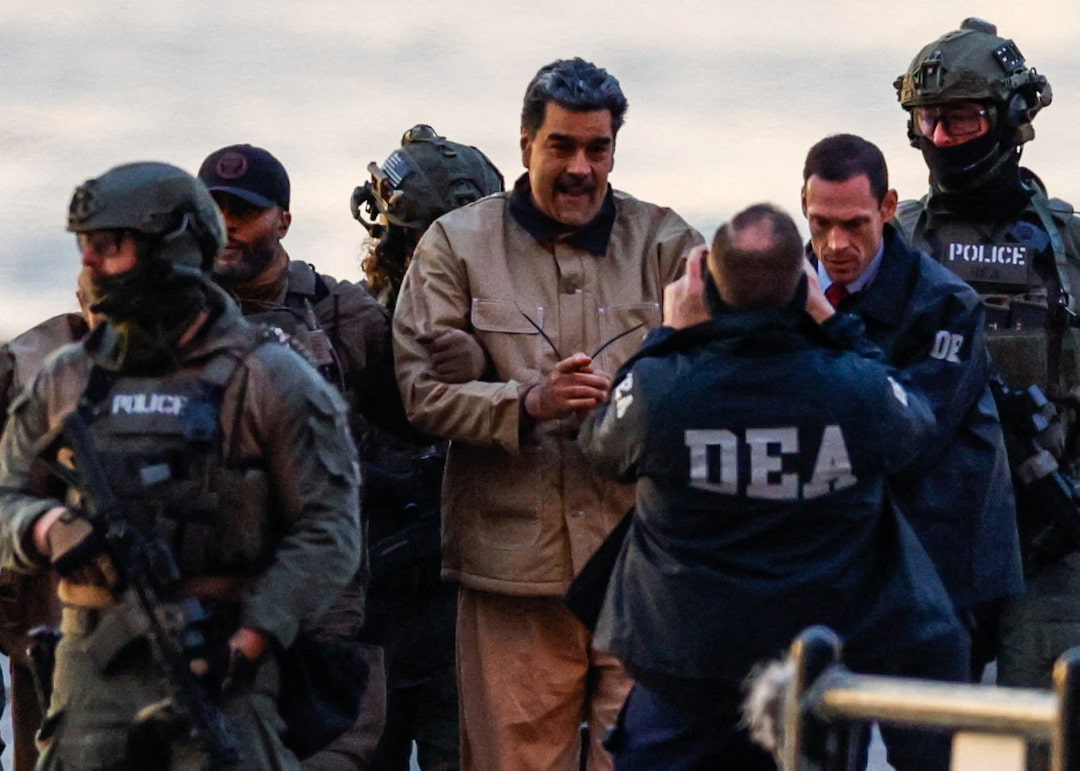
Former Venezuelan president Nicolás Maduro is set to appear again in a New York court following his shocking capture by U.S. forces earlier this year.
Diaspora Digital Media reported that Maduro, 63, was arrested alongside his wife, Cilia Flores, during a surprise overnight military operation in Caracas in January.
The raid, carried out by American commandos, removed him from power after more than a decade in leadership.
Maduro has pleaded not guilty to multiple charges, including alleged involvement in drug trafficking and weapons-related offences.

He insists he is a “prisoner of war” and is expected to challenge the case in court, with his legal team pushing for it to be dismissed.
One of the key issues likely to come up during the hearing is who will pay his legal fees. Venezuela’s government has offered to cover the costs, but U.S. sanctions have complicated the process.
Since his arrest, Maduro has been held at a federal detention centre in Brooklyn under tight restrictions.
Reports say he is being kept alone in a cell, with limited communication — only brief phone calls with family and lawyers. He reportedly spends much of his time reading the Bible.
Despite his situation, family members say he remains strong and defiant.
The operation that led to his capture was intense. Venezuelan officials say at least 83 people were killed and over 100 injured during the assault on the capital.
No U.S. troops were reported dead.
The move marked a major turning point in Venezuela’s politics, ending Maduro’s rule, which began in 2013.
Following his removal, Delcy Rodríguez stepped in to lead the country.
She now faces the challenge of stabilising an economy in crisis while responding to pressure from the United States. Some reforms have already been introduced, including releasing political prisoners and adjusting oil policies.
Security is expected to be high around the New York courthouse as Maduro appears before the judge.
The case is being handled by veteran judge Alvin Hellerstein, known for presiding over several major trials in the United States.
For now, the world is watching closely as the legal battle unfolds — a case that could have lasting implications for both Venezuela and U.S. foreign policy




