

Africa
Mali Imposes $10,000 Visa Bond on U.S. Citizens

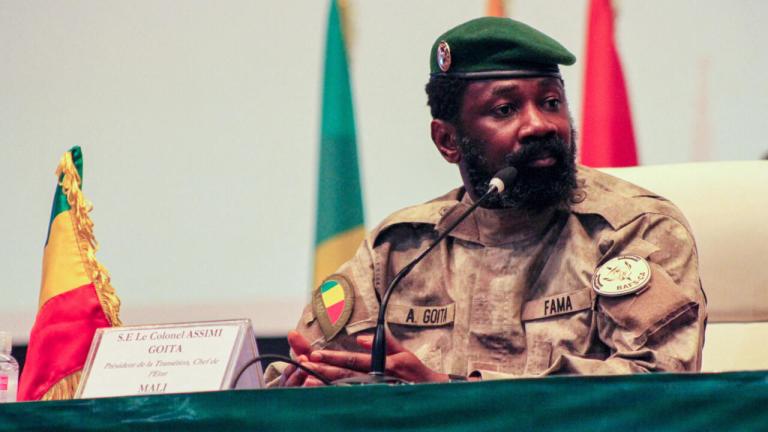
Mali has imposed a $10,000 visa bond on U.S. citizens entering the country for business or tourism, in a strong reciprocal response to Washington’s new travel policy targeting the West African nation.
The U.S. embassy in Mali announced on Friday that under a new pilot visa bond programme taking effect from October 23, American authorities will require bonds of up to $10,000 from Malian travelers applying for tourist or business visas.
The U.S. government said the bonds would be refunded upon compliance with visa terms and proper departure.
In a swift reaction, Mali’s foreign ministry condemned the U.S. action as a “unilateral decision”, claiming it violates a longstanding bilateral agreement between both nations on long-term, multiple-entry visas.

“The government of Mali deplores this unilateral decision by the United States,” the ministry said in a statement on Sunday.
“In accordance with the principle of reciprocity, Mali has decided to implement an identical visa programme, imposing the same requirements on U.S. citizens as those applied to Malian nationals.”
The decision means American visitors to Mali will now have to post a visa bond of up to $10,000 before being granted entry, matching the same conditions the U.S. government has set for Malian travelers.
According to U.S. State Department data from 2015 to 2024, fewer than 3,000 non-immigrant visas were issued annually to Malian nationals, while figures for Americans traveling to Mali were not immediately available.
The visa bond initiative, first introduced under the administration of U.S. President Donald Trump, was part of Washington’s efforts to curb visa overstays and tighten border enforcement.
The policy mandates travelers from certain countries to post refundable financial bonds as a guarantee they will leave the U.S. before their visas expire.
In August, similar bond measures were extended to Zambia and Malawi, with applicants required to post up to $15,000.
Zambia’s government had sharply criticized the move, describing it as an “unnecessary financial burden” on its citizens.
They also warn the decision could discourage business and tourism travel between the two countries.
The new visa policy underscores a broader diplomatic rift, as Mali continues to align more closely with Russia and China following strained relations with Western powers in recent years.

(DDM) – Former presidential aspirant His Excellency Peter Obi has outlined a blueprint for transforming Nigeria into a leader capable of lifting Africa from poverty to prosperity.
Diaspora Digital Media (DDM) gathered that Obi delivered a keynote reflection via Zoom from Madrid, Spain, during the Paul Alaje 2nd Colloquium held in Abuja, Nigeria, on Saturday, November 15, 2025.
Our correspondent notes that the keynote centred on the theme: “Breaking the Cycle: How Nigeria Can Lead Africa from Poverty to Prosperity,” highlighting the country’s immense human and natural potential.
Obi emphasized that while Nigeria is blessed with abundant resources and talent, human development challenges, governance gaps, and infrastructural deficits continue to hinder progress.
He proposed five pillars for national transformation, beginning with a shift from consumption-driven policies to a production-focused economy that prioritizes value creation and self-reliance.
The second pillar focuses on human capital development, advocating investments in education, skills acquisition, healthcare, and youth empowerment to strengthen Nigeria’s workforce.
Obi highlighted the third pillar as strengthening governance, calling for accountability, transparency, and ethical leadership across all levels of government to restore public trust.
Fostering innovation and technology forms the fourth pillar, with Obi urging Nigeria to leverage digital tools, research, and entrepreneurship to drive sustainable economic growth.
The fifth pillar stresses national unity, emphasizing that a cohesive, inclusive society is crucial for stability, social harmony, and effective policy implementation.
He further urged Nigerians to embrace discipline, accountability, and civic participation, arguing that meaningful reform requires active citizen engagement rather than reliance solely on government action.
Obi reiterated that breaking the cycle of poverty in Nigeria would have a multiplier effect across Africa, positioning the country as a model for development, progress, and continental leadership.
He concluded by expressing confidence that a renewed Nigeria is possible through collective effort, visionary leadership, and adherence to principles that prioritize citizens’ welfare.
Observers note that Obi’s keynote offers a comprehensive roadmap for sustainable development, highlighting the interconnection between economic policy, human development, governance, innovation, and social cohesion.
The colloquium provided a platform for dialogue among policymakers, academics, investors, and civil society actors to reflect on Nigeria’s challenges and chart actionable strategies for national transformation.
Obi’s reflections underscore the importance of strategic planning, citizen involvement, and ethical leadership in breaking systemic cycles of poverty and fostering a prosperous Nigeria capable of leading Africa forward.
Africa
Tanzania President Appoints Daughter, Son-in-Law as Ministers Amid Election Backlash
Tanzania’s President Samia Suluhu Hassan has appointed her daughter and son-in-law as ministers in her new cabinet, a move that has sparked fresh controversy after a violent and heavily disputed election.
In a nationwide broadcast on Monday, President Hassan announced 27 ministers and 29 deputy ministers.
Among them was her daughter, Wanu Hafidh Amei, who was named Deputy Minister of Education, Science, and Technology. Her husband, Mohamed Mchengerwa, was appointed Minister of Health.
The president also appointed Tanzania’s ambassador to China, Khamis Mussa Omar, as the new Minister of Finance.
Meanwhile, Adolf Mkenda retained his position as Minister of Education, Science, and Technology.
Seven former ministers were removed from the cabinet, but Anthony Mavunde and Mahmoud Thabit Kombo kept their portfolios as Minister of Mining and Minister of Foreign Affairs, respectively.
President Hassan’s re-election continues to face intense criticism following the October 29 polls, which were marred by violence, an internet shutdown, and a widespread crackdown on opposition supporters.
International bodies have condemned the election process.
The United Nations called for a full investigation into reported killings, alleging that security forces removed bodies to destroy evidence.
The opposition party CHADEMA, whose candidate Tundu Lissu was barred from running, claims about 700 people were killed during the election.
The party has refused to recognise Hassan as the legitimate president.
Election observer groups including the African Union, European Union, Southern African Development Community, and the diplomatic missions of the UK, Canada, and Norway denounced the polls as not credible.
They highlighted fatalities, the internet blackout, disqualification of opposition candidates, and violent repression of protesters.
Africa
32 Feared Dead as Bridge Collapses at DR Congo Mining Site
A deadly bridge collapse at a cobalt mine in southeast DR Congo has killed at least 32 miners. Authorities said the accident happened on Saturday at the Kalando mine in Lualaba Province.
The provincial interior minister, Roy Kaumba Mayonde, confirmed the death toll on Sunday.
He said rescuers had recovered 32 bodies and were still searching for more victims trapped in the flooded pit.
The bridge collapsed as wildcat miners rushed across a makeshift structure built over a water-filled trench. Heavy rain had soaked the mine, creating dangerous conditions.
Officials had already banned access to the area due to fears of a landslide, but thousands of miners reportedly forced their way in.
Local authorities said the Kalando site is about 42 kilometres from Kolwezi, the provincial capital.
DR Congo produces over 70 percent of the world’s cobalt, a mineral used in electric car batteries, mobile phones, and laptops.
The global demand for cobalt has fuelled massive illegal mining across the country, involving more than 200,000 people.
A report by SAEMAPE, a government agency that oversees small-scale mining, said the presence of soldiers near the site triggered panic among miners.
The agency said the mine has long been a flashpoint of disputes involving wildcat miners, a cooperative meant to organise operations, and legal operators linked to Chinese interests.
The report said the miners fell into the trench and “piled on top of each other,” causing multiple deaths and injuries.
Images shared by the National Human Rights Commission showed miners digging out bodies. At least 17 corpses were photographed lined up near the trench.
Arthur Kabulo, the CNDH provincial coordinator, told AFP that more than 10,000 wildcat miners work at Kalando. Authorities suspended all operations at the site on Sunday.
The tragedy again highlights the harsh realities of cobalt extraction in DR Congo. Years of allegations over child labour, corruption, and unsafe conditions have cast a dark shadow over the industry.
The country’s mineral wealth has also fuelled armed conflict in the east for more than three decades.
-
News1 day agoBREAKING: ISWAP executes Nigerian Brigade Commander
-
News6 days agoBREAKING: President Tinubu Snubs Wike, Backs Lieutenant Yerima, Military
DDM News
-
News1 day agoPHOTO: Nigerian Brigade Commander executed by ISWAP has been identified as Brigadier General Uba
-
World News4 days agoBREAKING: Multiple explosions hit oil installations in Bakassi Peninsula as group calls for Kanu release
-
News4 days agoObiano’s Camp Debunks Death Rumour, Warns Against Fake News
-
News3 days agoBREAKING: PDP expels Wike, Fayose, Anyanwu
-
News3 days agoBrigadier General reappears after ISWAP ambush
-
World News7 hours agoBREAKING: 7 killed as militants calling for Kanu’s release bomb security checkpoint
-
News4 days agoISWAP ambushes military convoy, reportedly abducts Brigade Commander
-
News4 days agoTENSION IN UNIUYO: VC PROF. NDAEYO NOMINATES JUNIOR PROFESSORS TO SCREEN SENIOR COLLEAGUES
- ALLEGED PLOT FOR VIOLENCE IF “LAST-MINUTE GAME” FAILS

