


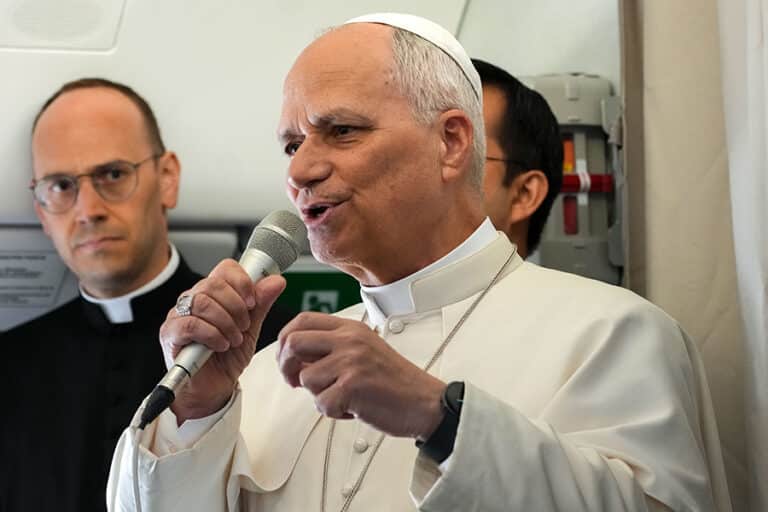
In a strong moral statement that has drawn global attention, Pope Leo XIV reaffirmed his stance against violence and capital punishment, emphasizing the sanctity of human life and the need for justice systems rooted in mercy rather than retribution.
Speaking firmly, the Pope said he rejects all forms of unjust action, including the taking of human life under any legal or institutional justification. His remarks also extended to capital punishment, which he described as incompatible with a consistent respect for human dignity.
The statement reflects a long-standing position within the Catholic Church’s modern teaching, which has increasingly moved toward opposing the death penalty outright. The Pope’s comments further reinforce the Church’s call for restorative justice focusing on rehabilitation, reconciliation, and the protection of life rather than irreversible punishment.
Observers note that the message comes at a time when global debates around criminal justice, human rights, and state-sanctioned executions continue to intensify. His words are being interpreted as both a moral appeal and a challenge to governments still applying capital punishment.

Faith leaders and human rights advocates have responded positively, praising the emphasis on compassion and the rejection of violence as a solution to crime. At the same time, some critics argue that the position raises complex questions about justice for severe crimes and the protection of society.
Nonetheless, the Pope’s message is clear: the value of human life is absolute, and justice should never be separated from mercy.




