


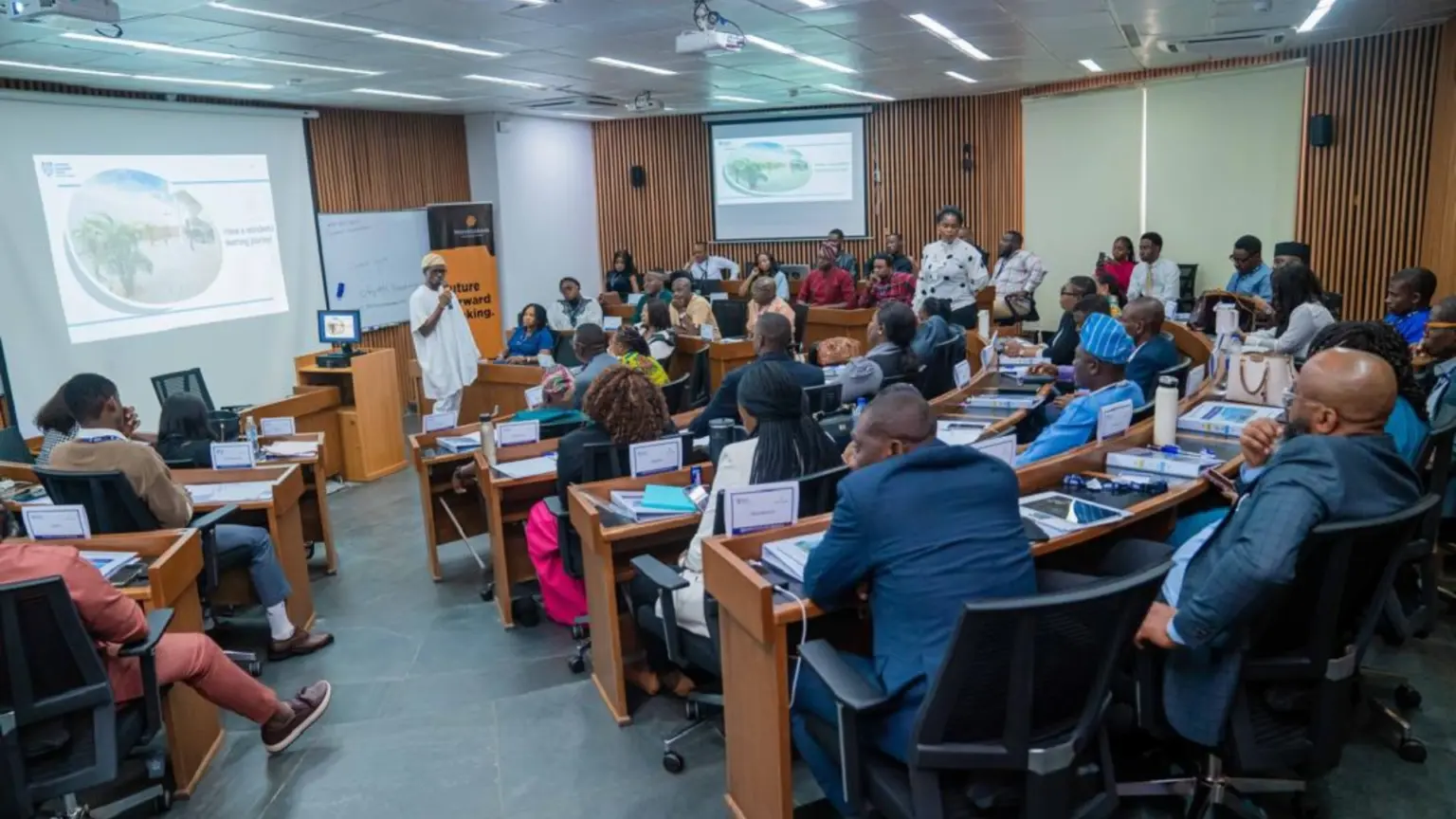
The Nigerian small and medium-sized enterprise (SME) sector is receiving renewed attention as financial institutions increasingly focus on providing the funding, support and financial solutions needed to help businesses survive, expand and contribute more meaningfully to the economy.
At the centre of this push are ProvidusBank and Unity Bank, which are deepening efforts aimed at building stronger and more resilient Nigerian businesses.
SMEs remain an important part of Nigeria’s economic structure, supporting employment, household incomes, local production and entrepreneurial activity across different sectors.
However, many businesses continue to face challenges ranging from limited access to affordable financing and inadequate infrastructure to weak business systems, cash-flow pressures and difficulties accessing larger markets.

The growing focus by banks on SMEs therefore reflects a broader recognition that strengthening smaller businesses can have a direct impact on economic growth.
Rather than simply providing conventional banking services, financial institutions are increasingly seeking ways to understand the realities of entrepreneurs and create products and partnerships that respond to those needs.
For ProvidusBank and Unity Bank, the push comes at a time when Nigerian businesses are operating in an increasingly demanding economic environment.
Rising operating costs, changing consumer behaviour and the need for businesses to adopt technology have made access to appropriate financial support more important than ever.
DDM News reports that the renewed attention on SMEs also highlights the changing relationship between Nigerian banks and the business community.
Entrepreneurs increasingly require more than loans. They need banking partners capable of supporting working capital requirements, facilitating payments, enabling digital transactions and providing financial guidance as their businesses grow.
The SME segment is particularly important because many businesses begin on a small scale but have the potential to become significant employers and contributors to local supply chains when they receive the right support.
However, access to finance remains one of the major obstacles preventing many enterprises from moving from survival mode to sustainable expansion.
Banks therefore have an important role to play in closing that gap.
By developing financing solutions suited to different business sizes and stages, financial institutions can help entrepreneurs purchase equipment, increase inventory, manage cash flow and take advantage of new opportunities.
ProvidusBank has continued to position business banking as an important part of its offering, with an emphasis on supporting entrepreneurs and growing businesses through financial products and digital banking solutions.
Its approach reflects the increasing importance of technology in making financial services more accessible and efficient for businesses.
Unity Bank, meanwhile, has maintained a strong focus on supporting businesses and entrepreneurs, particularly through initiatives designed to improve access to finance and strengthen the capacity of enterprises.
Its engagement with the SME community reflects the recognition that sustainable economic development requires stronger businesses operating across different parts of the country.
The emphasis on SMEs also extends beyond the banks themselves.
Nigeria’s wider financial ecosystem has increasingly encouraged financial institutions to provide greater support to smaller businesses, recognising their contribution to economic activity and employment.
For entrepreneurs, the availability of appropriate financial services can determine whether a promising business remains small or develops into a more structured enterprise.
Access to working capital, for instance, can help a business meet customer demand without experiencing disruptions caused by cash shortages. Similarly, digital payment solutions can make it easier for businesses to receive payments, manage transactions and keep better records.
The push to build stronger SMEs is therefore not simply about increasing lending.
It is also about improving the overall financial health and business capacity of Nigerian enterprises.
This distinction is important because excessive borrowing without adequate business planning can create additional pressure for entrepreneurs.
Sustainable SME financing must be accompanied by responsible financial management, proper record-keeping and a clear understanding of how borrowed funds will generate returns.
As Nigerian businesses become increasingly digital, banks also have an opportunity to help SMEs formalise their operations.
Digital banking tools can provide businesses with better visibility over transactions, simplify payments and improve financial management.
These capabilities can also help businesses establish clearer financial records, which may become useful when seeking additional financing.
The partnership between banks and SMEs could also support the development of local supply chains.
Stronger small businesses are better positioned to supply larger companies, participate in procurement opportunities and expand into new markets.
This creates a multiplier effect in which support for one business can generate opportunities for employees, suppliers, distributors and other businesses within the same ecosystem.
DDM News notes that the growing SME focus by ProvidusBank and Unity Bank comes at a critical period for Nigeria’s private sector.
As businesses continue to navigate economic pressures, the strength of financial partnerships will increasingly determine how well entrepreneurs can respond to changing market conditions.
The challenge, however, will be ensuring that support reaches businesses beyond major commercial centres.
Many small businesses operating in less-developed markets still struggle with limited access to formal financial services, inadequate business knowledge and difficulties meeting conventional lending requirements.
Expanding access while maintaining responsible lending standards will therefore remain important.
Banks will need to continue developing solutions that reflect the different realities of Nigerian businesses, rather than treating the SME sector as a single category.
For entrepreneurs, the message is equally clear: access to finance is only one part of building a sustainable enterprise.
Businesses that combine financing with sound management, innovation, proper accounting and effective customer engagement are more likely to convert financial support into long-term growth.
The renewed push by ProvidusBank and Unity Bank ultimately points to a wider shift within Nigeria’s banking industry.
SMEs are no longer being viewed simply as small customers; they are increasingly recognised as an important engine of private-sector growth and a major part of the country’s economic future.
If this relationship between financial institutions and entrepreneurs continues to deepen, stronger SMEs could emerge with the capacity to create more jobs, expand local production and compete more effectively in Nigeria’s increasingly competitive market.
For Nigeria, strengthening SMEs is not merely a banking objective. It is an economic necessity.
The success of initiatives by banks such as ProvidusBank and Unity Bank will ultimately be measured by how effectively they help businesses move beyond survival, build resilience and create sustainable value within the Nigerian economy.




