


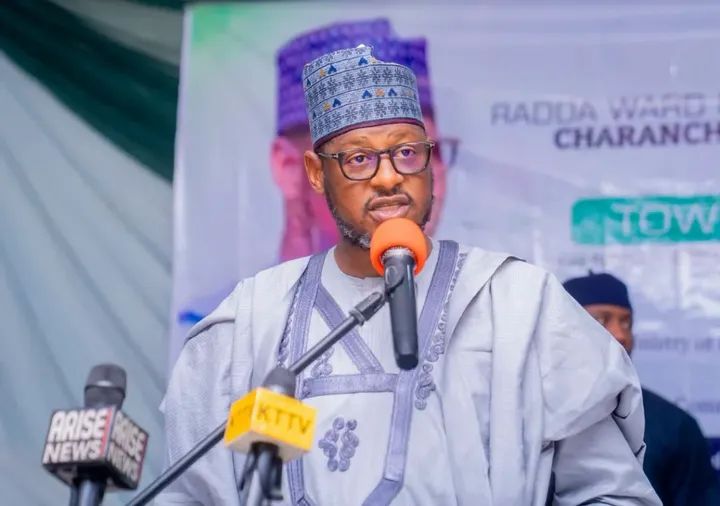
KATSINA, NIGERIA — Katsina State Governor Dikko Umaru Radda has showered praise on President Bola Tinubu’s economic reforms, crediting them with enabling states across the federation to execute critical infrastructure projects and meet salary obligations without resorting to borrowing.
The governor made the remarks during a recent engagement with stakeholders in Katsina, where he highlighted the tangible impact of the administration’s policy adjustments on subnational finances. According to Radda, the increased allocations from the Federation Account—a direct result of the president’s reforms—have provided states with the fiscal space to deliver on governance promises that were previously stalled due to funding constraints.
“These reforms are helping states deliver projects and pay salaries,” Radda said, his tone reflecting appreciation for the administration’s bold policy direction. He noted that the financial breathing room has allowed his administration to commit substantial resources to infrastructure development and social programmes that were previously shelved due to inadequate funding.

The governor’s comments come amid ongoing national debate over the effects of subsidy removal and other fiscal measures introduced by the Tinubu administration. While critics have pointed to the short-term pain of inflation and rising living costs, proponents like Radda argue that the long-term gains—including improved revenue sharing, enhanced collection efficiency, and reduced reliance on debt—are now becoming increasingly evident at the state level.
For Katsina State, the improved revenue position has facilitated the continuation of several key development projects, including road construction, healthcare facility upgrades, and educational infrastructure improvements. The governor also confirmed that the state government has been able to ensure that civil servants receive their wages promptly, a significant achievement given the economic headwinds facing many states.
“The difference is clear,” Radda explained. “Before these reforms, we were constantly struggling to balance our books. We had to borrow to pay salaries and delay projects indefinitely. Now, we can plan with greater certainty and execute projects that directly impact the lives of our people.”
Radda’s endorsement adds to a growing chorus of state executives who have acknowledged the positive fiscal impact of the reforms, even as they navigate the complex economic landscape. Several governors from different political affiliations have reportedly expressed similar sentiments privately, though some remain cautious about publicly endorsing the policies due to political considerations.
The Katsina governor also used the opportunity to call on his colleagues to ensure that the increased revenues are deployed transparently and efficiently. He emphasized that while the reforms have created opportunities, state governments must demonstrate accountability to maintain public trust and maximize the benefits for citizens. “The money is now available, but we must use it wisely. We cannot afford to waste these resources,” he stated.
President Tinubu’s reforms, which include the removal of fuel subsidies and the unification of exchange rates, have been controversial since their introduction. Critics argue that the policies have exacerbated hardship for ordinary Nigerians, while supporters maintain that they are necessary for long-term economic stability and growth. The debate is likely to intensify as the country approaches the 2027 general elections.
For now, Governor Radda’s remarks provide a boost for the administration’s narrative that its reforms are yielding dividends at the subnational level. His testimony adds weight to the argument that the policies are not merely abstract macroeconomic adjustments but are translating into tangible benefits for Nigerians, from improved roads to regular salary payments. As the 2027 election cycle gathers momentum, such endorsements could prove significant in shaping public perception of the administration’s performance.




