


The Federal Government says the removal of petrol subsidy and reforms in the foreign exchange market generated N15.8 trillion in additional resources for the Federation between June 2023 and December 2025.
The government said the gains from the reforms were reflected mainly in increased revenue collections and higher naira proceeds accruing to the Federation, rather than through a separate “subsidy savings” line in the Federation Account.
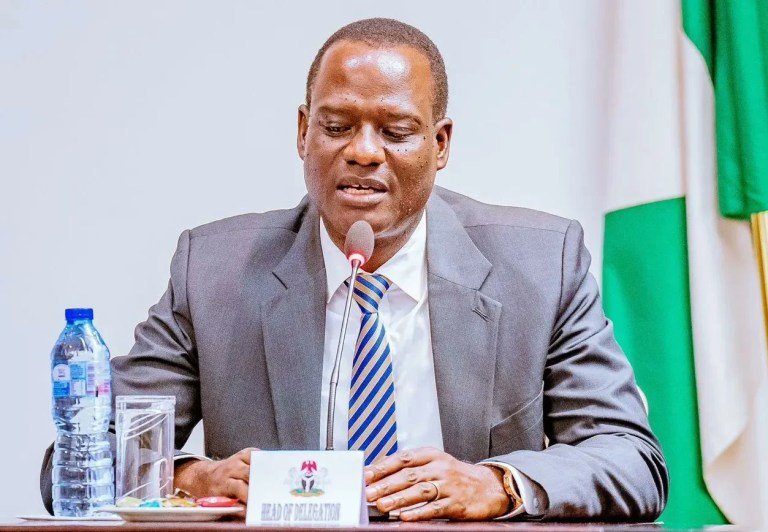
The Minister of Finance and Coordinating Minister of the Economy, Taiwo Oyedele, disclosed this on Wednesday at a media conference on the government’s reform scorecard, titled, “The Benefits, Costs and Harm Prevented.”
Mr Oyedele’s explanation provides the Federal Government’s latest response to questions surrounding the utilisation of savings following President Bola Tinubu’s removal of petrol subsidy in May 2023.

According to the minister, the N15.8 trillion was not paid into the Federation Account under a specific heading labelled “subsidy savings”.
He explained that the combined impact of petrol subsidy removal and foreign exchange reforms increased the naira value of revenues accruing to the Federation.
“Between June 2023 and December 2025, subsidy savings mobilised a sum of N15.8tn in resources for the Federation,” Mr Oyedele said.
“Many people will say, ‘Where is the subsidy saving?’ As a matter of fact, there wasn’t any line in the Federation Account with the description, ‘subsidy savings.’
“So, the subsidy savings showed up in the form of higher collection by Customs because, for every one dollar of import duty before, at N460, it became one dollar at N1,004, N1,003, N1,005.
“The NRS, Petroleum Profit Tax that it collected before, same dollar, higher amount in naira. So, the savings showed up in the Federation accounts by way of higher revenue collections as a result of the reforms.”
The minister said the additional fiscal resources were generated through both petrol subsidy removal and the foreign exchange reforms.
He explained that the previous foreign exchange regime amounted to an implicit subsidy, which he said created opportunities for rent-seeking rather than benefiting ordinary Nigerians and manufacturers.
“Not just the subsidy removal, but also the exchange rate flotation, because we were subsidising the exchange rate. And that subsidy was not going to the ordinary person or manufacturers. It was going to rent-seekers,” he said.
Mr Oyedele’s comments come amid continued debate over the fiscal impact and benefits of the Tinubu administration’s major economic reforms, particularly the removal of petrol subsidy and the unification of the foreign exchange market.




