


tech-uk-social-media-ban-under-16
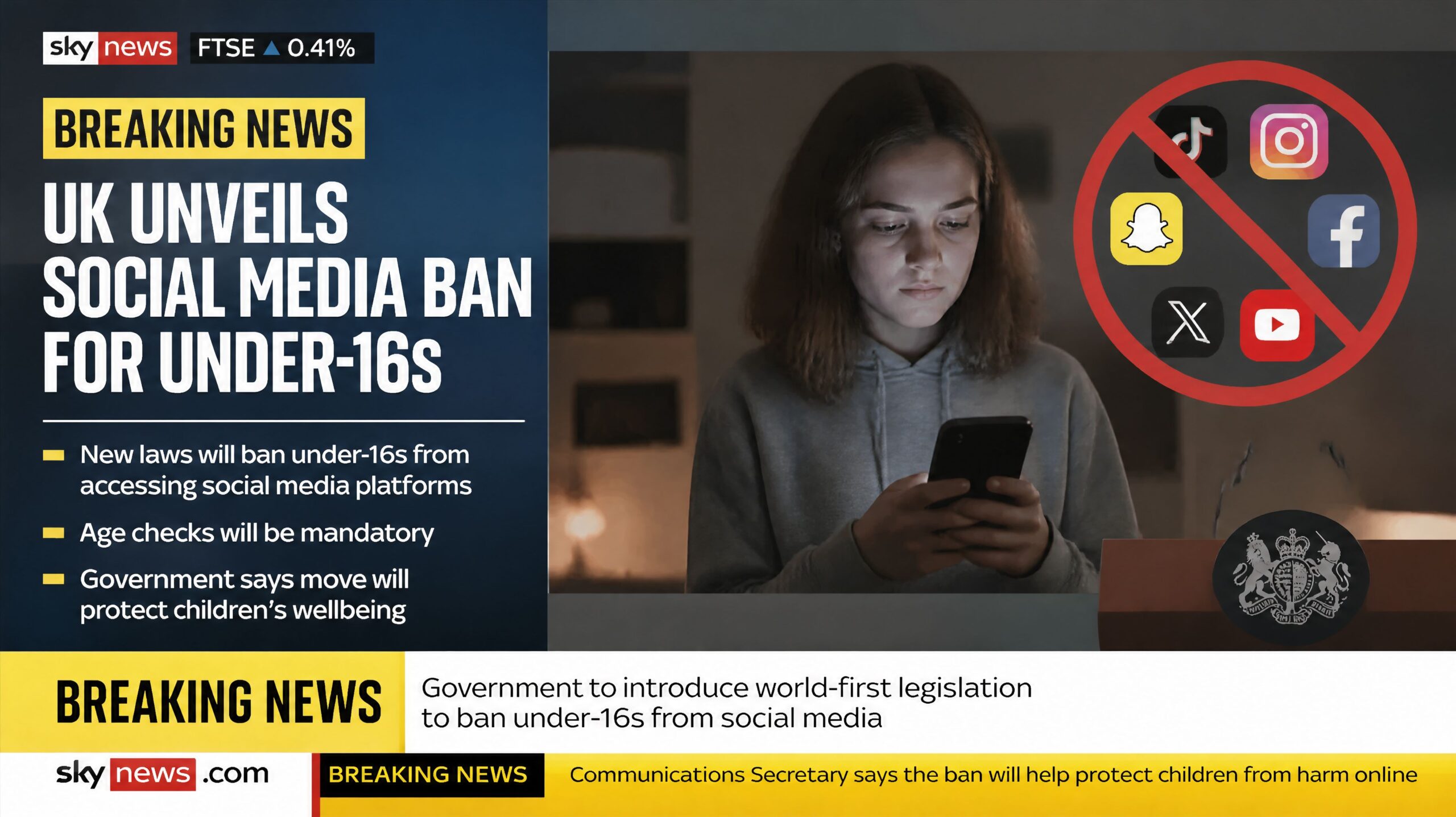
UK Unveils Sweeping Social Media Ban for Under-16s The landmark rules will block children under 16 from major platforms by Spring 2027, backed by massive parental support and strict age checks. UK Prime Minister Keir Starmer announces a sweeping social media ban for children under 16, targeting apps like TikTok, Instagram, and YouTube.
Government Draws Line in Sand
Consequently, the United Kingdom has joined a global movement to protect children online. Specifically, Prime Minister Keir Starmer announced a sweeping ban on Monday. The new rules will block children under 16 from using major social media platforms. Therefore, tech giants must soon adjust their services or face heavy penalties.
Additionally, the government hopes this move will give children their childhoods back. Statistics show that online platforms often expose young people to major mental health risks. Meanwhile, the ban targets ten popular digital platforms including TikTok, Snapchat, and Instagram. However, messaging services like WhatsApp and Signal will remain exempt from the restrictions.

Major Tech Platforms Face Restrictions
Subsequently, the government will use a model similar to the one in Australia. This system targets user-to-user platforms that rely heavily on algorithmic feeds. Specifically, the ban covers platforms like YouTube, Facebook, X, Threads, and Reddit. Furthermore, UK announces ban on social media for under-16s to address rising public safety concerns.
Simultaneously, the new rules will restrict other dangerous online features. For example, livestreaming and stranger contact will be blocked for minors in video games. Therefore, these changes go far beyond just a simple social media ban. Indeed, the UK Department for Science, Innovation and Technology expects to lay down the first regulations before Christmas.
Tech Giants and Critics Push Back
In contrast, global tech companies have expressed strong concerns about the sudden announcement. For instance, Meta warned that bans might isolate teens from supportive online communities. As a result, tech giants believe teens might move to unregulated, less safe spaces. YouTube also argued that blanket bans push children away from curated, supervised services.
Furthermore, some human rights organizations have criticized the policy. Specifically, Amnesty International UK called the ban the right diagnosis but the wrong prescription. Therefore, they believe the government should regulate the platforms rather than exclude children. However, official consultations show that nine out of ten parents strongly back the decision.
A Historic Cultural Shift
Ultimately, the historic ban marks a major turning point for the digital world. Consequently, children will have less screen time and more time for real-world play. Additionally, the government will enforce strict age-verification checks to ensure compliance. Through this, ministers intend to set a safe new normal for future generations.
Therefore, the country will prepare for the massive transition over the next year. For example, tech companies must start building stronger age-checking tools immediately. Indeed, the full law will come into force by Spring 2027. Of course, parents across the nation are welcoming the long-awaited change with great relief.




