


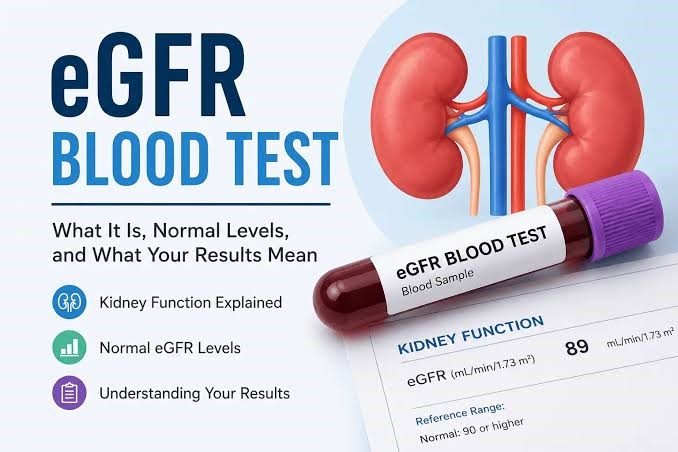
Kidney disease often develops silently, with few or no symptoms in its early stages. For this reason, healthcare providers rely on kidney function tests to detect problems before significant damage occurs. One of the most important measurements is the estimated glomerular filtration rate (eGFR), which helps determine how well the kidneys are filtering waste from the blood.
Health experts say routine kidney function testing is especially important for people with diabetes, high blood pressure, or a family history of kidney disease.
What Is eGFR?
The estimated glomerular filtration rate (eGFR) is a calculation that estimates how much blood the kidneys filter every minute.
It is calculated using:

- Blood creatinine level.
- Age.
- Sex.
- Other clinical factors.
The higher the eGFR, the better the kidneys are functioning.
What Is Creatinine?
Creatinine is a waste product produced by normal muscle activity.
Healthy kidneys remove creatinine from the blood and eliminate it through urine.
When the kidneys are not working properly, creatinine builds up in the bloodstream, causing blood test results to rise.
Understanding eGFR Results
Although your healthcare provider will interpret your results, eGFR values are generally grouped as follows:
- 90 mL/min/1.73 m² or higher: Normal kidney function (if no other signs of kidney disease are present).
- 60–89: Mild reduction in kidney function, which may be normal in some older adults if there are no other abnormalities.
- 45–59: Mild to moderate reduction.
- 30–44: Moderate to severe reduction.
- 15–29: Severe reduction in kidney function.
- Below 15: Kidney failure, which may require dialysis or a kidney transplant.
A single abnormal result does not always mean chronic kidney disease. Your doctor may repeat the test to confirm the findings.
Other Kidney Function Tests
Healthcare providers often use eGFR together with other tests, including:
Blood Creatinine Test
Measures the amount of creatinine in the blood.
Urine Albumin-to-Creatinine Ratio (ACR)
Detects small amounts of protein in the urine, which may be an early sign of kidney damage.
Urinalysis
Checks for blood, protein, glucose, infection, and other abnormalities.
Blood Urea Nitrogen (BUN)
Measures another waste product that may increase when kidney function declines.
Kidney Ultrasound
May be recommended to identify structural abnormalities, kidney stones, cysts, or blockages.
Who Should Have Kidney Function Tests?
Regular kidney testing is recommended for people who:
- Have diabetes.
- Have high blood pressure.
- Have heart disease.
- Have obesity.
- Have a family history of kidney disease.
- Are over 60 years of age.
- Have previously experienced kidney injury.
Early testing allows kidney disease to be detected before symptoms appear.
How Can You Protect Your Kidneys?
To help maintain healthy kidney function:
- Keep blood pressure under control.
- Manage diabetes effectively.
- Drink enough water.
- Maintain a healthy weight.
- Exercise regularly.
- Avoid smoking.
- Limit excessive use of painkillers, especially NSAIDs.
- Attend routine medical check-ups.
These healthy habits can reduce the risk of chronic kidney disease.
When Should You See a Doctor?
Consult a healthcare professional if you:
- Notice swelling in your feet or face.
- Have persistent high blood pressure.
- Experience blood or protein in your urine.
- Have changes in urination.
- Have diabetes or high blood pressure and have not had recent kidney tests.
Early diagnosis often leads to better treatment outcomes.
The Bottom Line
The eGFR is one of the most valuable tools for assessing kidney function and detecting chronic kidney disease early. When combined with blood and urine tests, it helps healthcare providers monitor kidney health, identify problems before symptoms develop, and guide appropriate treatment. Regular kidney function testing is particularly important for people at increased risk of kidney disease.
Disclaimer: This article is for informational purposes only and should not replace professional medical advice. Always discuss your kidney function test results with a qualified healthcare professional, who can interpret them based on your overall health and medical history.




