


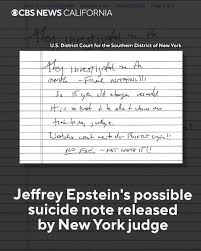
A newly surfaced document described as a possible suicide note linked to Jeffrey Epstein has stirred fresh controversy, after being reported by The New York Times.
According to the report, the note whose authenticity has not been confirmed contains a series of short, emotionally charged statements. Among them are claims suggesting Epstein felt unjustly investigated, alongside phrases that appear to reference control over his own fate and a refusal to show remorse or vulnerability.
However, the outlet made it clear that it could not verify whether Epstein actually wrote the note, raising immediate questions about its origin, credibility, and timing. This uncertainty has become central to the ongoing reaction surrounding the document.
Epstein died in August 2019 while in custody in a New York jail, a case officially ruled a suicide. His death, which occurred while he was awaiting trial on federal sex trafficking charges, has remained the subject of widespread scrutiny, speculation, and multiple investigations into jail conditions and possible negligence.

The emergence of this alleged note adds another layer to an already complex and highly debated case. For some, the tone and content of the message appear consistent with a defiant or detached mindset. For others, the lack of verification makes it difficult to draw any meaningful conclusions.
Legal analysts and observers have also pointed out that unverified documents like this can complicate public understanding, especially in high-profile cases where misinformation can spread quickly.
The development has reignited conversations online, with many calling for clarity and transparency, while others urge caution in treating the note as legitimate without concrete proof.
As it stands, the document remains unconfirmed, and its true significance if any continues to be debated.




