



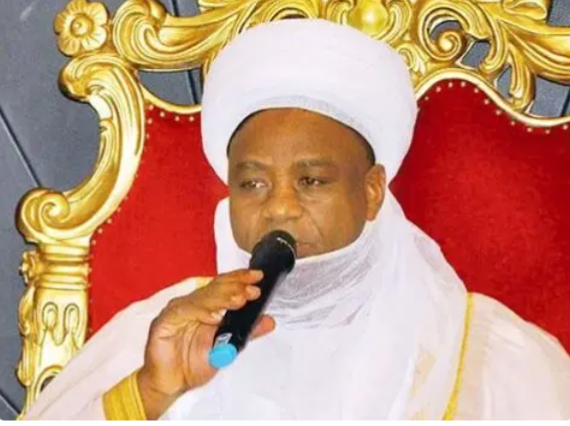
The Sultan of Sokoto and President General of the Nigeria Supreme Council for Islamic Affairs (NSCIA), Alhaji Sa’ad Abubakar III, has firmly dismissed concerns that Muslims in Nigeria are pursuing any agenda aimed at eliminating Christians, stressing that such fears are unfounded and harmful to national cohesion.
He made the remarks in Abuja during the first triannual meeting of the Nigeria Inter Religious Council (NIREC), a platform established to foster dialogue, mutual understanding, and cooperation between Christian and Muslim leaders in the country.
The meeting brought together prominent religious leaders and government officials, including the President of the Christian Association of Nigeria (CAN), Archbishop Daniel Okoh, and the Secretary to the Government of the Federation, Senator George Akume, alongside other stakeholders committed to strengthening peaceful coexistence across the country.
Speaking at the session, the Sultan said it was important for Nigerians to correct what he described as persistent misinterpretation of violence and insecurity as being driven by religion.
He categorically stated that Muslims are not involved in any plan to eliminate Christians or alter Nigeria’s religious balance.
According to him, Muslims and Christians must continue to coexist peacefully, as any notion of religious domination is both unrealistic and contrary to the principles of mutual respect.
He said Muslims are not in any position or inclination to remove Christians from Nigeria, adding that such fears do not reflect reality.
The Sultan further explained that many violent incidents often described as religious should not be framed in that manner, warning that doing so only deepens suspicion and division among citizens.
He urged Nigerians to distinguish between religion and criminality, stressing that individuals who engage in violence do so as criminals and not representatives of any faith.
He added that associating terrorism, banditry or other forms of violence with religion distorts public understanding and undermines efforts to achieve peace.
Even when individuals claim religious justification for their actions, the Sultan said such behaviour is entirely inconsistent with the teachings of Islam and any genuine religious doctrine.
He also cautioned against misinformation and false authority within religious discourse, noting that linguistic knowledge or superficial understanding of religious texts does not automatically qualify anyone as a spiritual leader.
He emphasised that proper education and literacy are essential in preventing the manipulation of religious teachings for destructive purposes.
The Sultan reiterated the importance of dialogue as the most effective means of resolving differences and addressing national challenges.
He said the Nigeria Inter Religious Council remains committed to promoting continuous engagement between faith communities, adding that dialogue builds understanding and reduces tension.
According to him, meaningful communication requires not only speaking but also listening and seeking to understand one another beyond assumptions.
He stressed that trust remains a critical foundation for peaceful coexistence, noting that citizens must avoid suspicion and embrace mutual confidence despite differences in belief.
In his remarks, the President of CAN, Archbishop Daniel Okoh, highlighted the importance of religious literacy in fostering national unity and reducing tensions often misinterpreted as religious conflict.
He explained that religious literacy involves more than knowledge of doctrines and rituals, but also includes awareness, sensitivity and respect for the beliefs of others.
He observed that many conflicts attributed to religion in Nigeria are often rooted in social, economic or political issues, rather than faith differences.
According to him, Nigeria’s diversity should be seen as a strength that can be harnessed through understanding and cooperation rather than division.
He noted that NIREC has continued to demonstrate that collaboration between religious communities is possible, even in the face of national challenges.
He said both Christians and Muslims share core values such as peace, justice and respect for human dignity, which should serve as a foundation for national unity.
The Secretary to the Government of the Federation, Senator George Akume, also addressed the gathering, stressing the role of education in reducing religious misunderstanding and preventing conflict.
He stated that ignorance often fuels suspicion, while knowledge and awareness promote trust and stability among diverse communities.
He called for stronger integration of inclusive religious education in schools and community institutions to encourage tolerance and mutual respect.
He further urged Nigerians to resist narratives that seek to divide the country along religious lines, noting that such narratives are often misleading and harmful.
Akume also reaffirmed the commitment of the federal government to improving national security, particularly in protecting vulnerable populations such as school children who have been targets of criminal attacks.
He emphasized that security challenges must be addressed collectively through cooperation between government institutions, religious bodies and citizens.
Throughout the meeting, participants consistently emphasized the need for sustained dialogue, improved understanding and stronger collaboration among religious groups as essential tools for promoting peace and national stability in Nigeria.




