


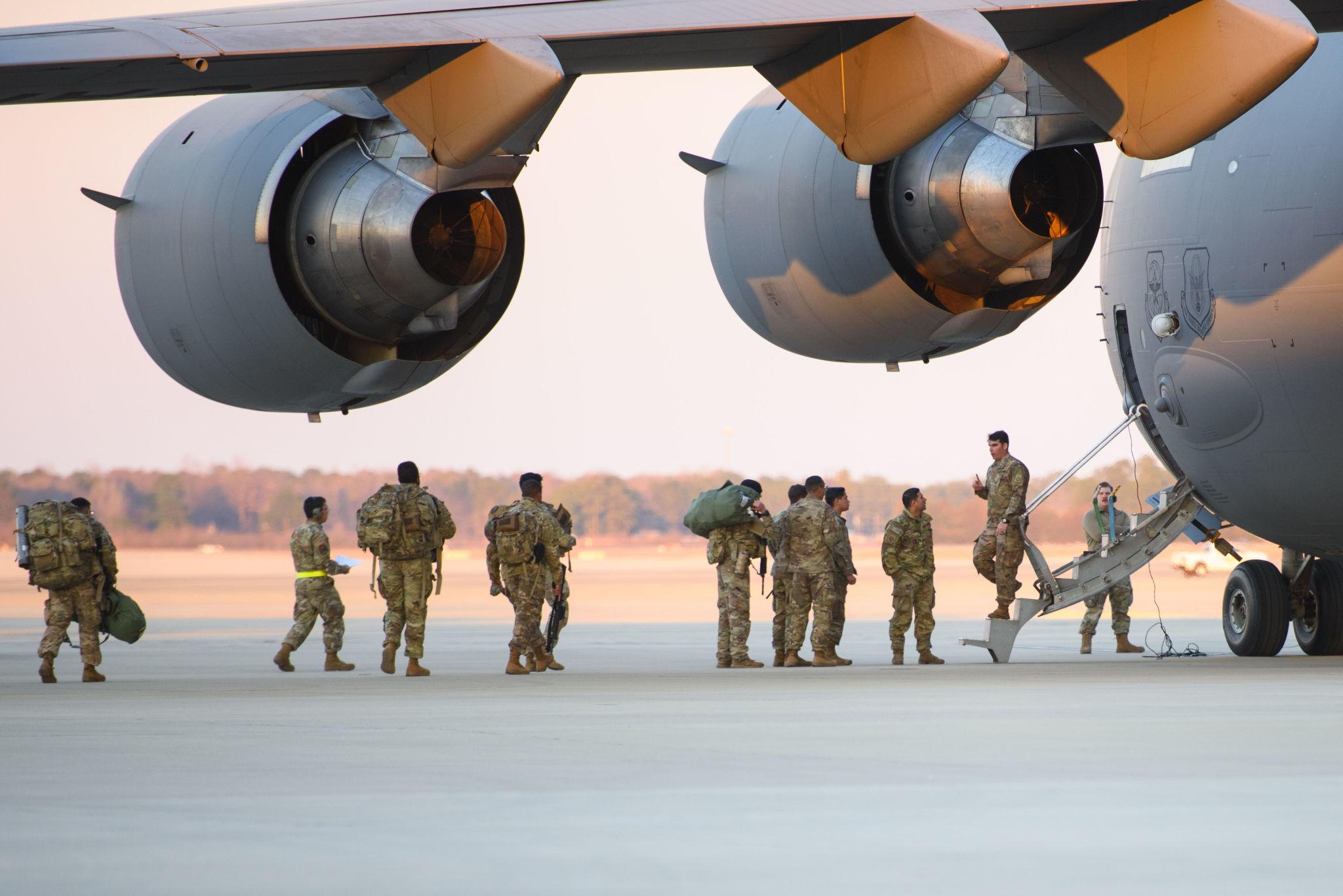
In the Middle East, at a time of heightened geopolitical tension and global economic sensitivity, Donald Trump has ordered the deployment of 1,500 troops, primarily paratroopers from the elite 82nd Airborne Division, to strategic locations around the Strait of Hormuz, a move announced amid growing concerns over the security of one of the world’s most critical oil transit corridors.
What appears, on the surface, to be a calculated military reinforcement quickly unfolds into a layered narrative of power, deterrence, and economic survival. The Strait of Hormuz is not just another waterway; it is the artery through which nearly a fifth of the world’s oil supply flows daily. Any disruption in this narrow passage has immediate and far-reaching consequences for global energy markets. Against this backdrop, the decision to deploy rapid-response airborne troops signals not merely preparedness, but urgency.
According to Diaspora Digital Media (DDM), the troops, drawn from one of the United States Army’s most combat-ready divisions, were mobilized with remarkable speed.
The 82nd Airborne Division, known for its ability to deploy anywhere in the world within hours, is not typically sent without a clear strategic objective.
Their presence suggests that intelligence assessments may have indicated credible threats to maritime security in the region, particularly involving oil tankers navigating the Strait.
But how did the situation escalate to this point?
Tensions around the Strait of Hormuz have long simmered beneath the surface, driven by a volatile mix of regional rivalries, sanctions, and strategic posturing.

In recent weeks, reports of harassment of commercial vessels, near-miss confrontations, and veiled threats from state and non-state actors have raised alarm bells in Washington and among its allies.
Each incident, while seemingly isolated, forms part of a broader pattern, one that threatens to choke a vital economic lifeline.
DDM sources indicate that the deployment is aimed at securing key islands and strategic positions that overlook or influence the passage of vessels through the Strait.
Control of such positions offers a tactical advantage, allowing surveillance, rapid intervention, and deterrence against hostile actions.
It is a move that transforms the geography of the region into a chessboard, where every island, every channel, and every maneuver carries weight.
Yet, beneath the military logic lies a deeper economic calculation.
Oil markets are notoriously sensitive to instability in the Middle East.
Even the perception of risk can trigger price spikes, disrupt supply chains, and strain economies far beyond the region.
By deploying troops, the Trump administration appears to be sending a dual message: to adversaries, a warning against escalation; to global markets, a reassurance of stability.
Still, the decision raises critical questions.
Is this a preventive measure, or a response to an imminent threat?
Are there undisclosed intelligence reports pointing to planned attacks on oil infrastructure or tankers?
Or is this a strategic show of force designed to preempt any such plans?
Observers note that the use of paratroopers, rather than conventional naval or ground forces alone, introduces a unique dimension.
Airborne units are designed for rapid insertion into contested environments, often ahead of larger forces. Their deployment suggests a need for flexibility and readiness to respond to rapidly evolving scenarios—an indication that the situation may be more fluid than publicly acknowledged.
Meanwhile, regional actors are watching closely.
Any increased U.S. military presence in the Middle East inevitably shifts the balance of power, prompting reactions that could either stabilize or further inflame tensions.
Allies may feel reassured, but adversaries could interpret the move as provocation, potentially setting the stage for a dangerous cycle of action and counteraction.
As the troops establish their positions and operations begin, the world is left to grapple with the implications.
The Strait of Hormuz remains open, for now, but the presence of elite U.S. forces underscores a stark reality: the security of global energy supply is increasingly intertwined with military strategy.
In the coming days, the true impact of this deployment will begin to unfold.
Will it succeed in deterring threats and ensuring the smooth passage of oil tankers, as intended?
Or will it become the opening move in a larger and more complex confrontation?
For now, one thing is clear.
What began as a strategic deployment has evolved into a moment of global significance, where every movement, every decision, and every signal carries consequences that extend far beyond the waters of the Strait of Hormuz.
And as events continue to develop, the world watches, waiting for the next move in a game where the stakes could not be higher.



 and then