


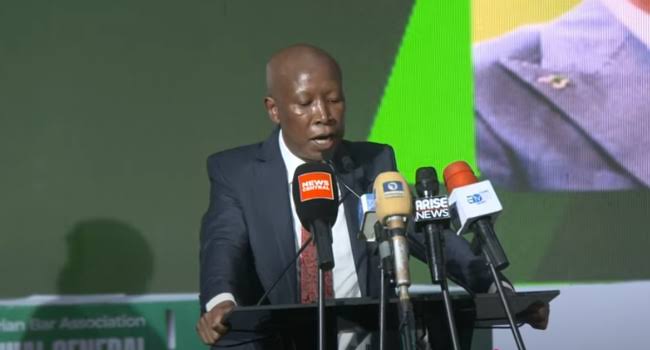
Firebrand South African opposition leader, Julius Malema, has urged African governments to regulate foreign loans from international financial institutions such as the World Bank and the International Monetary Fund (IMF), warning that such debts could mortgage the future of the continent.
Malema, who spoke on Sunday, August 24, in Enugu as keynote speaker at the Nigerian Bar Association (NBA) Annual General Conference, described the growing reliance on foreign loans as a “debt trap” that hands over Africa’s economic independence to its former colonisers.
“The debt trap of Africa to our foreign colonisers must be stopped, and that begins by regulating these loans that our leaders commit future generations to, because they will not be there when the colonisers come to collect,” he told the gathering of lawyers and dignitaries.

The Economic Freedom Fighters (EFF) leader disclosed that the South African parliament is considering legislation to curb reckless foreign borrowing.
According to him, the Public Finance Management Amendment Bill, introduced by the EFF, will require the National Treasury to seek parliamentary approval before contracting loans from institutions like the IMF and World Bank.
“This bill will ensure transparency regarding such loans and their conditionalities. It is a problem not just for South Africa, but for the whole continent,” Malema stressed.
Africa’s Rising Debt Profile
His comments come amid mounting concerns about Africa’s swelling debt levels. Countries such as Nigeria, Ethiopia, Kenya, and Ghana have seen their debt burdens increase significantly in recent years, raising fears of dependency on Bretton Woods institutions and vulnerability to external shocks.
Malema argued that Africa’s economic strength lies in collaboration rather than dependency.
Nigeria–South Africa Ties
The firebrand politician also paid tribute to Nigeria for its support of South Africa during the apartheid era, saying both nations must now lead efforts to industrialise the continent.
“Combined, we possess the minerals that power modern technology, the energy resources that fuel global industry, and the human capital to build a self-sufficient continent,” he said.
He urged Africa’s two largest economies to build factories, process resources locally, and drive industrialisation together, insisting that “salvation will not come from Washington, London, Brussels, or Beijing.”
“Our salvation lies here, in Lagos and Johannesburg, in Abuja and Pretoria, in the hands of Africans who refuse to be divided,” Malema declared, drawing applause from the audience.
The Enugu conference, which attracted top legal minds, policymakers, and business leaders, is themed around governance, economic sustainability, and Africa’s role in a changing global order.