


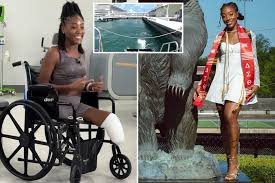
A 22-year-old American woman has filed a multi-million-dollar lawsuit against a boat cruise company following a devastating accident that resulted in the loss of her limbs during a leisure trip that reportedly cost just $79.99.
According to details emerging from the case, the incident occurred during a day cruise where the woman had allegedly consumed alcohol and marijuana prior to the accident. Reports indicate that she decided to jump into the water to relieve herself, believing it was safe to do so at the time.
In her legal claim, the woman argues that the cruise company bears responsibility for the incident, alleging that staff members encouraged unsafe behavior. She claims that when she initially intended to use the restroom onboard, a crew member advised her to urinate in the water instead, assuring her that the boat’s engines had been turned off.
Relying on this information, she jumped into the water. However, moments later, a small engine was reportedly activated in reverse, creating a powerful suction that pulled her toward the vessel’s propellers. The resulting injuries were catastrophic.

Despite the severity of the situation, the woman reportedly managed to free herself and call for help after approximately 20 seconds in the water. Medical reports indicate she lost nearly 60 percent of her blood during the ordeal. Following emergency treatment and multiple surgeries, doctors were ultimately unable to save her legs, leading to the amputation of one limb entirely.
The lawsuit further alleges negligence on the part of the cruise operator, including failure to ensure passenger safety and improper handling of onboard operations while a passenger was in the water. The plaintiff is also accusing the company of overserving alcohol and failing to enforce safety protocols.
The case has sparked significant public debate, particularly around personal responsibility versus corporate liability. While some argue that the woman’s decision to jump into open water under the influence contributed to the accident, others believe the company should be held accountable if staff indeed provided misleading or unsafe instructions.
Legal experts note that the outcome of the case will likely hinge on evidence surrounding staff conduct, safety procedures, and whether proper warnings were issued. If proven, negligence on the part of the cruise company could result in substantial compensation.
As the case unfolds, it highlights critical issues surrounding safety standards in recreational boating, the responsibilities of service providers, and the importance of informed decision-making by passengers.
What began as an inexpensive day trip has now escalated into a life-altering incident and a high-stakes legal battle with far-reaching implications.




