


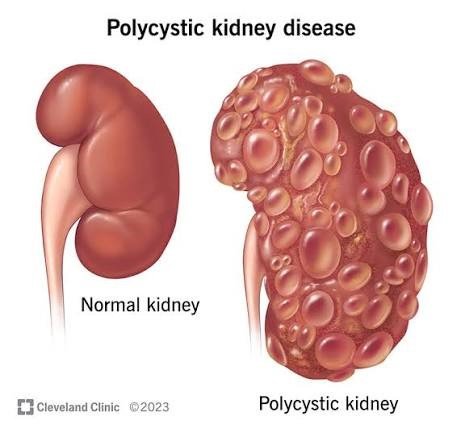
Polycystic Kidney Disease (PKD) is an inherited condition in which numerous fluid-filled cysts develop in the kidneys. As these cysts grow in size and number, they can enlarge the kidneys, reduce their ability to function properly, and eventually lead to chronic kidney disease or kidney failure.
Health experts say PKD is one of the most common inherited kidney disorders worldwide. Early diagnosis, regular monitoring, and appropriate treatment can help slow disease progression and reduce complications.
What Is Polycystic Kidney Disease?
Polycystic Kidney Disease is a genetic disorder that causes clusters of cysts to develop in both kidneys.
Unlike simple kidney cysts, which are usually harmless, the cysts in PKD continue to grow over time, gradually replacing healthy kidney tissue.

In some people, cysts may also develop in the liver, pancreas, or other organs.
Types of PKD
There are two main forms of the disease.
Autosomal Dominant Polycystic Kidney Disease (ADPKD)
This is the most common type, accounting for about 90% of cases.
Symptoms usually appear between the ages of 30 and 50, although cysts may begin developing much earlier.
A child has a 50% chance of inheriting the condition if one parent has ADPKD.
Autosomal Recessive Polycystic Kidney Disease (ARPKD)
This rare form usually affects infants or young children.
It is often more severe and may lead to serious kidney and liver complications early in life.
What Causes PKD?
PKD is caused by inherited changes (mutations) in specific genes responsible for normal kidney development.
These genetic mutations cause kidney cells to grow abnormally, leading to the formation of multiple fluid-filled cysts.
The condition is not caused by diet, lifestyle, or infection.
Common Symptoms
Many people with PKD have no symptoms during the early stages.
As the cysts enlarge, symptoms may include:
- High blood pressure.
- Persistent pain in the back or sides.
- Blood in the urine.
- Frequent urinary tract infections.
- Kidney stones.
- Frequent urination.
- Enlarged abdomen due to enlarged kidneys.
- Headaches.
- Fatigue.
Symptoms often become more noticeable as kidney function declines.
Possible Complications
Without proper management, PKD can lead to:
- Chronic kidney disease.
- Kidney failure.
- Kidney stones.
- Recurrent kidney infections.
- Liver cysts.
- High blood pressure.
- Brain aneurysms in some individuals.
- Heart valve abnormalities.
Not everyone with PKD develops these complications.
How Is PKD Diagnosed?
Healthcare providers may recommend:
- Family history assessment.
- Kidney ultrasound.
- CT scan or MRI.
- Blood tests to evaluate kidney function.
- Urine tests.
- Genetic testing in selected cases.
Imaging tests are the primary method used to detect kidney cysts.
Treatment
There is currently no cure for PKD, but treatment focuses on slowing disease progression and managing complications.
Treatment may include:
- Controlling high blood pressure.
- Treating urinary tract infections promptly.
- Managing pain safely.
- Drinking adequate fluids when advised by a healthcare professional.
- Following a kidney-friendly diet.
- Avoiding smoking.
- Regular monitoring of kidney function.
In advanced cases, dialysis or a kidney transplant may become necessary if kidney failure develops.
Can PKD Be Prevented?
Because PKD is an inherited condition, it cannot be prevented.
However, early diagnosis allows healthcare providers to:
- Monitor kidney function regularly.
- Treat complications early.
- Slow disease progression.
- Improve quality of life.
Family members of affected individuals may benefit from medical evaluation and, in some cases, genetic counselling.
When Should You See a Doctor?
Seek medical advice if you:
- Have a family history of PKD.
- Notice blood in your urine.
- Experience persistent pain in your sides or lower back.
- Develop repeated urinary tract infections.
- Have high blood pressure at a young age.
Early diagnosis can help preserve kidney function for as long as possible.
The Bottom Line
Polycystic Kidney Disease is a lifelong inherited disorder that causes multiple cysts to develop in the kidneys. Although there is no cure, early diagnosis, blood pressure control, regular monitoring, and healthy lifestyle habits can help slow disease progression and reduce the risk of kidney failure. Anyone with a family history of PKD should discuss screening with a qualified healthcare professional.
Disclaimer: This article is for informational purposes only and should not replace professional medical advice. Individuals with symptoms or a family history of Polycystic Kidney Disease should consult a qualified healthcare professional for appropriate evaluation, genetic counselling where necessary, and ongoing management.




