



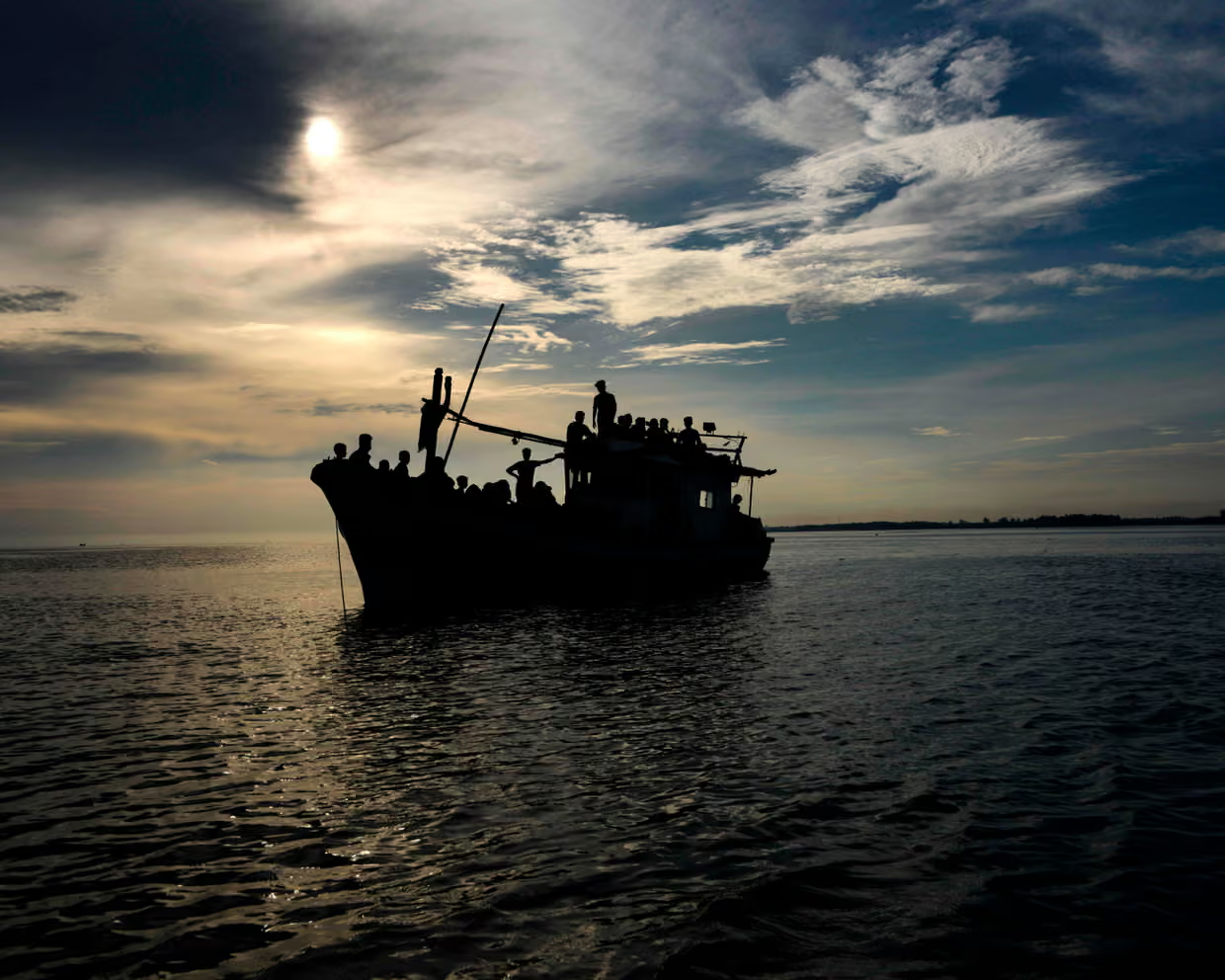
More than 500 Rohingya refugees are feared dead after two overcrowded boats reportedly capsized in the Bay of Bengal, prompting an investigation by the United Nations High Commissioner for Refugees (UNHCR) and the International Organization for Migration (IOM).
In a joint statement released on Thursday, the UN agencies said preliminary information indicated that the boats departed Myanmar’s western Rakhine State in late June, carrying mostly Rohingya refugees. Some passengers had also travelled from refugee camps in neighbouring Bangladesh.
One of the vessels, believed to have been carrying about 250 people, lost contact shortly after setting sail. A second boat, reportedly carrying 280 passengers, is believed to have sunk off Myanmar’s Ayeyarwady coast on July 8.
Although the incidents and casualty figures have not been officially confirmed, the UN agencies warned that the reported loss of life could be devastating.

The spokesperson for Myanmar’s Ministry of Home Affairs declined to comment, while officials from the presidency and the Ayeyarwady regional government did not respond to requests for information.
The Rohingya, a persecuted Muslim minority from Myanmar, rarely attempt sea crossings during the monsoon season because of the heightened risks. The UNHCR and IOM noted that heavy rains and widespread flooding across the region would have made the journeys even more dangerous.
Around 1.2 million stateless Rohingya remain in overcrowded refugee camps in Bangladesh after fleeing military violence in Myanmar. Many are unable to return home, where the military remains in power and Rohingya communities continue to face severe restrictions, with thousands confined to internment camps.
Aid agencies say worsening humanitarian conditions, driven in part by cuts to international funding and continued conflict in Myanmar’s Rakhine State, have pushed more refugees to risk dangerous sea voyages in search of safety, particularly toward Malaysia.
Thousands of Rohingya have died attempting the crossing over the years, including women and children, while rescue efforts have often been hampered by delayed responses from regional maritime authorities.
The UNHCR and IOM said the latest tragedy underscores the urgent need for stronger regional cooperation, including improved search-and-rescue operations, greater access to asylum, and tougher action against human trafficking and smuggling networks.
According to the UNHCR, more than 6,500 Rohingya fled by sea in 2025, with nearly 900 reported dead or missing, making it the deadliest year on record for Rohingya attempting the perilous maritime journey.




