


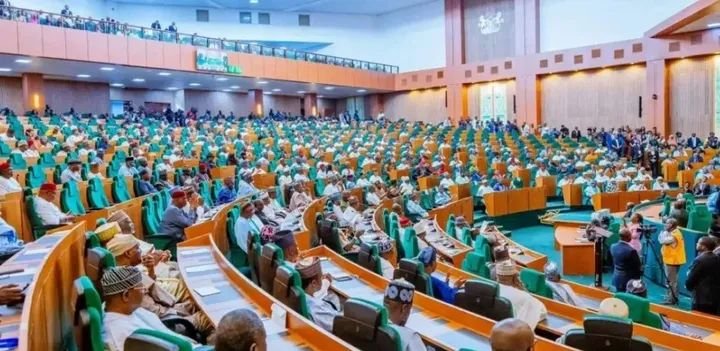
ABUJA, Nigeria — The House of Representatives has intensified efforts to strengthen Nigeria’s response to human trafficking, declaring that repatriating trafficked Nigerians from Mali and other West African countries is no longer enough unless backed by comprehensive rehabilitation and reintegration programmes.
The position was canvassed on Wednesday at a high-level stakeholders’ technical meeting organised by the House Committee on Humanitarian Services, where lawmakers, government agencies, development partners and civil society organisations examined strategies for improving the rescue and reintegration of trafficked Nigerians.
The meeting, however, took a dramatic turn when the National Council of Child Rights Advocates (NACCRAN) levelled a series of allegations against officials of the Nigerian Embassy in Mali, accusing them of poor handling of rescued victims, lack of transparency in repatriation activities and alleged collaboration with individuals exploiting vulnerable Nigerians.
Presenting findings from an 11-month fact-finding mission, the organisation’s Operation Consultant on Diaspora Issues, Adefioye Simeon, alleged widespread irregularities in the handling of trafficked Nigerians by officials of the Nigerian Embassy in Bamako. He claimed the mission was initiated after reports emerged in 2022 that increasing numbers of underage Nigerian girls were being trafficked to Mali, the Republic of Benin, Togo, Burkina Faso and Senegal for prostitution.

Among the findings presented was an allegation that repatriation activities at the embassy lacked transparency and relied on selected individuals rather than established institutional procedures. Simeon further claimed that rescued girls were brought to the Nigerian Embassy by private individuals who allegedly paid about 200,000 CFA francs per victim to embassy officials to facilitate transportation back to Nigeria.
“Questions regarding the utilisation of these funds were never satisfactorily answered,” he said. He also alleged that several rescued girls reported severe physical and emotional abuse while in the custody of traffickers and raised concerns over poor documentation of Nigerians living in Mali.
According to him, migrants were made to pay between 10,000 and 15,000 CFA francs for identification cards, yet many of the documents were reportedly rejected at border checkpoints. He accused certain embassy officials of frustrating attempts by NACCRAN to investigate alleged exploitation of Nigerians in Mali.
“Rather than addressing our complaints, the Consular Officer responded with hostility and threats,” he claimed. Simeon further alleged that despite petitions submitted to the Federal Ministry of Justice, Ministry of Women Affairs, National Human Rights Commission, the Office of the Senate President and relevant committees of the National Assembly, little progress was made until the House Committee on Humanitarian Services intervened.
According to him, the committee’s intervention prompted the deployment of a Federal Ministry of Foreign Affairs fact-finding team to Mali in July 2025. He said NACCRAN subsequently repatriated more than 10 underage Nigerian girls between September and December 2025, with victims handed over to the National Agency for the Prohibition of Trafficking in Persons (NAPTIP) and reunited with their families.
Despite the successes, Simeon said the organisation has yet to receive fresh authorisation from the Ministry of Foreign Affairs to continue its humanitarian operations across West Africa. “As of today, no response has been received. Meanwhile, reports continue to indicate that Nigerian girls remain vulnerable to trafficking, exploitation, and abuse across several West African countries,” he said.
He urged the House Committee to investigate allegations surrounding repatriation activities at the Nigerian Embassy in Mali, strengthen coordination among the Ministry of Foreign Affairs, NAPTIP, security agencies and civil society organisations, and develop a comprehensive policy framework to combat trafficking across the region.
The chairperson of the House Committee on Humanitarian Services, Tolulope Akande-Sadipe, described human trafficking as one of the country’s most pressing humanitarian challenges, noting that thousands of Nigerians, particularly women, children and young people, continue to fall victim to trafficking, forced labour, sexual exploitation and other forms of modern slavery across West Africa. She called for a survivor-centred approach that goes beyond bringing victims home.
The allegations against officials of the Nigerian Embassy in Mali had not been independently verified, and no response had been issued by the Ministry of Foreign Affairs or the officials named in the presentation. The stakeholders’ meeting comes amid growing concern over the increasing number of Nigerians trafficked across West Africa and renewed calls for stronger institutional coordination, improved victim protection and greater accountability in Nigeria’s anti-trafficking efforts.




