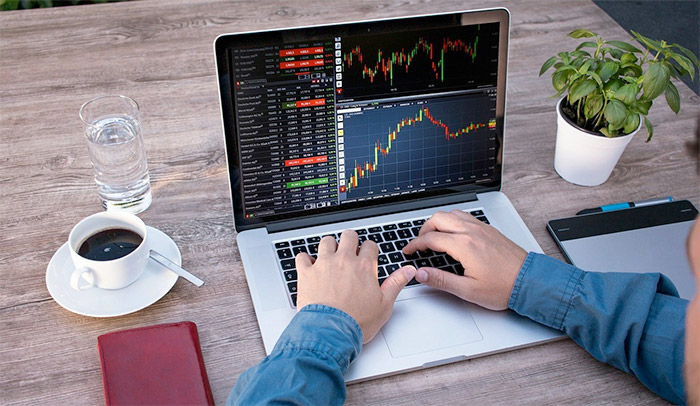
Do people really make money from forex trading, or is the foreign exchange market simply another internet business where a few people win while thousands lose their money?
It is a question many Nigerians have asked as forex trading continues to attract young people looking for alternative ways to earn income. Social media is filled with screenshots of profitable trades, luxury lifestyles, expensive cars, foreign currencies and traders claiming to have turned small accounts into substantial amounts of money. Yet behind the glamour is a market that can be extremely difficult, unpredictable and unforgiving.
The simple answer is yes, some people genuinely make money from forex trading. However, that does not mean forex is an easy path to wealth, and it certainly does not mean that everyone who enters the market will become profitable.
In fact, the biggest misconception surrounding forex is that the market itself is the problem. For many traders, the technical side is only one part of the challenge. Understanding charts, price movements, market structure, indicators and economic events can be learned over time. The much harder battle is controlling the person sitting behind the trading screen.
Forex has a way of exposing emotions that people may not even realise they possess.
A trader may believe they are patient until they watch a profitable trade move against them. They may think they are disciplined until they lose money and immediately open another position to recover the loss. They may consider themselves conservative until they see an opportunity that appears too attractive to ignore.
Then greed enters.
Fear follows.
Impatience takes over.
Before long, a trader who spent months learning strategies can destroy an account within a few hours because they failed to follow their own rules.
This is why experienced traders often emphasise discipline, risk management and capital preservation as much as technical analysis. Knowing when not to trade can be just as important as knowing when to enter a position.
The forex market does not reward desperation.
Someone entering the market with the mindset that a $50, $70 or $100 account must quickly become thousands of dollars is already placing enormous pressure on themselves. With a small account, traders may feel tempted to take excessive risks because they want returns that are unrealistic relative to their capital.
That is where many beginners get trapped.
They see someone online turning a small amount into a much larger figure and assume they can reproduce the same result. What they often do not see are the losing trades, blown accounts, years of practice, emotional setbacks and financial mistakes that may have occurred before the success story.
Forex has a relatively low barrier to entry. A person can learn about the market online, open an account and begin trading with a comparatively small amount of money. That accessibility is both its attraction and its danger.
If entering the medical profession required only downloading an application and paying a small registration fee, millions of people would probably call themselves doctors. But becoming a doctor requires years of education, supervised practice and professional training.
The same principle applies to many serious professions.
Doctors, engineers, lawyers and other professionals spend years developing their expertise before expecting to earn substantial income from their skills. Forex trading may not require the same formal educational pathway, but developing the psychological discipline and market experience required to trade consistently can also take years.
This is where some of the unrealistic expectations surrounding forex begin to collapse.
A person who has been trading for three months cannot reasonably expect to have the same level of understanding as someone who has spent five or ten years studying markets. Yet social media often creates the impression that profitability should happen almost immediately.
The pressure becomes even greater when beginners compare forex with businesses such as POS, food vending, fashion or other ventures where there is a more visible connection between effort and daily income.
Forex works differently.
You can spend hours analysing charts and still finish the day without taking a trade. You can make what appears to be an excellent decision and still lose money. You can have several profitable trades followed by one major loss if your risk management is poor.
That uncertainty is part of the business.
For some Nigerians, this difficulty is precisely what makes forex attractive. Unlike some physical businesses that become overcrowded when too many people enter the market, the foreign exchange market does not suddenly become less valuable because thousands of Nigerians begin learning it.
There is no roadside location where everyone must compete for the same customers.
There is no limited number of POS customers in one street.
There is no neighbourhood where everyone suddenly starts selling the same product.
But that does not mean forex is a guaranteed opportunity. It simply means that the nature of the competition is different.
The market does not care about your nationality, your social-media following or how badly you need money. A trader can have thousands of followers and still lose money. Someone with no online presence can quietly develop a profitable strategy and manage their capital successfully.
This is why the idea that forex should be easy because it is popular is dangerous.
The market’s difficulty is actually part of what makes it difficult to exploit consistently. If making money from currency movements were as simple as watching a few videos, opening a trading account and copying signals, the market would not remain a challenging profession.
DDM News observes that the growing interest in forex among young Nigerians should therefore be accompanied by more realistic conversations about risk, patience and financial responsibility. Forex should not be presented as a shortcut out of unemployment or poverty.
It should be treated as a high-risk financial activity that requires serious education and strict risk management.
There is also an important distinction between learning forex and trading real money.
A person can spend months studying charts without being ready to risk their savings. Learning how the market works, practising a strategy, keeping records of trades and understanding risk can help a beginner determine whether trading is actually suitable for them before committing significant capital.
And even after becoming consistently profitable, scaling up should be approached carefully.
A trader who can manage a small account responsibly is not automatically ready to manage ten times as much money. Larger positions create larger emotional pressure, and a strategy that works psychologically with small amounts may become difficult to execute when the money involved becomes significant.
Capital preservation therefore remains one of the most important principles.
The first goal should not always be to make as much money as possible. Sometimes the most important achievement is simply surviving long enough to learn.
A trader who loses everything cannot continue trading.
Someone who protects their capital, learns from mistakes and gradually improves has the opportunity to remain in the market long enough to develop.
This is also why people should be extremely cautious about anyone promising guaranteed returns, effortless profits or overnight wealth through forex. No legitimate trader can guarantee that every trade will win. Markets are uncertain, and anyone presenting forex as a risk-free source of income is ignoring one of its most fundamental realities.
There are people making money from forex. There are also many people losing money.
Both realities can exist at the same time.
The difference is often not simply intelligence. It can involve experience, strategy, risk management, discipline, psychology, capital and the ability to accept losses without becoming reckless.
For someone considering forex, the right question may therefore not be, “How quickly can I make money?”
A better question is, “Am I willing to spend years learning a difficult skill without expecting immediate financial rewards?”
If the answer is no, there are other businesses and skills worth exploring.
But for someone who is genuinely interested in financial markets, willing to study extensively and capable of treating risk seriously, forex can become a skill rather than a gambling exercise.
The journey can be long, lonely and frustrating. There will be losing trades, mistakes and moments when quitting appears easier than continuing. But those who eventually develop consistency often understand that profitability is not simply about finding a magical strategy.
It is about becoming disciplined enough to execute a strategy repeatedly, manage risk and accept that not every trade needs to be profitable.
DDM News believes that is the conversation Nigeria needs to have about forex. Not the flashy cars. Not the screenshots of winning trades. Not the promise of overnight wealth.
The real story is the discipline behind the screen.
Forex can make money, but it can also take money.
It is not POS. It is not a quick side hustle. It is not a guaranteed escape from financial hardship. And it is certainly not a game that rewards impatience.
For anyone who chooses to enter, learn properly, start cautiously, protect your capital and understand that becoming profitable may take considerably longer than social media makes it appear.
In the end, the market does not owe anyone riches.
Those who survive long enough to master the skill may eventually discover that the greatest advantage was never a secret indicator or a perfect trading signal.
It was discipline.