


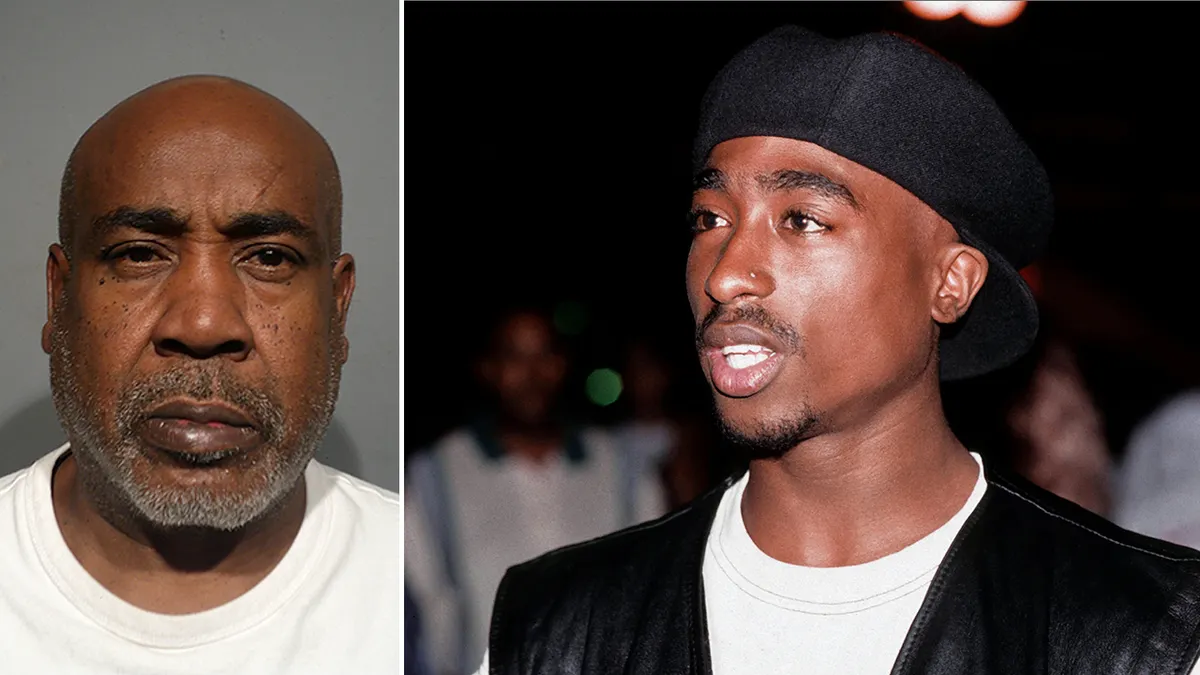
A former Los Angeles gang leader, Duane “Keffe D” Davis, has been found guilty of the 1996 murder of American rapper, Tupac Shakur, bringing a three-decade-old mystery surrounding the hip-hop star’s death closer to a legal conclusion.
A Las Vegas jury convicted the 63-year-old Davis on Monday after deliberating for only a few hours.
The jury found him guilty of first-degree murder with the use of a deadly weapon. Davis, who could face life imprisonment without parole, told Judge Carli Kierny after the verdict that he intended to appeal.
His sentencing has been fixed for October 13.

Davis, a former leader of the South Side Compton Crips, was accused of arranging the September 7, 1996, shooting of Shakur following a confrontation involving members of the rapper’s entourage and Davis’ nephew at a Las Vegas casino.
During closing arguments, prosecutor Binu Palal told the jury that Davis responded to the confrontation by obtaining a firearm, gathering his associates and setting out to find Shakur.
Shakur had travelled to Las Vegas to watch heavyweight boxing champion Mike Tyson fight. About two hours after the casino confrontation, a white Cadillac pulled alongside the BMW carrying Shakur at a red light.
The rapper was sitting in the front passenger seat when gunfire erupted from the Cadillac.
Prosecutors said Davis handed a gun to a person sitting in the back seat of the Cadillac and directed the individual to shoot Shakur.
Shakur, popularly known as 2Pac, was hit several times. He died six days later at the age of 25.
Davis is the only surviving person who was inside the Cadillac when the shooting occurred.
The driver of Shakur’s BMW, Death Row Records co-founder Marion “Suge” Knight, was also wounded in the attack.
For years, the murder remained one of the most high-profile unsolved cases in the United States, fuelling speculation among music fans over who ordered the killing and why.
Davis eventually became the only person charged in connection with Shakur’s death.
Case revived decades later
The investigation struggled for years because of limited evidence, but renewed attention came after Davis published his memoir, Compton Street Legend, in 2019.
Over the years, Davis had made statements suggesting that he was involved in the killing, including comments to law enforcement officers and the media, as well as accounts contained in his autobiography.
He later denied the murder allegation and pleaded not guilty.
During the trial, prosecutors played recordings of Davis’ statements to support their case.
His lawyer, Michael Sanft, however, argued that the statements were not credible and were partly intended to promote Davis’ book.
“You’re reading a book that is fiction and not fact,” Sanft told the jury, arguing that the prosecution had no evidence linking his client to the murder apart from Davis’ own statements.
Davis’ lawyers had previously sought to prevent the memoir and statements he made during a 2008 police interview from being admitted as evidence, but their efforts were unsuccessful.
Shakur was a central figure in the bitter East Coast-West Coast rivalry that dominated American hip-hop in the 1990s.
Born to a family with links to the Black Panther movement and raised in Harlem and Baltimore, Shakur later became one of the defining figures of California hip-hop after signing with Los Angeles-based Death Row Records.
His best-known songs include California Love and All Eyez on Me.
Thirty years after his death, the conviction of Davis marks a major development in one of the most closely followed murder cases in music history.




