


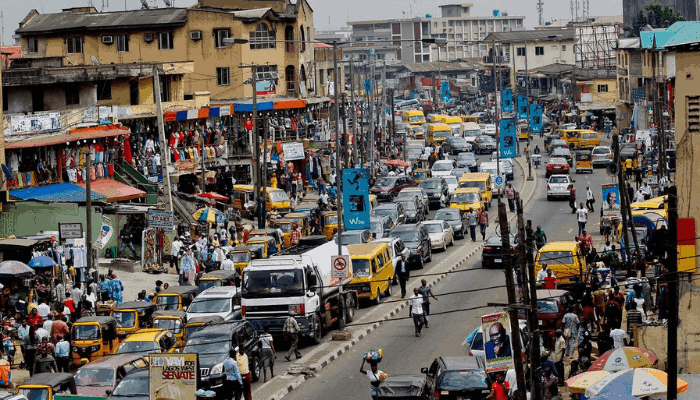
Nigeria’s economy is showing stronger signs of recovery, but President Bola Ahmed Tinubu is approaching the 2027 presidential election with a difficult economic contradiction: the numbers are improving while millions of Nigerians are still struggling with the high cost of food and basic necessities.
The latest Gross Domestic Product figures offer the administration a stronger economic story to present to voters.
Nigeria’s economy grew by 4.43 percent year-on-year in the second quarter of 2026, accelerating from 3.89 percent in the first quarter and marking the fastest second-quarter expansion in five years.
The performance was supported by improvements in both the oil and non-oil sectors, giving the government fresh evidence that its controversial economic reforms are beginning to generate stronger growth. (Reuters)

Yet the political significance of the figures goes beyond the headline growth rate.
As the 2027 election approaches, the administration faces the harder task of convincing ordinary Nigerians that macroeconomic improvement is translating into better living standards.
For many households, economic performance is not measured through GDP reports, foreign-exchange reserves or international credit ratings.
It is measured by the price of rice, beans, bread, cooking gas, transportation and other essentials. This creates a significant gap between the government’s economic narrative and the daily experience of citizens.
Tinubu’s administration has repeatedly defended its reform programme, particularly the removal of the petrol subsidy and changes to the foreign-exchange system.
The reforms were designed to reduce government distortions, strengthen public finances, attract investment and create conditions for sustainable economic growth. However, their early effects included a sharp rise in living costs, a weaker naira and significant pressure on household purchasing power.
The latest GDP figures suggest that the economy is gradually moving beyond the initial shock of those reforms. Growth has strengthened, agriculture has improved and services continue to provide the largest contribution to economic output.
According to the latest data, services expanded by 4.60 percent in the second quarter and accounted for more than half of economic activity, while agriculture grew by 4.39 percent.
The industrial sector, however, expanded at a weaker 3.96 percent, highlighting the continuing challenge of building a more productive industrial base. (Mukoko News)
That composition matters because economic growth does not automatically mean greater prosperity for households.
An economy can expand while citizens continue to struggle if the growth does not generate sufficient jobs, stronger wages, affordable food and wider access to economic opportunities.
This is where Tinubu’s 2027 challenge becomes particularly complicated.
The government can point to stronger growth as evidence that its reforms are working.
Foreign-exchange reserves have also strengthened, while international rating agencies have become more constructive about Nigeria’s economic outlook.
Moody’s recently revised Nigeria’s sovereign outlook from stable to positive while maintaining its B3 rating, citing improvements in economic growth and external buffers. (Mukoko News)
These developments represent meaningful progress for an economy that has faced years of fiscal pressure, weak revenue generation and foreign-exchange instability.
They also provide the Tinubu administration with a stronger argument that the difficult decisions taken since 2023 were intended to create a more stable foundation for future growth.
But the government’s economic success will ultimately be judged by how much of that improvement reaches the household.
The International Monetary Fund has warned that conditions remain difficult for many Nigerians.
Its 2026 assessment estimated that poverty had reached 63 percent under Nigeria’s national poverty line and that about 27 million Nigerians faced food insecurity in late 2025. The IMF also warned that higher global fuel, food and fertiliser prices could intensify inflationary pressures and worsen poverty and food insecurity. (IMF eLibrary)
That warning makes the relationship between economic growth and food security central to the 2027 political debate.
Inflation has fallen substantially from its previous peak, providing some relief to the economy. But lower inflation does not mean that prices have returned to their previous levels.
It simply means that prices are rising more slowly. For households that have already experienced years of steep increases in the cost of living, the distinction is critical.
A family that previously spent a certain amount on food may still be spending significantly more even after inflation has slowed.
Unless wages and household incomes rise at a comparable pace, the pressure on living standards can continue despite improvements in headline inflation.
This explains why the administration’s growth figures may not automatically translate into political support.
Recent reporting on Nigeria’s political environment has highlighted the cost of living as one of the central issues likely to shape the 2027 election.
Nigerians are increasingly evaluating the economy through food prices, transportation costs, employment opportunities and their ability to meet basic household needs rather than through macroeconomic statistics alone. (Al Jazeera)
For Tinubu, the challenge is therefore no longer simply to demonstrate that the economy is growing. The government must show that growth is becoming inclusive.
That means creating more productive employment, strengthening domestic manufacturing, improving agricultural productivity, reducing the cost of moving goods across the country and expanding social protection for vulnerable households.
It also means ensuring that improvements in foreign-exchange stability and government revenue eventually produce visible benefits for consumers and businesses.
The weakness of industrial growth remains particularly important.
Services can generate substantial economic activity, but Nigeria’s long-term development requires stronger manufacturing and productive industries capable of creating large numbers of jobs and reducing dependence on imported goods.
Agriculture also presents both an opportunity and a challenge.
Stronger agricultural output could help improve food availability and reduce pressure on food prices, but insecurity, inadequate infrastructure, high input costs and transportation challenges continue to affect farmers and food supply chains.
The administration therefore faces a race against time.
With the 2027 election approaching, it needs the improving economic figures to become tangible improvements in the lives of citizens.
For DDM News, the emerging picture is one of an economy that is clearly recovering at the macroeconomic level but remains under pressure at the household level.
The 4.43 percent GDP growth provides Tinubu with one of his strongest economic talking points since taking office, but it does not erase the hardship experienced by millions of Nigerians.
The political question is consequently becoming sharper: can stronger economic growth arrive quickly enough, and broadly enough, for Nigerians to feel the difference before they vote?
Tinubu’s administration is likely to emphasise the progress made in stabilising the economy, strengthening reserves and restoring investor confidence.
The opposition, meanwhile, is expected to focus on the cost of living, food insecurity, unemployment and the purchasing power of ordinary citizens.
That battle will be fought not only over statistics but over personal experiences.
A trader who can sell more goods, a farmer who can produce at lower cost, a worker whose income rises faster than prices and a family that can afford a balanced meal are more likely to feel economic recovery than someone who only hears that GDP has increased.
The latest growth figures therefore give Tinubu a stronger platform going into the 2027 election, but they also raise expectations.
Once an economy begins to recover, citizens naturally expect the benefits to become more visible.
The administration’s next test will be turning macroeconomic stability into household prosperity.
For DDM News, that distinction could define the political meaning of Nigeria’s economic recovery.
Growth may be accelerating, but for voters facing persistent food and living-cost pressures, the real measure of recovery will be whether life becomes more affordable, incomes become stronger and economic opportunities become more accessible.
As 2027 draws closer, Tinubu’s economic record will increasingly be judged by one simple question: are Nigerians actually feeling the growth?




