


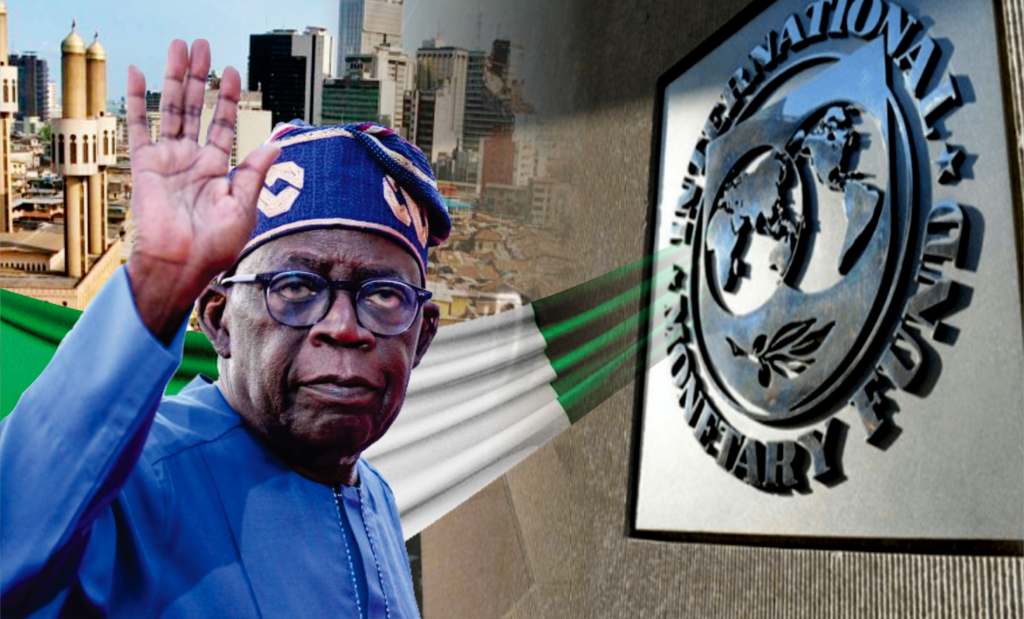
The International Monetary Fund (IMF) has cautioned the Nigerian government about potential risks linked to its proposed $5 billion financing arrangement with First Abu Dhabi Bank, warning that such transactions are often complex and lack transparency.
The deal, approved by Nigeria’s Senate in April, is structured as a Total Return Swap (TRS) and is part of the government’s broader strategy to refinance expensive debt and fund critical infrastructure projects.
Notably, similar financing arrangements have recently been used by other African countries, including Senegal and Angola.
Speaking to reporters on Tuesday, IMF Resident Representative in Nigeria Christian Ebeke said the Fund views these types of transactions with caution because their terms are often difficult to fully assess.

“Our view is that these structures carry risks. They are usually opaque, and the conditions attached to them are not always transparent,” Ebeke said.
The IMF suggested Nigeria could explore alternative funding options, including issuing Eurobonds, securing concessional loans, or accessing other sources of financing that may offer greater clarity and stability.
The warning comes even as the IMF praised the economic reforms introduced by President Bola Tinubu’s administration since 2023. According to the Fund, measures such as the removal of fuel subsidies, tighter monetary policy, and exchange rate liberalisation have improved macroeconomic stability and strengthened investor confidence.
However, the IMF stressed that the benefits of those reforms have yet to reach many Nigerians. Poverty remains widespread, with about 63 percent of the population living below the poverty line, while millions continue to struggle with food insecurity.
The Fund also warned that gains made so far could be undermined by external shocks, including ongoing tensions in the Middle East and volatility in global financial markets.
While Nigeria has regained access to international capital markets and attracted stronger portfolio investment flows, the IMF noted that heavy dependence on short-term foreign investment leaves the economy vulnerable to sudden reversals.
The Central Bank of Nigeria recently reported that the country’s gross foreign reserves have climbed to $50 billion, their highest level in 17 years. Even so, the IMF urged policymakers to focus on attracting more stable long-term investments, particularly foreign direct investment, rather than relying heavily on portfolio inflows.
The Fund said maintaining reform momentum while addressing the social impact on ordinary citizens will be crucial to sustaining Nigeria’s economic recovery.




