


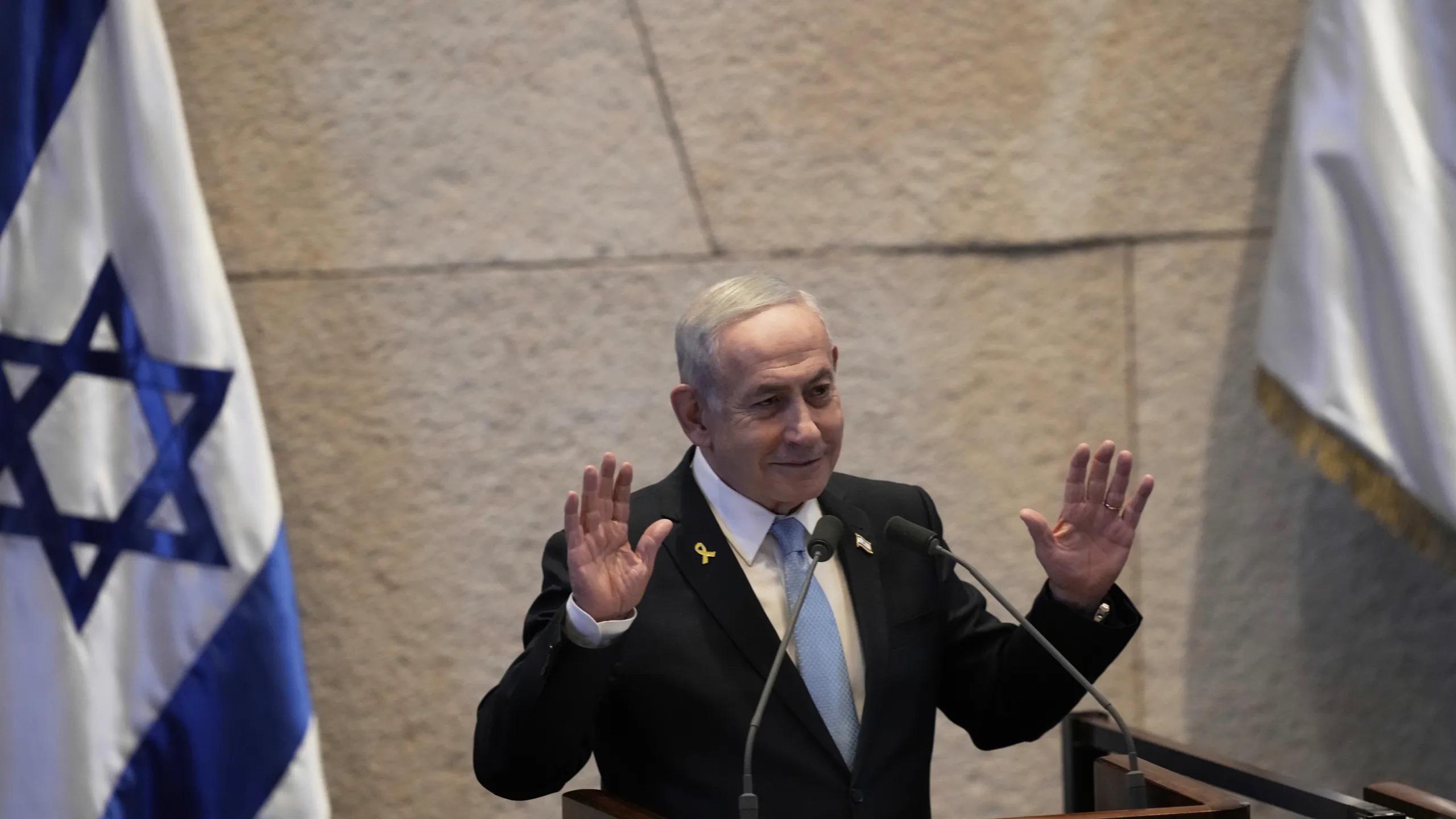
Israeli Prime Minister Benjamin Netanyahu has declared that Israeli forces will remain in southern Lebanon for as long as Israel considers it necessary, casting fresh uncertainty over efforts to end the conflict along the border.
Speaking on Thursday, Netanyahu said Israel must continue maintaining a security zone inside southern Lebanon and would not withdraw until its security objectives are fully met.
“We must maintain a security zone in southern Lebanon, and it requires that we must not leave there as long as Israel’s security needs require it,” he said.
The remarks mark Netanyahu’s first public comments since the United States and Iran signed an agreement aimed at ending months of regional conflict and launching negotiations toward a broader peace settlement.

A key provision of the U.S.-Iran agreement calls for an end to the war in Lebanon, where Israeli forces have been battling Hezbollah fighters and occupying territory extending up to 10 kilometres inside Lebanese territory.
However, the agreement does not clearly spell out how or when Israeli forces would leave the area, leaving room for competing interpretations.
Netanyahu’s statement suggests Israel is not prepared to commit to a timetable for withdrawal and intends to maintain its military presence regardless of diplomatic developments.
The Israeli leader has repeatedly argued that a buffer zone inside southern Lebanon is necessary to prevent future attacks and protect communities near the border.
His position is likely to deepen tensions with Lebanon and Iran, both of which have insisted that any lasting peace arrangement must include respect for Lebanese sovereignty and territorial integrity.
The comments also highlight a growing gap between Washington’s diplomatic efforts and Israel’s military objectives. While the U.S.-Iran agreement seeks to de-escalate conflicts across the region, Israeli officials have continued to stress that security decisions will be determined by conditions on the ground.
For many displaced Lebanese residents hoping the agreement would bring an end to the fighting, Netanyahu’s remarks raise fresh questions about when they will be able to return home safely.
As negotiations continue between Washington and Tehran, the future of southern Lebanon is emerging as one of the most contentious issues threatening the broader peace process.




