


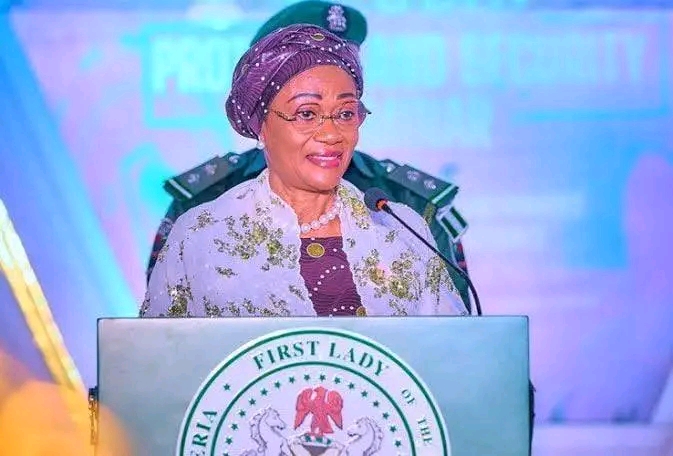
KADUNA, NIGERIA — Nigeria’s First Lady, Oluremi Tinubu, has commenced the distribution of ₦1.2 billion in cash support alongside food items to vulnerable households across the nineteen northern states as part of a major humanitarian intervention.
The event took place at the Government House banquet hall in Kaduna, where beneficiaries, government officials, and key stakeholders gathered for the rollout of the large-scale relief programme.
The initiative includes the distribution of hundreds of trucks of rice and financial support aimed at easing economic hardship among low-income families in the region.
The programme was organised by the First Lady in collaboration with the Office of the Special Adviser on Political Matters to the President, led by Ibrahim Kabir Masari.

Speaking at the event, organisers emphasised that the intervention is designed to provide immediate relief to vulnerable populations facing rising food costs and economic pressures across northern Nigeria.
The initiative forms part of broader efforts by the current administration to cushion the impact of economic reforms and inflation on ordinary citizens.
Among top government officials present at the event was Deputy Senate President Barau Jibrin, who commended the initiative and described it as timely support for struggling households.
Also in attendance was Kaduna State Governor Uba Sani, who highlighted the importance of targeted interventions in addressing poverty and food insecurity within the state and the wider northern region.
Representatives from Jigawa State, including the governor and other senior officials, were also present, underscoring the regional scope of the programme.
Wives of state governors, including Hafsat Uba Sani, attended the event, reflecting coordinated support among state leadership structures for the initiative.
The distribution exercise is expected to reach thousands of households across the nineteen northern states, with logistics teams working to ensure equitable delivery of both food supplies and financial assistance.
Analysts note that such interventions are increasingly critical as economic challenges continue to affect purchasing power, particularly among vulnerable populations.
They also stress that sustained support programmes, combined with long-term economic policies, will be necessary to achieve lasting impact beyond immediate relief.
The initiative is part of a series of social support efforts being implemented to strengthen social safety nets and improve living conditions for disadvantaged groups across the country.
As distribution continues, attention will focus on transparency, effective delivery, and the overall impact of the programme on communities across northern Nigeria.




