


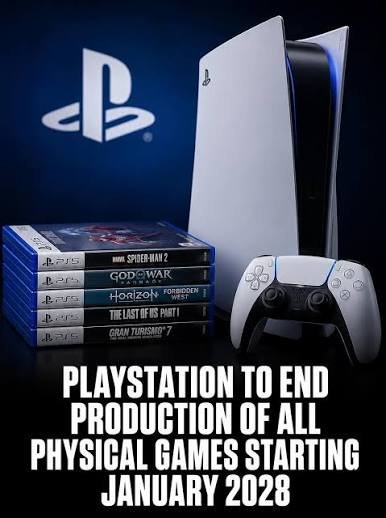
PlayStation has announced plans to discontinue physical game discs for all new releases starting January 2028, marking a major shift toward an all-digital future for one of the world’s most popular gaming platforms.
According to the company, all new titles will be available exclusively through the PlayStation Store and select retailers in digital formats. The announcement, made via the official PlayStation Blog on July 1, 2026, reflects what Sony describes as an “inevitable” response to evolving consumer habits.
“This is a natural direction for Sony Interactive Entertainment to adapt to consumer trends, as the general preference for digital media significantly outpaces physical discs,” the company stated.
Recent data supports this move, with nearly four in five full-game purchases on PlayStation 4 and PlayStation 5 now made digitally. The rise of digital gaming has already been evident, especially with the release of the disc-free PlayStation 5 Digital Edition.

However, the decision has triggered widespread criticism from gamers worldwide, particularly those who value physical ownership, game collecting, and the ability to resell or share titles.
The backlash intensified following a related move by Rockstar Games, which revealed that Grand Theft Auto VI will have a “physical edition” that contains only a download code instead of an actual disc.
Many players argue that eliminating discs removes key aspects of gaming culture, including collecting physical copies and accessing cheaper second-hand games.
Weighing in on the debate, Trevor Noah highlighted the economic impact of the decision. According to him, physical discs have long provided an affordable entry point for gamers who rely on second-hand purchases or shared games.
“For a lot of gamers, physical discs are the only way they could afford to play games because they could get them secondhand,” Noah noted. “You can also give games to your younger siblings, which is a great way to introduce them to the games you were playing.”
Beyond affordability, concerns have also emerged around accessibility. In regions like Nigeria and other parts of Africa, some gamers pointed out that digital-only systems may create barriers due to limited access to international payment methods required for online purchases.
Critics further argue that the shift raises deeper concerns about digital ownership, as players no longer have permanent, transferable access to games in the same way physical copies allow.
Despite the backlash, Sony appears committed to its digital-first strategy, positioning the move as part of a broader industry trend toward convenience and instant access.
As the 2028 deadline approaches, the gaming community remains divided caught between the convenience of digital gaming and the nostalgia, flexibility, and ownership tied to physical discs.




