


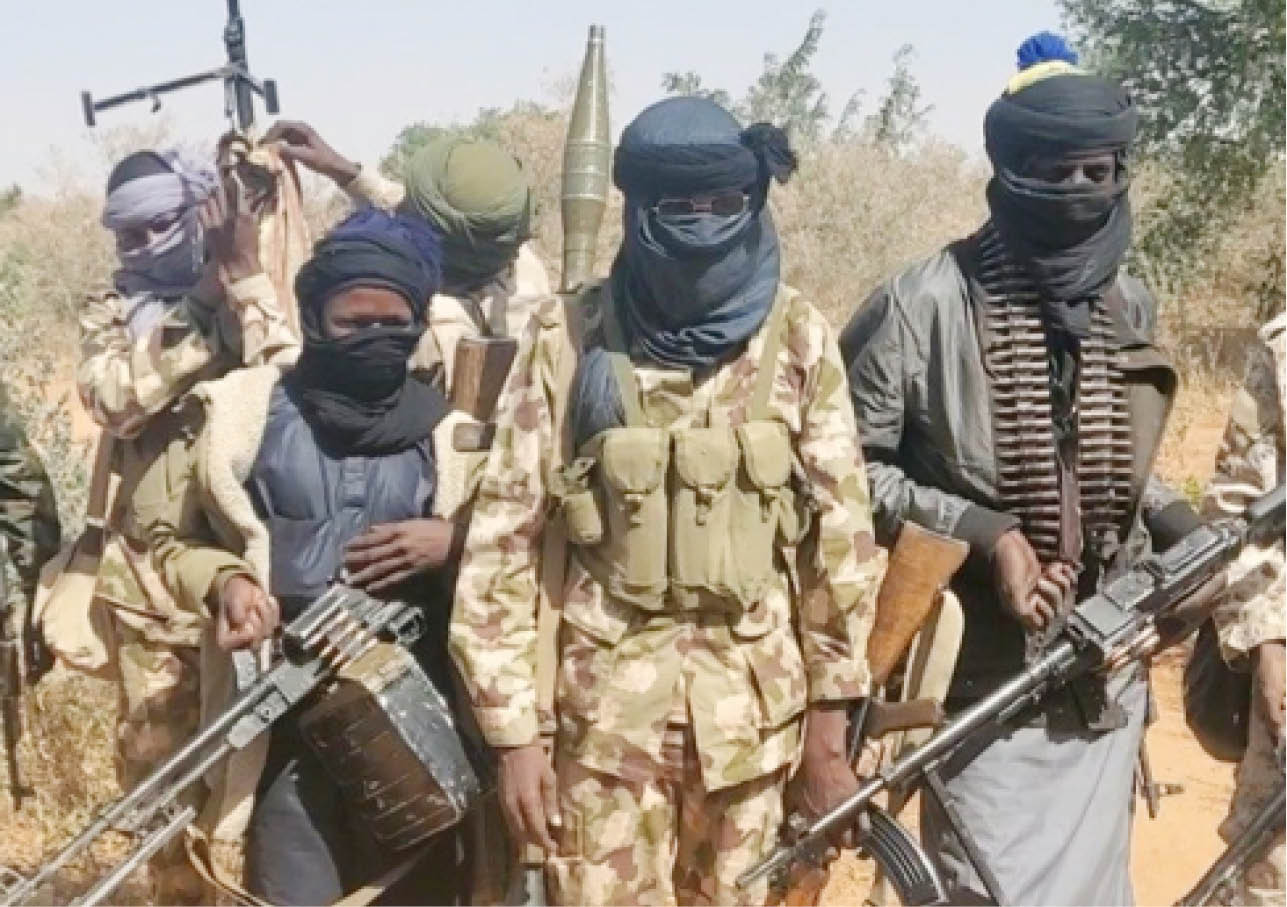
A new report released by the United States Commission on International Religious Freedom has claimed that about 30,000 armed Fulani militants are currently operating across Nigeria, contributing significantly to the country’s worsening insecurity and religious violence.
The May 2026 report, titled “Nonstate Violators of Religious Freedom in Nigeria: Fulani Militants,” stated that the armed groups operate in clusters ranging from 10 to 1,000 members and have become some of the deadliest non-state actors responsible for religious freedom violations in the country.
According to the commission, attacks carried out by militants of Fulani ethnic background intensified insecurity across Nigeria’s Middle Belt and parts of the South, resulting in thousands of deaths, widespread displacement, and heightened religious tensions.
“Violence by Fulani militants caused the highest number of deaths among all religious communities in Nigeria over the last year compared to attacks by organised insurgent groups and criminal gangs,” the report stated.

The commission noted that while many attacks targeted Christian communities, Muslim communities had also suffered killings, raids, kidnappings, and other forms of violence.
USCIRF explained that the militant groups do not operate under a central command structure but often collaborate with criminal gangs and extremist organisations.
“These actors operate in a variety of contexts and with a multiplicity of likely aims and motivations,” the report said.
It added that some groups coordinate with conventional bandit gangs seeking financial gain, while others have links to terrorist organisations promoting violent extremist ideologies.
The report stated that militants frequently attack isolated rural communities at night using motorcycles, automatic rifles, and machetes, often forcing residents to flee in order to seize land and expand territorial control.
According to USCIRF, violence involving Fulani militants and other armed groups has displaced at least 1.3 million people across the Middle Belt, leaving many victims in overcrowded camps with poor sanitation and inadequate security.
The commission cited several attacks recorded in 2025 and early 2026, including deadly incidents in Benue, Plateau, Kaduna, and Niger states.
“One attack in Benue in June 2025 killed at least 200 people, including internally displaced persons living in a Catholic mission,” the report stated.
USCIRF also referenced the Yelwata massacre in Benue State, where over 200 Christians, including women and children, were reportedly killed and more than 3,000 people displaced.
The report alleged that some attacks were deliberately timed to coincide with Christian religious celebrations such as Christmas and Easter to maximise psychological impact on victims.
In another incident highlighted by the commission, suspected Fulani militants reportedly attacked Holy Trinity Parish in the Kafanchan Diocese of Kaduna State in February 2026, killing three people and abducting 11 others, including parish priest Father Nathaniel Asuwaye.
USCIRF also documented attacks on Muslim communities, including the kidnapping of an imam and seven worshippers from a mosque in Plateau State.
The commission said conflicting narratives surrounding the violence have complicated efforts to fully determine the motivations behind the attacks.
“Some observers have argued that environmental and economic factors are the driving force behind Fulani militants’ acts of violence, while others have suggested that these actors are engaged in a concerted campaign of outright genocide against non-Muslims,” the report stated.
The commission criticised Nigerian authorities for what it described as inadequate responses to repeated attacks, noting that victims frequently complain about delayed security intervention.
USCIRF further stated that some Christian advocacy groups accused security agencies of favouring Muslim communities during investigations and operations.
The report acknowledged efforts by some state governments to address farmer-herder clashes through ranching initiatives and noted that the Federal Government intensified operations against armed groups after Donald Trump designated Nigeria as a Country of Particular Concern over religious freedom violations in October 2025.
According to the commission, President Bola Tinubu later classified kidnappers and violent armed groups, including Fulani militants, as terrorists in December 2025.
USCIRF also referenced growing scrutiny of the Miyetti Allah Cattle Breeders Association of Nigeria, which has faced allegations from some Christian leaders over its alleged inability to stop militant violence and land invasions.
However, the association denied supporting criminal activities.
“We do not support, condone, harbour, finance, or protect any form of criminality, extremism or violence,” MACBAN stated, according to the report.
Despite recent security operations and peace initiatives, USCIRF warned that violence remains widespread across central Nigeria and called for stronger action by federal and state governments to protect lives and ensure religious freedom.




