


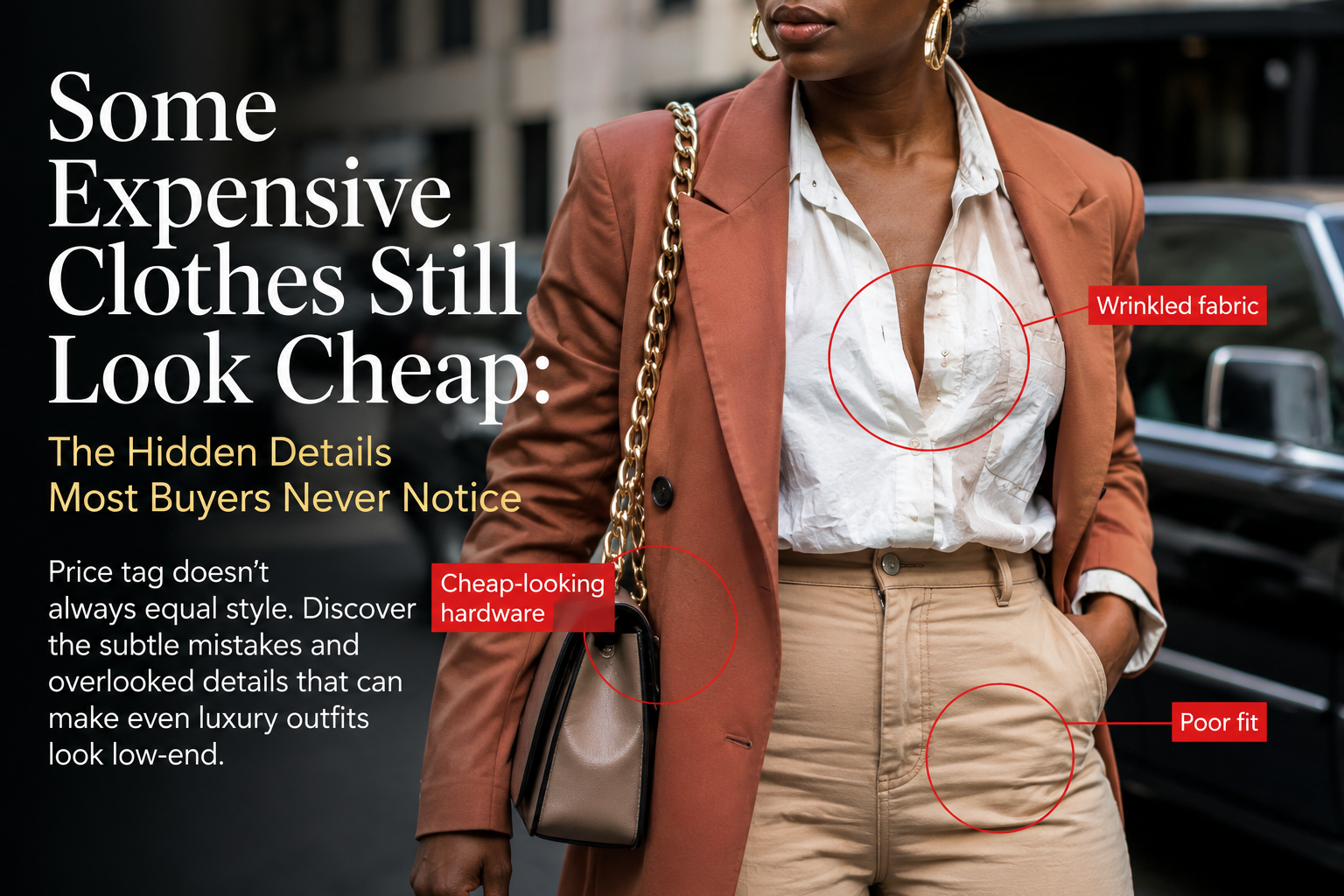
Many people assume that the more expensive a piece of clothing is, the better it will look. It is an easy belief to understand because luxury fashion has always been associated with elegance, sophistication, and quality. However, reality often tells a different story. You may have seen someone wearing an outfit worth hundreds of thousands of naira, yet it somehow fails to make the impression its price suggests. At the same time, another person may walk into the same room wearing a much more affordable outfit and receive endless compliments because everything simply looks right. The difference is rarely about the amount spent. It is about the details that many people overlook.
According to fashion experts, the true value of clothing is not determined by its price tag but by how well it fits, how carefully it is made, and how properly it is maintained. These are the elements that quietly separate garments that appear luxurious from those that only carry an expensive label. DDM News gathered that many shoppers unknowingly spend large sums on clothing without paying attention to these important factors, only to end up disappointed when the outfit fails to deliver the polished appearance they expected.
One of the biggest reasons expensive clothes can look surprisingly cheap is poor fit. No matter how luxurious the fabric may be or how famous the designer’s name is, a garment that does not sit properly on the body immediately loses its elegance. Clothes that are too tight create unnecessary pulling around the chest, waist, or hips, while oversized pieces can appear sloppy when they are not intentionally designed that way. Proper tailoring remains one of the greatest secrets behind expensive-looking fashion. Even an average-priced outfit can appear remarkably sophisticated after it has been adjusted to fit the wearer’s body perfectly. This is why many fashion-conscious individuals invest in alterations after purchasing their clothing rather than wearing it exactly as it comes from the store.
Another hidden factor is choosing the wrong fabric for the environment. Some luxury materials are designed for cooler climates and may not perform well in hot, humid conditions like those experienced across many parts of Nigeria. Thick wool blends, heavy silk, or structured synthetic fabrics can easily trap heat, causing excessive sweating and deep wrinkles after only a short period of wear. Once a garment becomes creased and loses its smooth appearance, its luxurious appeal quickly disappears. This explains why someone wearing a lighter cotton or linen outfit suited to the weather may appear far more stylish than another person struggling in an expensive but unsuitable fabric.

Construction quality also plays a much bigger role than many shoppers realize. Not every expensive garment is manufactured with the same level of craftsmanship. Some brands reduce production costs by cutting corners where customers rarely look. These shortcuts include unfinished inner seams, thin linings, uneven stitching, poorly aligned patterns, or weak reinforcement around stress points. While these details may remain hidden when the clothing is hanging on a rack, they become obvious once the garment is worn repeatedly. Over time, these small imperfections begin to affect the overall appearance, making an expensive purchase feel far less premium than expected.
Buttons, zippers, hooks, and other accessories are equally important. A beautifully tailored jacket fitted with lightweight plastic buttons can instantly lose its luxurious image. Weak zippers that snag, exposed synthetic linings, or decorative accessories that quickly tarnish all reduce the perceived quality of the garment. These seemingly minor elements contribute significantly to how people judge clothing without even realizing it. Luxury fashion is often defined by consistency, where every component of the garment reflects careful attention to detail rather than focusing only on the visible fabric.
Many people also make the mistake of believing that adding more decorative elements automatically makes clothing more fashionable. In reality, excessive embellishments often have the opposite effect. Garments overloaded with beads, oversized logos, unnecessary zippers, multiple textures, or conflicting design trends can appear cluttered instead of elegant. Fashion professionals frequently emphasize that simplicity allows quality to stand out. Clean lines, balanced proportions, and thoughtful finishing often communicate sophistication much more effectively than garments trying to showcase every trend at once.
Maintenance is another area where expensive clothing often loses its value. Luxury garments require proper care if they are to retain their original appearance. Wrinkled fabric, visible lint, pet hair, loose threads, or stains can make even the most costly outfit appear neglected. Natural fabrics especially require steaming or careful ironing to achieve the smooth drape that gives them their signature elegance. Unfortunately, many people spend heavily on designer clothing but overlook regular maintenance, allowing simple issues to diminish the overall impression. A clean, well-pressed outfit will almost always leave a stronger impression than an expensive garment that appears untidy.
Colour coordination also influences how expensive clothing is perceived. An outfit made from premium materials can still appear awkward if the colours clash or the accessories compete for attention. Fashion is about creating harmony between every element, including shoes, belts, handbags, jewellery, and even hairstyles. When these pieces complement one another, the outfit naturally appears more refined regardless of its actual price.
Confidence also plays a surprisingly important role. Clothing is designed to enhance the person wearing it, not overshadow them. Someone who constantly adjusts uncomfortable clothing, struggles with poor fit, or appears uneasy in an outfit will naturally project less confidence. On the other hand, a person wearing simple clothing that fits perfectly and allows freedom of movement often appears far more stylish. The way an individual carries themselves can elevate an outfit just as much as the quality of the garment itself.
Fashion experts continue to remind buyers that branding should never replace careful inspection. Designer labels may create expectations of excellence, but wise shoppers still examine stitching, fabric quality, finishing, hardware, and construction before making a purchase. A high price does not always guarantee exceptional craftsmanship, just as a moderate price does not automatically indicate poor quality. Understanding these differences helps consumers make smarter fashion investments that remain attractive for years rather than only impressing at the point of purchase.
As more consumers become informed about clothing quality, attention is gradually shifting away from famous labels toward garments that combine excellent craftsmanship with timeless design. DDM News reports that experienced buyers increasingly focus on fit, finishing, durability, and practicality instead of relying solely on expensive brand names. In today’s fashion world, true elegance is no longer measured by how much an outfit costs but by how effortlessly it reflects quality, confidence, and attention to detail. The most stylish people are often those who understand that luxury is found not in the price tag, but in the small details that quietly make every outfit look exceptional.




