


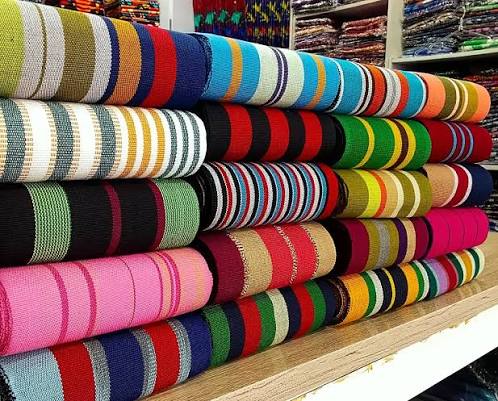
Long before African fashion became a major force on international runways, social media platforms and global red carpets, communities across the continent had already developed sophisticated textile traditions that communicated identity, wealth, status, spirituality and social belonging. Among these treasured traditions is Àsọ-Òkè, one of the most recognisable handwoven textiles associated with the Yoruba people of West Africa. More than a beautiful fabric, Àsọ-Òkè represents generations of craftsmanship, cultural memory and artistic expression, with its story deeply connected to the history and social life of the Yoruba people.
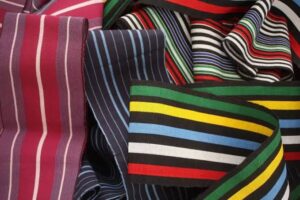
Àsọ-Òkè, sometimes referred to as Àsọ-Òfì, is traditionally a handwoven strip cloth associated particularly with the Yoruba people of southwestern Nigeria and other parts of Yorubaland. The Victoria and Albert Museum describes it as a handmade strip-woven textile historically produced by the Yoruba, with narrow strips of handwoven fabric stitched together to form a larger finished cloth. Traditionally, Yoruba men operated the narrow horizontal loom, producing strips that were later joined together.

The name itself carries historical significance. The word “Àsọ” means cloth in Yoruba, while “Òfì” refers to the loom. The expression “Àsọ-Òkè” is commonly interpreted as “cloth from the hinterland” or “cloth from the hill,” reflecting its association with communities away from the coastal trading centres. Historical accounts particularly connect the name with the Oke-Ogun area and the textile-producing town of Iseyin in present-day Oyo State. According to historical research on Iseyin, merchants in Lagos used the expression to describe cloth coming from the inland communities.
The origins of Yoruba textile production stretch far back into African history. Exactly when Àsọ-Òkè itself first emerged in its recognisable form is difficult to establish because textiles are fragile materials and rarely survive for centuries. However, evidence of sophisticated textile production in Yorubaland is considerably older than the modern fashion industry. Research into Yoruba textiles points to evidence of cotton spinning in places such as Ile-Ife and Old Oyo, while other cultural histories place the development of cloth weaving in Yorubaland many centuries ago.
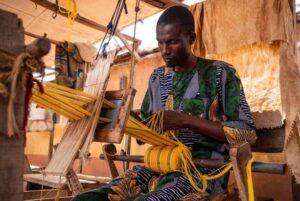
What eventually became Àsọ-Òkè developed as part of this broader Yoruba tradition of spinning, dyeing and weaving. Cotton was among the important materials used, while silk and other fibres also became significant. The weaving process required patience and technical skill because the cloth was traditionally produced in narrow strips rather than as one large piece. These strips were carefully woven, patterned and subsequently sewn together to create the wider fabric used for clothing.
This method of production gave Àsọ-Òkè its distinctive appearance. Instead of relying on industrial machinery, traditional weavers worked with relatively simple looms, manipulating threads to create intricate patterns, textures and colour combinations. The finished fabric could therefore represent many hours of careful manual labour, with the skill of the weaver reflected in the precision of the patterns.
Historically, weaving was strongly associated with men in many Yoruba communities, particularly in places where the narrow horizontal loom was dominant. Yet the story of Àsọ-Òkè has never been limited to the weavers themselves. Women played an equally important role in the textile economy as traders, patrons, designers and consumers. Academic research on Àsọ-Òkè specifically highlights the importance of women cloth traders in encouraging changes in design and responding to changing consumer tastes.
One of the most fascinating aspects of Àsọ-Òkè is the variety of traditional styles associated with it. Among the best-known historical categories are Etù, Àlàárì and Sányán. These fabrics were distinguished by their materials, colours, textures and social associations. Sányán, for example, became associated with its characteristic pale brown or earthy appearance, while Àlàárì became known for rich red or reddish tones. Etù was traditionally associated with darker blue-black shades. Historical research identifies these three as major traditional types of Yoruba Àsọ-Òkè.
The colours and textures were not merely decorative. Clothing in Yoruba society could communicate social position, wealth, occasion and group identity. Àsọ-Òkè therefore became particularly important during significant moments in people’s lives. Weddings, funerals, religious celebrations, chieftaincy ceremonies, festivals and other major social occasions provided opportunities for people to display carefully selected textiles.
For Yoruba men, Àsọ-Òkè became part of prestigious traditional outfits such as the Bùbá and Sọ̀kòtò, the flowing Agbádá and traditional caps such as the Àbẹ̀tí-Àjà. Women incorporated the fabric into the Ìró and Bùbá, Ìpèlè and Gèlè, among other forms of traditional dressing. The cloth could therefore transform an outfit from ordinary clothing into a visual representation of heritage and occasion.
Its importance was also connected to political power. Historical accounts from Iseyin indicate that handwoven cloth was considered valuable enough to form part of tribute associated with the old Oyo Empire. This demonstrates that Àsọ-Òkè and related woven textiles were not simply household products; they could also participate in systems of wealth, authority and political exchange.
Iseyin became one of the most important centres associated with Àsọ-Òkè production. The town developed a strong weaving culture in which textile production supported families and local commerce. Ilorin in present-day Kwara State also developed a significant weaving tradition, while other Yoruba communities became important centres for production, trading or consumption. Research on Ondo, for instance, shows that migrant weavers from Iseyin and Ilorin contributed significantly to the town’s early twentieth-century Àsọ-Òkè industry.
However, the journey of Àsọ-Òkè has not always been one of uninterrupted success. The arrival of imported European textiles, changing fashion preferences and colonial economic transformations created challenges for traditional weaving. In some communities, cheaper factory-produced fabrics became increasingly attractive to consumers. Historical research on Ondo records how imported materials such as damask, brocade, velvet and printed fabrics contributed to declining patronage of traditional Àsọ-Òkè.
The same challenge affected other weaving communities. In Ilorin, for example, traditional weaving once provided livelihoods for numerous families, but the industry later experienced a serious decline as fewer young people entered the profession and imported fabrics gained popularity.
Yet Àsọ-Òkè refused to disappear.
Instead, the textile began to evolve. This ability to adapt is one of the reasons the fabric remains relevant today. Contemporary weavers and designers have experimented with colours, yarns, patterns, textures and production methods while retaining the basic identity of the traditional cloth. Academic research describes Àsọ-Òkè as an evolving tradition rather than something frozen in the past, with innovation occurring across production, distribution and consumption.
DDM News reports that the modern story of Àsọ-Òkè is increasingly connected to the revival of African fashion and cultural pride. The fabric has moved beyond being worn exclusively for traditional ceremonies and has entered contemporary fashion in increasingly creative ways. Designers now incorporate Àsọ-Òkè into dresses, jackets, skirts, bags, shoes, accessories and modern two-piece outfits, allowing younger generations to connect with the textile without necessarily dressing in strictly traditional styles.
This transformation has also been helped by the global growth of African fashion. As African designers increasingly present their work to international audiences, traditional fabrics have gained new visibility. Àsọ-Òkè has become especially attractive because of its handmade quality, distinctive texture and strong cultural identity.
Today, a Yoruba bride wearing Àsọ-Òkè is not simply wearing an attractive fabric. She is participating in a cultural tradition that connects her ceremony to generations that came before her. A groom dressed in an Àsọ-Òkè Agbádá is similarly carrying forward a visual language that has been used to communicate dignity, celebration and identity for generations.
The textile has also become a powerful symbol of collective identity through coordinated dressing. Families, friends and social groups may select matching or complementary Àsọ-Òkè for weddings and other celebrations. This practice turns the fabric into more than an individual fashion statement; it becomes a visual representation of belonging and community.
The economic importance of Àsọ-Òkè should not be overlooked either. Behind every finished piece is a chain of human activity involving fibre producers, spinners, dyers, weavers, traders, tailors and designers. In communities where weaving remains active, the craft continues to provide employment and preserve specialised knowledge.
There are, however, continuing concerns about the survival of traditional weaving. Modernisation, industrial textiles, changing consumer preferences and the difficulty of transferring specialised weaving skills to younger generations remain significant challenges. Recent research on traditional weaving in northern Yorubaland similarly warns that the number of skilled workers has declined and links part of the decline to Westernisation and imported goods.
At the same time, there are encouraging signs. New research focusing on Iseyin shows that Àsọ-Òkè weaving continues to play a role in urban identity, social relationships and cultural life, demonstrating the resilience of the craft in the face of urbanisation and modernity.
The history of Àsọ-Òkè is therefore not simply the story of an old Nigerian fabric. It is the story of an African civilisation that used textile production to preserve memory, express identity, create economic opportunities and mark important moments in human life.
From the narrow strips produced by traditional looms to the glamorous outfits seen at contemporary Nigerian weddings, Àsọ-Òkè has travelled through centuries of cultural change without losing its essence. It has survived the arrival of imported fabrics, changing fashion preferences, colonial disruption and modern industrial production. Today, it stands at the meeting point between heritage and innovation.
For DDM News, the continued popularity of Àsọ-Òkè is a powerful reminder that African traditions do not have to remain trapped in the past to survive. They can evolve, enter modern fashion and appeal to new generations while retaining the stories and craftsmanship that gave them meaning in the first place.
Àsọ-Òkè is, ultimately, more than something to wear. It is history woven into thread, culture transformed into colour, craftsmanship preserved through generations and identity stitched into every strip. As African fashion continues to gain international recognition, the future of Àsọ-Òkè may be as vibrant as its past — provided the knowledge of how to create it continues to be passed from one generation to the next.




