


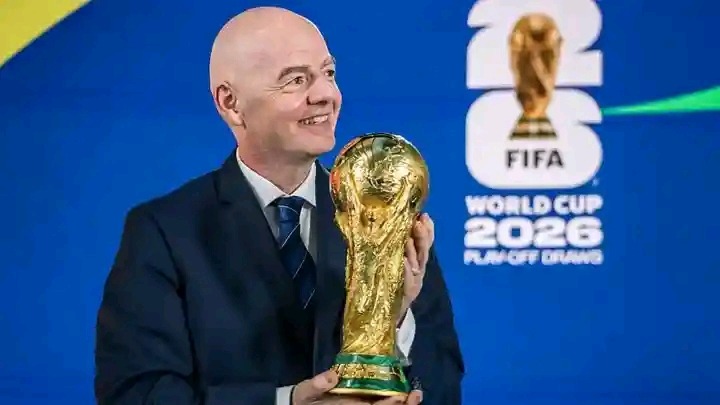
FIFA President Gianni Infantino has apologised to members of the organisation’s Council over the handling of a controversial investment proposal that would have opened part of the commercial rights of major football competitions, including the FIFA World Cup, to private investors.
The apology came during a FIFA Council meeting in Zurich, Switzerland, on Thursday, October 15, 2026, as Infantino faced renewed criticism over the way the proposal was developed and communicated to football officials around the world.
The abandoned initiative, known as FIFA Forward Enterprise (FFE), was designed to create a commercial company responsible for managing key FIFA competitions and attracting private investment. The proposal reportedly envisaged raising up to $4.2 billion through the sale of a minority stake in the new entity.

However, the plan generated widespread opposition among football administrators, particularly over concerns about transparency, governance and the lack of consultation with key stakeholders before it became public.
Infantino acknowledged mistakes in the consultation and communication process, saying the proposal had been intended to increase investment in football development rather than undermine the interests of FIFA’s member associations.
He stressed that the initiative had been a proposal and not a completed transaction, adding that it had now been permanently withdrawn.
According to FIFA, the organisation’s leadership maintained that its objective was to find additional ways to support football development across its 211 member associations. Nevertheless, critics argued that a proposal of such financial and strategic significance should have been presented to the Council before being publicly discussed.
The controversy intensified after several football governing bodies expressed concern about the possible implications of allowing private investors to acquire a stake in the commercial interests of the World Cup and other major competitions.
European football’s governing body, UEFA, was among the strongest opponents of the initiative. Its leadership argued that the World Cup should not be treated as an investment product and questioned whether FIFA should surrender part of the competition’s commercial value to outside investors.
Other confederations also raised concerns about the process, with officials questioning why the proposal had advanced without adequate consultation and scrutiny.
The backlash eventually forced FIFA to abandon the plan in August, following weeks of criticism from football administrators and other stakeholders.
The dispute has since developed into a wider debate about transparency and decision-making within the world governing body, with some senior officials arguing that the episode exposed weaknesses in FIFA’s governance structure.
Following Thursday’s meeting, representatives of the English and German football associations indicated that Infantino’s apology had not resolved their concerns.
German Football Association president Bernd Neuendorf called for substantial changes to FIFA’s governance arrangements, arguing that the organisation needed a fresh approach to leadership and accountability.
Debbie Hewitt, chair of the English Football Association and a FIFA vice-president, also expressed dissatisfaction, saying important questions remained unanswered.
Among the outstanding issues was a request for documents explaining how the FFE proposal had been developed, evaluated and presented. Critics said access to the relevant information was necessary to understand the financial assumptions behind the plan and determine whether appropriate governance procedures had been followed.
Infantino’s supporters, however, maintained that his leadership had delivered substantial benefits to global football, including expanded investment in development programmes and increased financial support for member associations.
The debate comes as FIFA considers a separate proposal to increase funding for football development during the 2027 to 2030 cycle.
Under the proposed FIFA Surplus Solidarity Programme, the organisation plans to make approximately $6.35 billion available for development across its 211 member associations, confederations and other stakeholders.
Each member association could receive up to $25 million over the four-year period, subject to the programme’s final terms, eligibility requirements and approval process.
FIFA said the funding proposal was made possible by the strong commercial performance of the 2026 World Cup. The organisation also intends to retain financial reserves to protect against unforeseen circumstances.
The new funding plan is separate from the abandoned FFE initiative. While the former would distribute resources from FIFA’s financial position to support football development, the latter involved attracting private investors through a proposed commercial entity.
The distinction is important as FIFA seeks to reassure member associations that its financial resources will continue to support football development across different regions.
The dispute has also raised questions about Infantino’s political position ahead of the next FIFA presidential election, scheduled for March 2027.
Some influential European officials have expressed doubts about his leadership, while representatives from several African and Asian football associations have continued to support him.
Mauritania Football Federation president Ahmed Yahya has publicly backed Infantino, arguing that the FIFA president remains the right person to lead the organisation.
The differing positions reflect divisions among football administrators over the direction of FIFA and the extent of governance reforms required following the investment controversy.
During Thursday’s meeting, the Council agreed to establish a working group to examine FIFA’s governance framework. The organisation also announced reviews of its disciplinary procedures and FIFA Peace Prize arrangements, with further discussions expected at a subsequent Council meeting.
For Infantino, the immediate challenge will be rebuilding confidence among officials who believe the investment proposal was handled without sufficient transparency.
Although the initiative has been withdrawn, the questions surrounding its development remain central to the debate over FIFA’s leadership and accountability.
The coming months are likely to be important as the organisation works to finalise its development funding arrangements and address concerns raised by Council members ahead of the 2027 presidential election.




