


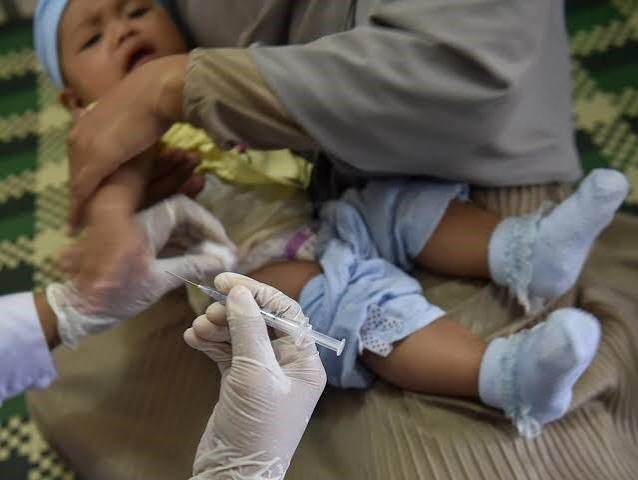
Global childhood vaccination coverage recorded modest progress in 2025, but millions of children still received no vaccines during their first year of life, according to new estimates from the World Health Organization and UNICEF.
The latest global immunisation data show that about 13.5 million children remained “zero-dose” in 2025, meaning they did not receive a single routine vaccine in their first year.
Although the number represents an improvement from the previous year, health agencies have warned that conflict, misinformation and funding challenges could threaten vaccination progress.
Nearly 116 Million Infants Receive First DTP Vaccine
According to the WHO-UNICEF Estimates of National Immunization Coverage, 90 per cent of infants worldwide received at least one dose of the diphtheria, tetanus and pertussis vaccine in 2025.

This represents nearly 116 million children.
About 85 per cent, or 110 million infants, completed the full three-dose DTP vaccination series.
Both figures increased by one percentage point compared with the previous year.
13.5 Million Children Receive No Vaccine
Despite the improvement, an estimated 13.5 million children did not receive a single vaccine during their first year of life.
The number of zero-dose children fell by nearly 750,000 compared with the previous year.
However, WHO and UNICEF warned that the world is still not making enough progress to achieve global immunisation targets.
Health officials are also concerned about children who begin their vaccination schedule but fail to complete all recommended doses.
Conflict Leaves Millions of Children at Risk
War and humanitarian crises continue to make routine vaccination difficult in several countries.
Children living in conflict-affected areas often struggle to access hospitals, clinics and vaccination centres.
Damage to health facilities, displacement and shortages of health workers can interrupt immunisation programmes.
These challenges increase the risk of outbreaks of diseases that can be prevented through vaccination.
Vaccine Misinformation Threatens Immunisation Progress
WHO and UNICEF also raised concerns about vaccine misinformation and hesitancy.
False or misleading health information can discourage parents from vaccinating their children.
Health experts say trusted information from qualified medical professionals and public health authorities remains important in helping families make informed vaccination decisions.
Disease Outbreaks Raise Fresh Health Concerns
Gaps in vaccination coverage can allow preventable diseases to spread more easily.
Health authorities have warned about outbreaks of diseases including measles and diphtheria in communities with low vaccination coverage.
Children who are not fully vaccinated may face a higher risk of severe illness and complications from some vaccine-preventable diseases.
WHO and UNICEF Call for Stronger Immunisation Systems
The global health agencies are urging governments and international partners to strengthen routine vaccination programmes.
They want countries to improve access to vaccines, particularly for children living in poor, remote and conflict-affected communities.
Health systems also need reliable funding, trained health workers and stronger disease monitoring systems.
Global Vaccination Progress Remains Fragile
The latest figures show that more children are receiving life-saving vaccines, but global progress remains slow.
Vaccination coverage is still below 2019 levels, while millions of infants continue to miss essential protection.
WHO and UNICEF warn that recent gains could be lost if countries fail to maintain funding and reach children who are currently excluded from routine immunisation services.
Closing the vaccination gap will remain an important global health priority as health authorities work to prevent outbreaks and protect millions of children from avoidable diseases.




