


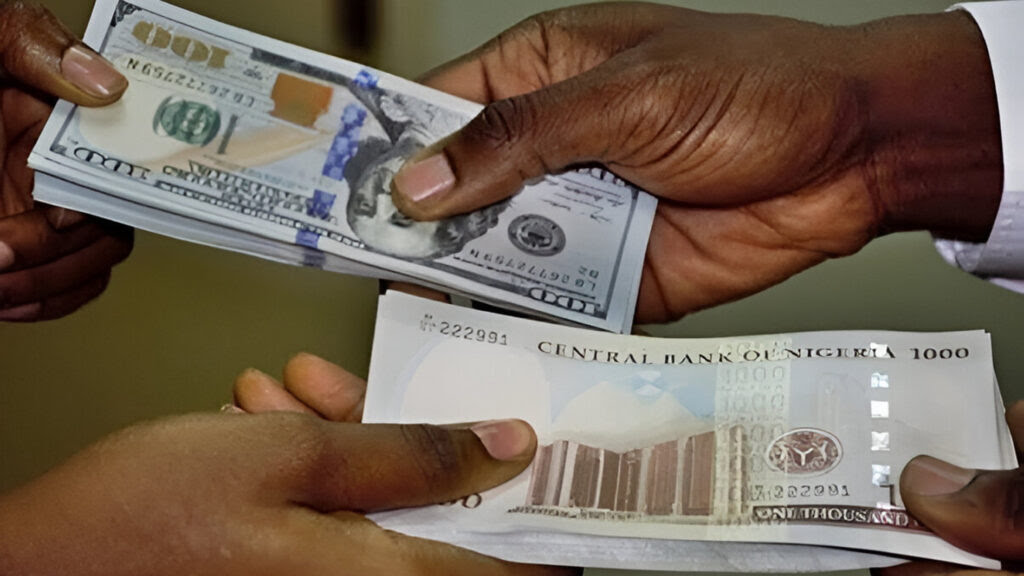
Nigeria’s naira is entering one of its strongest periods in years, gaining momentum even as the country moves deeper into an election season traditionally associated with heightened political uncertainty, increased capital outflows and pressure on the foreign-exchange market.
The currency is now on course for its strongest annual performance since at least 2018, according to market analysts, as improving dollar liquidity, stronger oil prices and rising remittance inflows provide support that could help the naira withstand some of the political pressures normally expected ahead of a major election.
The development represents a significant shift in the currency market.
In previous election cycles, uncertainty surrounding political transitions has often encouraged investors and businesses to increase their demand for dollars, placing additional pressure on the naira.

This time, however, stronger external inflows and improving market conditions appear to be changing the equation.
The naira has recently strengthened to levels that would have appeared difficult to imagine during some of its most turbulent periods.
BusinessDay reported that investment firm CardinalStone expects the currency to hover around N1,310 per dollar, while Zedcrest Capital projects a rate of about N1,300 per dollar.
The average estimate from four investment banks puts the naira at roughly N1,290 per dollar by the end of the year, compared with about N1,328.92 currently. (Business Day)
For a currency that has experienced significant volatility since Nigeria’s foreign-exchange reforms, the latest performance is more than a short-term market movement.
It signals the possibility that some of the structural weaknesses that previously made the naira extremely vulnerable to political and external shocks may be gradually easing.
One of the biggest factors behind the improved outlook is the availability of foreign exchange.
Higher oil prices have increased dollar earnings for Nigeria, while stronger remittance inflows are providing another source of foreign currency.
Together, these inflows are helping to improve liquidity in the market and reduce some of the intense pressure that previously pushed businesses and investors towards the dollar.
Oil remains particularly important to Nigeria’s external position.
As one of Africa’s major oil producers, the country relies heavily on crude exports to generate foreign exchange.
When oil prices rise and production and exports improve, Nigeria generally receives greater dollar inflows, strengthening its capacity to meet foreign-exchange demand.
The latest improvement is also taking place against a broader backdrop of increased confidence in Nigeria’s economic management.
Moody’s recently revised Nigeria’s credit outlook from “stable” to “positive”, citing stronger foreign-exchange reserves, better-than-expected economic growth and greater resilience against external shocks.
The rating agency also pointed to stronger oil revenues and increased refined petroleum exports as factors supporting the country’s external position. (Reuters)
That improvement matters because currency stability is closely tied to investor confidence.
When investors believe that a country has enough foreign-exchange liquidity to meet its obligations and manage external shocks, the incentive to rush into dollars can decline.
That can create a reinforcing cycle in which stronger confidence supports the currency, while a stronger currency further improves market sentiment.
Yet the naira’s current strength comes with an important political test.
Nigeria is approaching its 2027 general election, and campaigning has already begun.
Historically, election periods can create uncertainty as investors assess the potential economic policies of competing political parties and candidates.
Concerns over government spending, policy continuity, fiscal pressures and possible changes in economic reforms can influence investment decisions and exchange-rate expectations.
This time, however, the currency appears to be showing greater resilience.
President Bola Tinubu’s administration has implemented sweeping economic reforms since taking office, including the removal of the petrol subsidy and major changes to the foreign-exchange system.
Those policies initially triggered significant economic pain, contributing to higher prices and intense pressure on households, but they also received support from investors and international financial institutions that viewed them as necessary steps towards correcting long-standing economic distortions. (Reuters)
The challenge now is whether the gains in financial markets can be sustained while Nigerians continue to deal with the consequences of higher living costs.
For ordinary households, a stronger naira does not immediately translate into cheaper food, transportation, housing or electricity.
The country continues to face substantial cost-of-living pressures, while high interest rates remain a constraint for businesses and consumers.
Reuters recently reported that despite improved investor sentiment and significant capital inflows, many Nigerians remain under severe economic pressure. (Reuters)
This creates a complicated picture for the currency.
On one side, investors are seeing signs of greater macroeconomic stability. On the other, households are still waiting for that stability to translate into meaningful improvements in their daily lives.
For the naira, however, the current rally provides an important opportunity.
A more stable currency could reduce the cost of imported inputs, improve planning for businesses and help moderate some inflationary pressures if the gains prove durable.
It could also strengthen Nigeria’s attractiveness to foreign investors who have historically been concerned about the difficulty of repatriating funds and managing exchange-rate volatility.
The critical question is whether the current strength represents a lasting transformation or simply a favourable moment created by improved oil earnings and stronger dollar inflows.
That distinction will become increasingly important as the election approaches.
If the naira continues to hold its ground despite rising political activity, it would represent a notable departure from previous election cycles when uncertainty often translated into heavier demand for dollars.
But if political tensions intensify, government spending increases or external conditions deteriorate, some of those gains could come under pressure.
For now, market expectations remain relatively optimistic.
Analysts’ projections suggest that the naira could strengthen further towards the N1,300-per-dollar region before the end of the year, potentially giving the currency its best annual performance in several years. (Business Day)
The significance goes beyond the exchange rate itself.
Nigeria is attempting to convince investors that its economic reforms are producing a more stable and predictable environment, even as the political calendar becomes increasingly crowded.
DDM News understands that the naira’s latest performance will therefore be closely watched by businesses, investors and policymakers.
A currency that can withstand election-related uncertainty while maintaining stronger external liquidity could become one of the clearest indicators yet that Nigeria’s foreign-exchange market is entering a new phase.
But the real test will come when political uncertainty collides with economic expectations.
For now, the naira is doing something that would have seemed unlikely during some of Nigeria’s recent currency crises: it is gaining ground while an election approaches.
And if the trend continues, the 2027 election season may not produce the currency shock many investors once expected.
Instead, Nigeria could be heading into the polls with a naira that is stronger, more resilient and increasingly capable of shrugging off the political pressures that have historically weighed heavily on it.
DDM News reports that the currency’s performance has placed Nigeria at an important economic crossroads.
Whether the naira can maintain its momentum will depend on the durability of foreign-exchange inflows, oil-market conditions, monetary policy, investor confidence and, ultimately, the political stability surrounding the election.
For now, however, the market is sending a striking message: the naira is no longer moving entirely to the rhythm of Nigeria’s political calendar.




